The Strategy of Conflict
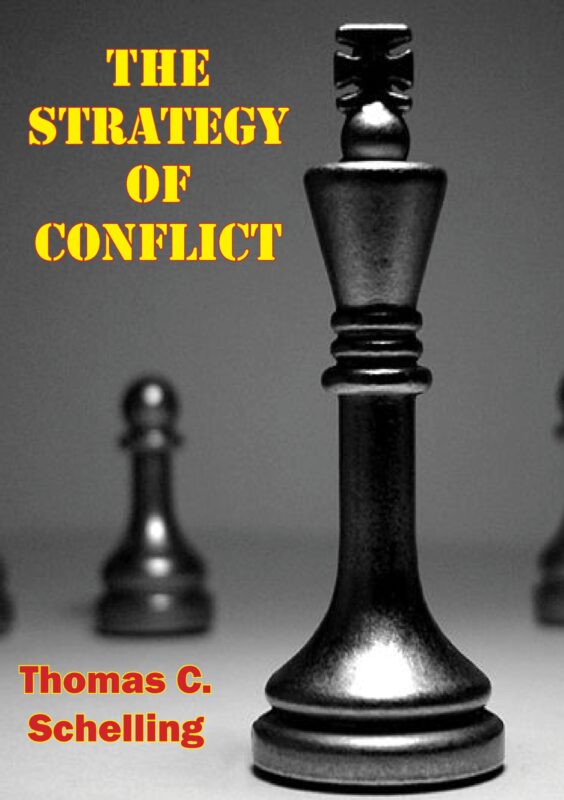
The Strategy of Conflict by Thomas C. Schelling redefines the intellectual landscape of negotiation, game theory, and strategic behavior. Schelling transforms the understanding of conflict by showing how actors—nations, organizations, individuals—pursue both divergent and overlapping interests, generating complex patterns of cooperation, confrontation, and resolution. He details the ways in which bargaining, deterrence, threats, and commitments shape the outcomes of interactions from global diplomacy to everyday disputes. Schelling’s theories continue to direct the strategies of policymakers, negotiators, and strategists who recognize that the art of conflict lies in shaping expectations and controlling the future through visible choices and calculated risk.
Understanding Strategy: From Bargaining Table to Battlefield
Strategic interaction unfolds where rational agents calculate actions based on anticipated responses from others. In The Strategy of Conflict, Schelling asserts that the theory of strategy grows from this premise of interdependent decision-making. Participants in a conflict do not act in a vacuum; their choices intertwine, shaped by awareness of mutual influence. Schelling classifies conflict situations as variable-sum games, where common interests coexist with elements of rivalry. This intersection demands more than maximizing gain at an opponent’s expense. Instead, the participant seeks to influence outcomes by shaping the adversary’s expectations, exploiting common interests, and averting mutual disaster.
Bargaining: Power, Commitment, and Tactical Sacrifice
Bargaining stands at the core of strategic conflict, manifesting both in explicit negotiations and in subtle, tacit maneuvering. Schelling demonstrates that bargaining power emerges not simply from resources or authority but from the ability to commit. When a party can visibly limit its own future options—by invoking legal, institutional, or reputational constraints—it sends a credible signal to adversaries. Schelling illustrates this principle through real-world analogies: a union leader publicly bound by the will of members, a negotiator tied to legislative mandates, or a nation whose public statements foreclose future concessions. Through such commitment, a party transforms apparent weakness into tactical strength. Who controls the agenda, shapes public perception, or limits communication wields leverage over the bargaining process.
Tacit Communication: The Language of Strategy
Actors in strategic conflict often communicate without words. Schelling shows how tacit bargaining shapes outcomes as much as explicit negotiation. The manner in which one occupies territory, signals willingness to escalate, or stages symbolic actions generates meaning that others interpret. These gestures and maneuvers become a language, carrying threats, promises, or offers of accommodation. The challenge lies in ensuring that adversaries recognize and correctly decode these signals. Misreading a move can trigger escalation or cause an opportunity for agreement to slip away. In high-stakes settings, such as limited war or international crisis, tacit communication establishes a line between calculated risk and catastrophic error.
Credibility: Building and Maintaining the Power to Influence
Credibility forms the foundation of strategic influence. A threat or promise matters only to the extent that others believe it. Schelling explores how actors make commitments credible by surrendering freedom to back down. A government deploying troops to a contested border, a parent swearing on their word, or a business leader making an irreversible public statement—each creates a situation where retreat imposes costs, even humiliation or systemic failure. These visible acts bind the initiator, transforming intentions into expected outcomes. Over time, reputation amplifies credibility: a negotiator known to keep commitments gains bargaining power, while one who capitulates loses influence. Institutions, legal structures, and publicity all contribute to the mechanics by which commitments take effect.
Risk, Randomness, and Brinkmanship
Schelling illuminates the strategic utility of risk and uncertainty. When participants randomize responses, introduce chance elements, or relinquish total control over actions, they introduce genuine unpredictability into a conflict. Brinkmanship emerges when actors leave the door open to disastrous outcomes in order to strengthen the credibility of threats or promises. Schelling famously describes the “threat that leaves something to chance,” where parties edge closer to the precipice, relying on the other’s fear of unintended escalation. Such dynamics influenced Cold War nuclear standoffs, but Schelling extends the logic to labor disputes, political standoffs, and even traffic negotiations. The calculated introduction of uncertainty shifts incentives, compelling adversaries to reconsider their willingness to push conflicts further.
Coordination and the Problem of Focal Points
Strategic situations often require actors to coordinate on a single outcome among many possibilities. Schelling introduces the concept of “focal points”—solutions that participants naturally gravitate toward in the absence of communication. Focal points can arise from tradition, precedent, cultural markers, or shared intuition. The ability to anticipate where an adversary will focus attention or which solution will attract consensus allows a skilled negotiator to simplify complex choices, break deadlocks, and channel behavior toward mutually beneficial outcomes. This insight bridges game theory and psychology, as it draws on the cognitive habits and social conventions that underpin strategic behavior.
Institutions, Structure, and the Distribution of Power
Institutions shape strategic conflict by defining rules, procedures, and roles. Schelling investigates how the distribution of authority between agents and principals, the sequence of offers, and the presence of external audiences or legislative bodies reconfigure bargaining positions. A negotiator constrained by a public commitment can credibly resist pressure, while one with private discretion may appear more flexible but less trustworthy. Institutions can create or undermine opportunities for compensation, issue linkage, and side payments, further complicating negotiation. The structure of the game—its agenda, order, and rules—sets the stage on which actors perform, shaping the possible outcomes.
Limited War, Deterrence, and the Logic of Conflict
Schelling dissects limited war, where adversaries possess both the capacity for total destruction and an incentive to avoid it. He defines the theory of deterrence as the art of persuading an adversary to refrain from undesired action by credibly threatening an unacceptable response. The logic of deterrence extends beyond nuclear policy to law enforcement, domestic governance, and personal relationships. Effective deterrence requires clarity about which actions trigger retaliation, credible capacity to carry out threats, and—crucially—ways for adversaries to retreat without losing everything. Schelling’s analysis reveals that the possibility of mutual accommodation runs through even the most adversarial situations. The logic of limited war depends on controlling escalation, signaling intentions, and providing opportunities for negotiated de-escalation.
Surprise Attack, Trust, and Mutual Distrust
Strategic conflict breeds mutual suspicion, especially in situations prone to surprise attack. Schelling analyzes the reciprocal fear that drives adversaries to arm, mobilize, and prepare for pre-emptive moves. As participants anticipate that the other may strike first, the temptation grows to launch a preventive action. Trust collapses as mutual expectations shift. Schelling dissects the mechanics of surveillance, warning systems, and arms control agreements designed to dampen the incentives for surprise. The solution, he shows, lies in structures that change the calculus of risk: longer-term monitoring, mutual transparency, and mechanisms for authenticating peaceful intentions. Even in environments where higher authority lacks enforcement power, such as in international relations or criminal underworlds, actors craft agreements, signals, and rituals to build trust and manage uncertainty.
Game Theory: From Formal Models to Practical Insight
Schelling brings the precision of game theory to bear on real-world conflict, but he moves beyond abstraction to highlight the practical dimensions of strategy. He classifies games by the symmetry or asymmetry of interests, the degree of coordination required, and the possibility of enforcing agreements. Schelling identifies mixed-motive games as especially rich, where participants seek both to compete and cooperate. Experimental research, communication strategies, and the study of randomization deepen the understanding of how theory intersects with lived experience. The book’s enduring value derives from Schelling’s insistence that theory illuminates, rather than obscures, the intricate realities of human interaction.
Applications: From the World Stage to the Everyday
The influence of The Strategy of Conflict radiates through global security policy, business negotiation, legal disputes, and interpersonal relationships. Policymakers rely on Schelling’s logic to craft arms control treaties, design sanctions, and calibrate diplomatic signals. Business leaders study his insights to manage mergers, acquisitions, and competitive standoffs. Lawyers and mediators adopt his tactics to structure settlements and guide disputing parties toward agreement. Even parents and educators unconsciously practice Schelling’s methods as they set boundaries, make credible promises, and manage conflict among children. Schelling’s analogies—drawn from traffic negotiations, criminal deterrence, and the underworld—expose the common structure that unites conflicts across scale and context.
The Paradox of Rationality and the Limits of Control
Strategic advantage often accrues to those who limit their own freedom, cultivate a reputation for unpredictability, or exploit the structural ambiguities of negotiation. Rationality, in Schelling’s analysis, involves not only calculation and foresight but also the capacity to signal limits, cultivate reputation, and engage in selective self-restraint. Schelling observes that actors sometimes wish to suspend their own rationality or communicate a willingness to pursue “irrational” action—because doing so changes the incentives for adversaries. The capacity to structure one’s own commitments, manage information flow, and exploit institutional settings transforms the playing field of conflict. Mastery lies in recognizing when to bind oneself, when to invite risk, and when to trust the language of strategy to convey intentions and shape the future.
Enduring Legacy and Future Directions
Schelling’s theories underpin much of modern strategic thought. Researchers in political science, economics, and psychology continue to refine his models, test his hypotheses, and extend his principles into new domains: cyberwarfare, artificial intelligence, climate negotiation, and beyond. Negotiators consult Schelling’s writings to unlock complex deadlocks, and strategists recognize the value of commitment, focal points, and calculated risk. The clarity, depth, and practical orientation of The Strategy of Conflict have ensured its place among the essential works for anyone seeking to understand, shape, or resolve conflict.