From Major Jordan’s Diaries
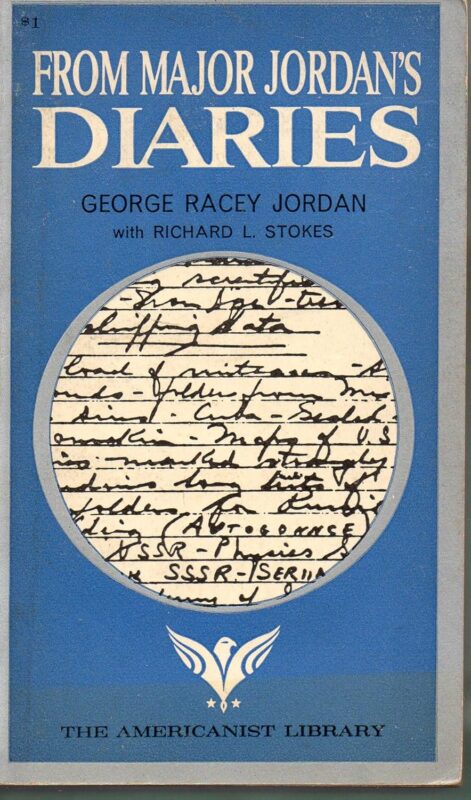
From Major Jordan's Diaries by George Racey Jordan uncovers the logistical, political, and security realities of U.S.-Soviet relations during World War II through the firsthand account of an officer who served as a Lend-Lease expediter and liaison. As the United States launched the Lend-Lease program, Jordan found himself on the frontlines of material transfers, observing not only the volume of goods but also the profound implications for technological and geopolitical developments. His daily records, later assembled into this detailed narrative, bring to light actions that shaped both the Allied war effort and the postwar world.
The Lend-Lease Pipeline and its Gatekeepers
The book establishes Jordan as a central figure in the Lend-Lease operation, assigned to expedite shipments first at Newark Airport and then at the critical transfer hub in Great Falls, Montana. The pipeline between the U.S. and the Soviet Union funneled aircraft, vehicles, machinery, and vast quantities of industrial and military materials to the Eastern Front. Jordan witnessed the Russian delegations assert their demands with remarkable effectiveness, often invoking the authority of Harry Hopkins, President Roosevelt’s confidant and Lend-Lease chief, to bypass military and civilian objections. Jordan’s proximity to key Soviet officials, especially Colonel Anatoli Kotikov, gave him rare access to the machinery of wartime logistics. He responded by maintaining a rigorous diary, meticulously recording daily transactions, personnel, and anomalies, shaping a contemporaneous record whose granularity provides insight unavailable from official summaries.
Atomic Secrets and Strategic Shipments
Within months of his assignment, Jordan encountered folders and shipping documents referencing substances and components whose strategic value extended far beyond conventional munitions. Shipments of graphite, aluminum tubes, cadmium, thorium, uranium oxide, uranium nitrate, and heavy water moved through his station, earmarked for Soviet destinations. As Jordan learned the scientific and military significance of these materials, he realized the American supply chain was delivering the basic elements of atomic bomb technology. Congressional hearings and FBI investigations later confirmed two uranium shipments and additional transfers of heavy water, with plane numbers and bills of lading documented in U.S. records. These actions, conducted under diplomatic cover and expedited by executive direction, provided the Soviet Union with the foundational assets to accelerate its nuclear program.
Industrial Blueprints and Economic Transformation
Beyond atomic materials, Jordan observed the shipment of blueprints, technical processes, patents, and entire industrial plants. Soviet requests, framed as wartime necessities, translated into the wholesale export of American manufacturing capability. Factories in steel, chemicals, aircraft, and armaments were replicated with American assistance. The Russian term “Fordize,” often repeated by Soviet officials, encapsulated their ambition to modernize and scale their economy with U.S. technology. The transfer extended to consumer goods and non-military supplies, items Jordan identified as exceeding the legal intent of Lend-Lease. He documented how Soviet representatives prioritized the import of postwar industrial capacity, creating an infrastructure base that fueled Soviet reconstruction and development after 1945.
Diplomatic Immunity and Open Doors
Soviet couriers and officials leveraged diplomatic immunity to move documents, samples, and sensitive materials across the United States with unprecedented latitude. Jordan’s diaries recount how Soviet agents shipped containers marked as diplomatic mail, which he found often contained secret scientific data, industrial plans, and classified information. U.S. authorities rarely intervened, and when Jordan himself inspected suspicious consignments, he faced bureaucratic resistance. Soviet operatives travelled the U.S. freely, without visas, a privilege documented in the book and later corroborated by official testimony. This climate of access, enabled by the urgency of the alliance and a permissive American policy, allowed the Soviet mission to operate with near-sovereign autonomy within U.S. borders.
Treasury Plates and Financial Risk
Among the most extraordinary revelations in Jordan’s narrative is the transfer of U.S. Treasury plates for printing occupation currency. Soviet agents received the physical tools required to print American money, with the ostensible purpose of supporting Allied operations in occupied Germany. Jordan recognized the scale of financial risk inherent in this decision. He records the debates and resistance among American officials, and how Soviet insistence, again reinforced by appeals to Hopkins, prevailed. The episode demonstrates the extent to which American authorities conceded leverage in pursuit of wartime unity, a concession that created vulnerabilities in both currency integrity and international trust.
The Push-Button System and Policy Direction
Jordan describes the “push-button system” of Lend-Lease as a process in which high-level Soviet requests triggered immediate compliance by American administrators. The chain of command led from Soviet officials to Hopkins, bypassing routine scrutiny and enabling rapid fulfillment of even the most unusual orders. The book illustrates this system through specific incidents: the suspension of commercial airline operations at Newark Airport, the reallocation of military equipment, and the prioritization of Soviet-bound aircraft over U.S. Air Force needs. Jordan’s narrative, backed by diary entries and official orders, captures how executive direction shaped on-the-ground outcomes, consolidating operational control in the hands of a few policymakers and their trusted Soviet interlocutors.
Investigations, Testimony, and Official Reaction
As Jordan’s concerns grew, he lodged formal protests with his superiors, cataloging incidents of overreach, missing accountability, and questionable shipments. His warnings initially met institutional inertia. The postwar period, however, brought Congressional hearings and an FBI investigation into his allegations. Testimony from committee investigators and other witnesses, including references from Senator Richard Nixon and documentation by FBI agents, confirmed many elements of Jordan’s story: secret shipments occurred, atomic materials moved through Great Falls, and Soviet agents received privileged access. Official records also showed the use of “H.H.” initials in connection with critical shipments, further connecting the policy direction to Harry Hopkins. Where gaps persisted, the book interrogates the administrative motivations and the stakes for American transparency.
The Personnel Ledger and the Web of Contacts
Jordan’s records included a ledger of 418 Soviet personnel operating in the United States, some of whom the FBI later identified as unknown agents or persons of interest. This network, tracked through Jordan’s daily logs and corroborated with Army and customs records, revealed the breadth of Soviet activity under the cover of wartime alliance. The narrative presents these interactions not only as logistical details but as critical evidence in the broader question of Soviet intentions and methods. By cross-referencing names, movements, and assignments, Jordan’s documentation provided investigators with leads that shaped Cold War security policy.
Early United Nations Involvement
The book notes that U.S. military personnel operated under the “United Nations” designation years before the formal establishment of the organization in San Francisco in 1945. Jordan’s original orders named him a United Nations representative, reflecting the terminology of the Allied coalition. This early use of the title, woven into Lend-Lease logistics and diplomatic protocols, demonstrates the foundational links between wartime cooperation and postwar institutional frameworks. The convergence of military and diplomatic roles shaped expectations and established patterns of international engagement that persisted into the era of global governance.
Narrative Structure and Moral Stakes
Jordan structures the memoir with a mixture of chronological narrative, topical chapters, and embedded primary documents. He interweaves anecdotes—such as the incident involving Colonel Kotikov’s complaint over an airline accident, or the surreal journey across Alaska during the harshest winter in decades—with documentary evidence. He insists on the veracity and importance of the record, framing the book as both a whistleblower’s chronicle and a patriotic duty. The stakes he identifies are not merely historical; they implicate questions of national security, governmental accountability, and the enduring legacy of U.S. policy decisions.
Legacy, Controversy, and Historical Resonance
From Major Jordan’s Diaries closes by reflecting on the attempts to suppress, discredit, or minimize his account in the years following the war. Jordan details press attacks, misrepresentations, and the slow progress of official investigations. Yet he situates his effort within the larger project of historical memory, calling for public evaluation and understanding of the evidence. His documentation, subsequently cited in debates over wartime policy and the origins of the Cold War, endures as a resource for researchers, policymakers, and readers interested in the intersection of logistics, secrecy, and geopolitics.
The story of American material and technological transfers to the Soviet Union, as recounted by Major Jordan, compels a reassessment of the cost, risks, and motivations behind Allied cooperation. Which interests prevailed when logistical necessity collided with strategic foresight? How did executive will override institutional caution, and what consequences followed for both nations’ futures? Jordan’s memoir, grounded in specific dates, names, and transactions, exposes the internal dynamics that propelled global change.
By threading the narrative through the eyes of a soldier-observer, the book delivers not only a record of events but a sustained inquiry into the balance of duty, loyalty, and awareness. The question persists: when decisions alter the fabric of international order, who records the consequences, and who bears responsibility for their unfolding impact?