Russia’s Agony
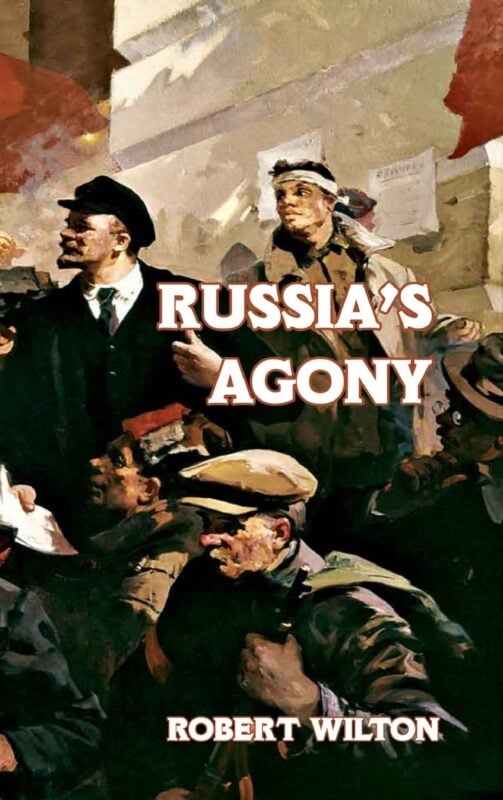
Russia's Agony by Robert Wilton examines the disintegration of the Russian Empire during World War I and the 1917 Revolution through the eyes of a seasoned foreign correspondent who bore witness to the unraveling of the old regime and the subsequent rise of Bolshevik power. Wilton weaves his personal experiences, historical analysis, and direct observation into a narrative that interrogates the foundational forces of Russian statehood, the social and political mechanisms that shaped its fate, and the global significance of its collapse.
The Roots of Russian Autocracy
Centuries of Mongol domination, internal fragmentation, and the relentless pressures of geography sculpted a form of government in Russia that concentrated authority in the figure of the autocrat. Wilton traces how early Slavic tribal communities transformed through economic necessity and foreign threat into Christian principalities, then into a centralized Tsardom. Rivers and trade routes linked far-flung settlements, enabling commerce and the rise of city-states, but recurring invasions from east and west demanded military unity and decisive leadership. The autocracy, inheriting its legitimacy from both Byzantine and Mongol traditions, built a state apparatus that bound population, territory, and ruler in a relationship characterized by loyalty and fear.
Bureaucracy and the Machinery of Rule
As the Russian Empire grew, a single ruler could no longer administer its vast, diverse domains directly. Authority filtered through a sprawling bureaucracy that, in practice, replaced autocracy’s personal rule with a system of power delegated to tens of thousands of clerks and officials. These agents, tied to their posts by privilege and duty, administered justice, levied taxes, conscripted soldiers, and controlled information. Wilton dissects how the bureaucracy, motivated to defend the status quo, feared innovation and reform, stifled dissent, and relied on repression to maintain order. The Okhrana, the secret police, emerged as the enforcer of ideological conformity, embedding surveillance, provocation, and intimidation into the daily lives of Russians.
Social Fabric and National Character
Within the bureaucratic framework, society stratified along lines of class, ethnicity, and faith. The nobility, often absentee landowners, exercised authority over the peasantry but remained disconnected from both state and nation. Middle-class professionals, merchants, and the emerging intelligentsia struggled to find a foothold in a political culture that valued obedience over initiative. The peasantry, recently emancipated from serfdom, clung to communal landholding and traditional forms of self-governance. Wilton observes how ignorance, poverty, and the state’s manipulation of alcohol sales left the masses vulnerable to demagoguery and radical ideas. He tracks the impact of literacy campaigns, educational reforms, and the gradual urbanization that brought new demands and aspirations.
The Crisis of Reform and Reaction
Repeated attempts to modernize Russian society produced cycles of hope and disappointment. The emancipation of the serfs, while heralded as a moment of liberation, left millions tethered to communal landholdings and subject to local authorities who replaced, rather than eliminated, the arbitrariness of the old order. Introduction of the Duma, a representative assembly, created expectations of shared governance, but autocratic resistance, combined with electoral manipulation and bureaucratic obstruction, rendered it largely impotent. Wilton identifies the deep frustration among reform-minded elites and the increasing alienation of workers and peasants. He highlights the cumulative effect of broken promises, state violence, and administrative incompetence, which steadily eroded the legitimacy of the monarchy.
World War I: The Catastrophic Catalyst
The outbreak of the First World War accelerated Russia’s internal decay. Military setbacks, logistical failures, and staggering casualties undermined faith in both government and army leadership. The Russian soldier, long romanticized for endurance and bravery, faced shortages of food, munitions, and medical care. Wilton provides firsthand accounts of the demoralization at the front and in the rear, linking military defeat to popular unrest in the cities. The home front, battered by inflation, unemployment, and food shortages, witnessed strikes, protests, and ultimately open revolt. He analyzes how the war’s demands exposed the state’s administrative incapacity and moral bankruptcy, generating a sense of impending crisis that swept through all strata of Russian society.
Revolution and the Fall of the Old Order
February 1917 unleashed a wave of mass mobilization that toppled the centuries-old autocracy. What drove the people of Petrograd to the streets? Wilton describes a volatile convergence of hunger, anger, and exhaustion that brought workers, soldiers, and intellectuals together in a collective repudiation of the regime. The Tsar’s abdication marked the collapse of a political order whose legitimacy had vanished long before. Wilton recounts the brief hopes invested in the Provisional Government, the competing agendas of moderate reformers and radical socialists, and the power vacuum that invited new forms of authority.
Bolshevism and the Descent into Anarchy
In the wake of the February Revolution, the Bolsheviks, guided by Lenin and Trotsky, positioned themselves as the champions of peace, land, and bread. Wilton interrogates the rapid transformation of revolutionary promise into organized coercion. The Soviets, initially imagined as vehicles for democratic participation, became instruments of single-party rule. Armed mutinies, peasant uprisings, and urban violence created a climate of perpetual crisis. Wilton details how ideological extremism supplanted pragmatism, with class war and repression destroying the vestiges of civil society. He warns that socialism, in its pursuit of absolute equality and state power, generated conditions for chaos, famine, and foreign intervention.
Land, Peasantry, and the Fate of Reform
The question of land ownership—who would control Russia’s vast agricultural wealth—emerged as the central conflict of the revolutionary era. Wilton explores the aspirations and disappointments of the peasantry, who sought security and autonomy but found themselves caught between the failing old order and the new Bolshevik state. Government attempts to impose collective farming and requisition grain fostered resentment and resistance. Many peasants joined the ranks of the anti-Bolshevik forces or resorted to sabotage and hoarding. The land question, unresolved by both Tsarist and socialist governments, fueled continuing unrest and shaped the trajectory of civil war.
Aristocracy, Middle Class, and Social Fragmentation
Wilton underscores the absence of a robust, politically engaged middle class as a critical factor in Russia’s collapse. The aristocracy, long divided by factionalism and personal interest, failed to offer coherent leadership. Professional and business classes, often marginalized by the bureaucracy and hampered by lack of legal rights, proved too weak to defend constitutionalism or market reforms. The resulting social vacuum empowered radical groups to capture the initiative and impose their vision by force.
National Identity and the Challenge of Diversity
The Russian Empire comprised a mosaic of nationalities, languages, and religions. Wilton examines the role of Ukrainians, Poles, Finns, Jews, Tatars, Armenians, and others in the revolutionary upheaval. Central policies alternately repressed and co-opted minorities, but the war and revolution opened new possibilities for autonomy and independence. Nationalist movements seized the opportunity to assert self-determination, creating new states and fueling border conflicts that complicated Russia’s internal struggles.
Economic Disintegration and Social Upheaval
The collapse of the autocracy and the onset of Bolshevik rule unleashed a spiral of economic decline. Factory production fell, transport networks disintegrated, and inflation rendered money worthless. Wilton observes how scarcity and breakdown of distribution networks caused urban hunger and rural deprivation. Attempts at state control—nationalization, requisitioning, and forced labor—produced resistance, black markets, and further chaos. The destruction of property rights and the flight of capital accelerated impoverishment and undermined the prospects for recovery.
International Consequences and the Allied Response
Russia’s agony reverberated far beyond its borders. Wilton argues that the revolution and civil war disrupted global markets, altered the balance of power, and forced the Allied nations to confront the possibility of a world transformed by radical ideologies. Intervention by British, American, French, and Japanese forces reflected both humanitarian concerns and strategic calculation. Wilton contends that understanding Russia’s tragedy requires attention to the interplay of domestic crisis and international dynamics.
Lessons for the West and the Future of Russia
What can readers in Britain, America, and beyond learn from the collapse of the Russian state? Wilton insists that the events he witnessed represent a warning and an invitation. He urges a deeper study of Russian society and history, resisting superficial judgments or complacent optimism. He presents Russia as a future economic powerhouse and essential market, arguing that its recovery and integration will depend on the ability to reconcile social justice, effective governance, and individual rights.
The Human Cost and the Hope of Renewal
Wilton closes by honoring those who sacrificed for country and freedom, especially the Cossacks and soldiers of the Allied cause. He stresses the immense human cost—millions dead, societies shattered, and hopes deferred. Yet he asserts that, beyond the agony, the Russian people possess a resilience and potential that demand recognition. What forms might renewal take? How can the lessons of autocracy, revolution, and extremism inform the choices of nations confronting similar challenges?
Enduring Relevance in the Global Context
Russia’s Agony stands as a testament to the stakes of political leadership, the perils of ideological excess, and the enduring interplay of national character and historical circumstance. Wilton’s account, rooted in eyewitness testimony and informed analysis, insists on the necessity of close study, empathy, and engagement with the real conditions shaping Russia and the world. The book’s narrative tension, grounded in the intersection of personal fate and structural transformation, compels readers to reflect on the past and its ongoing consequences for the present.