The Best Enemy Money Can Buy
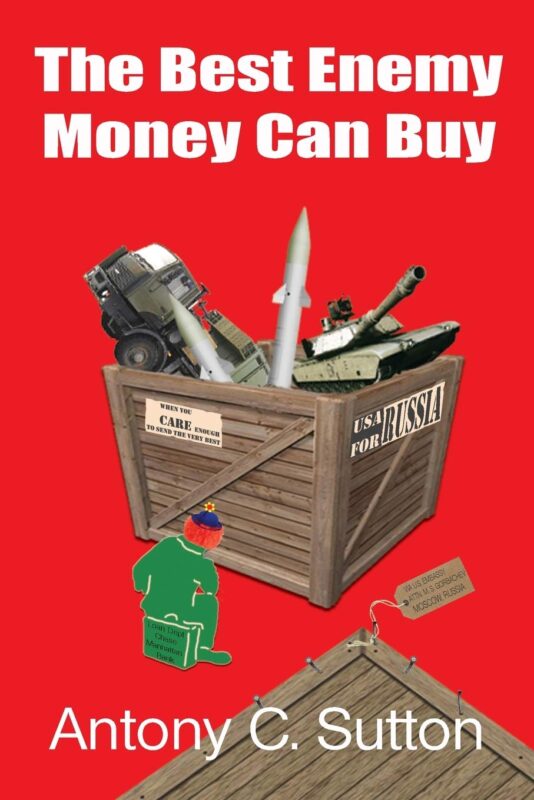
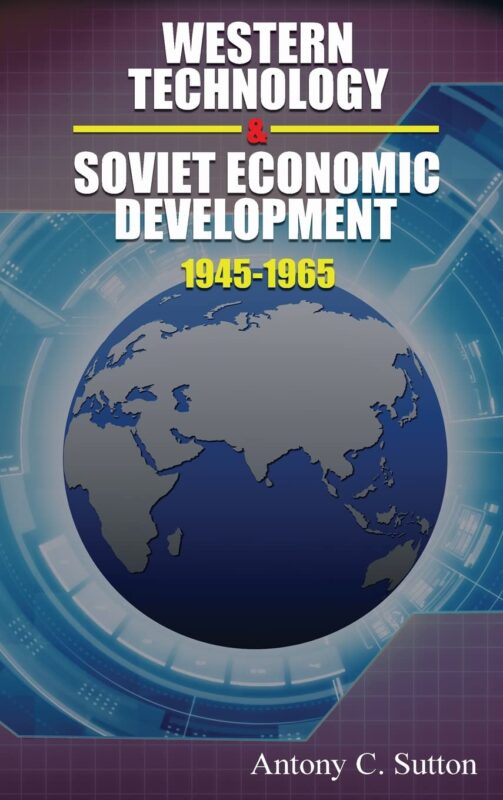
The Best Enemy Money Can Buy by Antony C. Sutton investigates the covert interplay between Western industrial power and Soviet military ascendancy. Sutton traces the flow of technology, engineering, and capital from American corporations and policymakers to the Soviet Union, demonstrating the deep interdependence that shaped global conflicts through the twentieth century. He presents exhaustive evidence that government officials and multinational business leaders enabled the Soviet war machine, ensuring the USSR possessed the capacity to project power, wage war, and sustain internal control through Western-backed infrastructure.
The Architecture of Soviet Power
Soviet military success arose not from indigenous technological innovation, but from systematic acquisition of advanced Western machinery, tools, and expertise. Sutton details how American companies such as Ford, General Electric, and numerous machine-tool manufacturers designed, built, and equipped vast Soviet industrial complexes. The Gorki and ZIL plants—engineered by Ford and Brandt—served as the backbone of Soviet automotive and military vehicle production. Their machines rolled off assembly lines supplied with American lathes, presses, furnaces, and automated lines. The USSR’s reliance on Western technology extended from automobile manufacturing to missile guidance systems, including precision ball-bearing grinders and automated assembly lines critical for MIRV (multiple independently targetable reentry vehicle) deployment.
Political Cover and Corporate Complicity
U.S. policymakers, pressured by corporate interests, provided legal, financial, and diplomatic frameworks for these transactions. Export-Import Bank loans, government-backed guarantees, and high-level lobbying opened channels for the export of machinery classified as “civilian” but easily convertible to military production. The Department of Commerce, State Department, and successive presidential administrations enabled and sustained this flow, often disregarding warnings from within the Department of Defense and intelligence agencies. Sutton documents the persistent suppression and classification of export data. Congressional inquiries and public scrutiny rarely penetrated the layers of administrative opacity that shielded key decisions from meaningful oversight.
The Power of Secrecy
Government agencies consistently buried information that revealed the scope and consequences of U.S.-Soviet industrial cooperation. State Department files contained reports detailing the military applications of exported technology, yet these files remained inaccessible to the public and even to most lawmakers. Executive branch officials crafted statements portraying Soviet industrial progress as internally generated, minimizing the Western role. When Congressional committees exposed the shipment of critical machinery—such as the Bryant Chucking Grinder Co. ball-bearing machines or the Transfermatic production lines—officials either denied military relevance or justified sales as commercial necessities.
Industrial Infrastructure as War Potential
Motor vehicle plants provide dual capacity: civilian utility and rapid conversion to military production. Sutton demonstrates that the U.S. government recognized this dynamic after World War II, prohibiting Germany from maintaining large-scale automotive manufacturing due to its war potential. Yet the same officials, when approached by Soviet interests, endorsed the export of entire factory complexes capable of turning out armored cars, trucks, and weapons carriers. The Ford-built Gorki plant and the Brandt-rebuilt ZIL complex served as blueprints for Soviet vehicle integration, allowing the USSR to produce standardized chassis, engines, and subassemblies easily adaptable to military specifications. The intertwining of civilian and military designs facilitated fast mobilization and reconfiguration for war.
American Technology in Global Conflict
The practical impact of Western technology emerged on battlefields across the world. Soviet vehicles and weapon systems, manufactured in U.S.-equipped plants, appeared in Korea, Vietnam, Afghanistan, and the Middle East. Trucks built at Gorki and ZIL transported troops and missiles, supplied the Ho Chi Minh trail, and carried rocket launchers deployed against American and allied forces. Equipment exports did not stop at trucks: machine tools, presses, automated lines, and specialized industrial robots gave the USSR capabilities that far exceeded its indigenous engineering base. Sutton details contracts for massive projects such as the Kama River truck plant—a facility surpassing the output of all U.S. heavy truck manufacturers combined—financed by American banks, equipped with American machinery, and justified through official statements as a means of “engagement.”
The Bureaucracy of Treason
Sutton identifies a class of “deaf mute blindmen”—multinational executives and government officials—whose pursuit of contracts and influence outweighed considerations of national security. These actors shaped policy, influenced presidential decisions, and rationalized the transfer of technology with assertions of peaceful trade and competitive necessity. When confronted with evidence of military end-use, they minimized, diverted, or outright denied the consequences. The institutional inertia of bureaucratic Washington insulated these arrangements from democratic scrutiny. Export license data remained classified; public debate rarely addressed the structural integration of Western and Soviet industries.
Suppression of Dissent
Critics who attempted to reveal the scope of technological transfer faced systematic marginalization. Historians, journalists, and even senior officials lost positions, reputations, and professional standing for challenging the official line. Sutton’s own career at the Hoover Institution collapsed after he published foundational work on Western technology and Soviet economic development. Reviewers admitted the factual basis of his research, yet refused to acknowledge the significance of his conclusions. Academic and journalistic gatekeepers preserved the status quo by isolating or ignoring dissent, ensuring the continuation of policies that sustained Soviet military strength.
Strategic Dependence and Policy Continuity
Sutton demonstrates the persistence of these patterns across decades and administrations. Both Republican and Democratic presidents, from Wilson to Reagan, presided over a system that exported the means of Soviet military growth. Export controls functioned as bureaucratic rituals, easily bypassed by legal exceptions, lax enforcement, and administrative discretion. Policy continuity extended through the highest levels of government and business, as former officials moved between regulatory agencies, multinational corporations, and financial institutions. Personal networks among business leaders, cabinet members, and financial elites cemented the priorities of technological transfer and international “engagement” over strategic restraint.
Weaponizing Technology as Political Leverage
Technology serves as a tool of statecraft, shaping not only industrial output but also global power alignments. Sutton argues that the United States possessed the capability to neutralize Soviet ambitions by controlling the export of key technologies and production systems. The failure to use this leverage resulted from the dominance of internationalist business interests and a compliant political class. Where policymakers could have reduced defense budgets, lessened tax burdens, and constrained Soviet expansion through targeted export controls, they instead enabled the transfer of critical industrial capacity. This pattern entrenched Soviet dependence on Western innovation, simultaneously financing and arming an ideological adversary.
Global Impact of Strategic Technology Transfer
American-supplied technology empowered the Soviet Union to project force well beyond its borders. Trucks, armored vehicles, and missiles—products of Western-assisted factories—appeared in conflicts that claimed thousands of lives. The infrastructure built with American engineering and funding underpinned the USSR’s campaigns in Afghanistan, Vietnam, and the Middle East. U.S. taxpayers, through both direct foreign aid and government-guaranteed loans, funded projects that supported Soviet interventions. The convergence of political expedience, corporate ambition, and administrative opacity generated global consequences, magnifying the destructive reach of the Soviet war machine.
Economic Motivations and Geopolitical Consequences
Western businessmen received lucrative contracts and steady profits from Soviet trade, denominated in hard currency and backed by taxpayer guarantees. Political leaders promoted these deals under the guise of economic opportunity, job creation, and diplomatic engagement. The logic of profit dominated strategic calculation, as firms competed for Soviet business, lobbied for export licenses, and expanded the scope of permissible transactions. Sutton reveals how this dynamic shaped both economic policy and geopolitical outcomes, creating a feedback loop in which technology transfer became self-justifying and self-perpetuating.
The Public’s Role and the Demand for Accountability
Sutton asserts that only an informed and mobilized electorate can disrupt this structural cycle. When the public demands transparency, scrutinizes export decisions, and holds officials and business leaders accountable, the calculus of technological transfer changes. Information suppression, bureaucratic inertia, and corporate influence thrive in environments of secrecy and disengagement. Congressional oversight, investigative journalism, and civic pressure serve as the primary checks on policies that subordinate national security to private gain. Sutton’s call to action invokes the necessity of public vigilance and structural reform, insisting that survival and strategic advantage depend on using technology as a conscious instrument of policy.
The Unfolding Legacy
The patterns Sutton documents persist across time, shaping both historical outcomes and contemporary debates. The interplay of technology, profit, and power defines the architecture of global conflict. Where nations use engineering, finance, and diplomacy as tools of influence, the alignment of interests between corporate actors and state policy determines both capability and intent. Sutton’s analysis remains a warning and a guide: the future of national security rests on the decisions of those who control the levers of technology, finance, and information. The lessons of The Best Enemy Money Can Buy underscore the imperative of structural transparency, public engagement, and strategic clarity in the conduct of international affairs.