Bitten: The Secret History of Lyme Disease and Biological Weapons
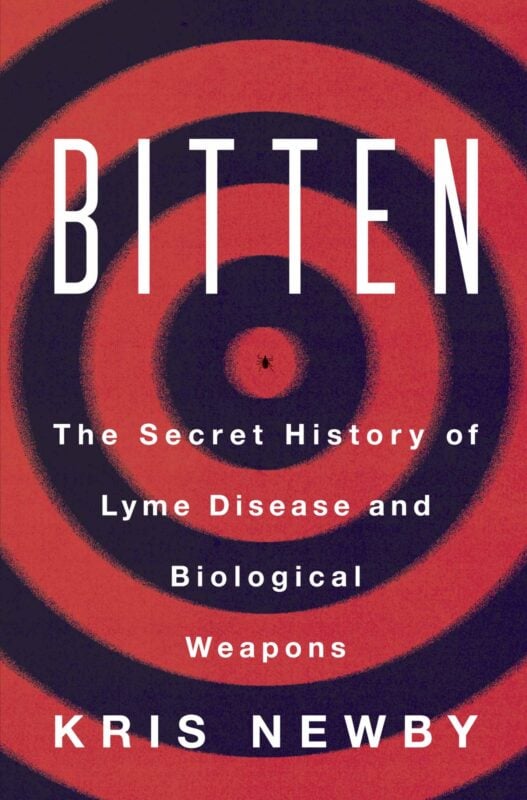
Bitten by Kris Newby reveals a chilling investigation into the origins of Lyme disease and its possible entanglement with Cold War-era biological weapons programs. The book centers on Willy Burgdorfer, the scientist who discovered the Lyme-causing bacterium, and uses his life and final confessions as the backbone for a deeper inquiry into the intersection of science, secrecy, and government experimentation.
A scientist’s confession ignites the search for truth
Willy Burgdorfer, a Swiss-American medical entomologist, achieved fame in 1981 for identifying the bacterium Borrelia burgdorferi. This discovery gave Lyme disease its name and its microbial cause. However, decades later, as Parkinson’s disease dimmed his health, Burgdorfer made cryptic statements suggesting a hidden origin for the epidemic. He implied that the outbreak around Lyme, Connecticut, may have stemmed from a classified biological weapons program.
These admissions weren't merely slips. They were deliberate and recorded. Author Kris Newby, herself a former Lyme sufferer and science writer, became the only journalist to earn his trust. Her prior experience producing the acclaimed documentary Under Our Skin laid the groundwork for unraveling Burgdorfer's double life as both public health hero and secret government researcher.
The hidden architecture of Cold War science
The United States military, during the Cold War, invested heavily in entomological warfare. Ticks, mosquitoes, and fleas became vectors not only for study but for deployment. The U.S. Army Chemical Corps, through facilities like Fort Detrick in Maryland and Rocky Mountain Laboratories in Montana, explored the weaponization of disease agents including tularemia, Q fever, and relapsing fever—many transmitted by arthropods.
Burgdorfer’s early work in Switzerland focused on relapsing fever spirochetes and their transmission by African ticks. His technical prowess in extracting and dissecting tick guts made him a prime recruit for American interests. A coin toss decided his future. Rather than taking a post in sunny Sardinia, he was sent to Hamilton, Montana, where he joined a program that quietly blurred the line between civilian parasitology and military bioengineering.
Operation Big Itch and the biology of warfare
From the 1950s onward, field tests such as Operation Big Itch validated the viability of insects as bioweapons delivery systems. Fleas infected with plague and ticks fed with rickettsial agents were packaged in munitions for aerial dispersal. Burgdorfer’s role involved selecting compatible microbe-host pairs, ensuring high transmission potential without killing the vector, and devising methods for rapid reproduction.
His notebooks document projects with code names and pathogen pairings. These included simultaneous infections—such as Colorado tick fever virus combined with Rocky Mountain spotted fever—in a single tick. Such co-infections mirrored the baffling array of symptoms seen in modern chronic Lyme patients. Some cases involved neurological decline, heart inflammation, and persistent immune dysregulation.
From Nashawena Island to a national epidemic
In 2002, Kris Newby and her husband were bitten by ticks while vacationing near Martha’s Vineyard. They both developed complex, debilitating illnesses. That event initiated her deep dive into the science, politics, and human toll of tick-borne diseases. Interviews with Burgdorfer revealed that ticks released decades earlier may have seeded areas like Long Island Sound with genetically altered microbes.
The overlap of geography, timing, and symptomatology raises sharp questions. Why did Lyme disease first appear near military research hubs? Why were early outbreaks in Connecticut and New York simultaneously accompanied by cases of babesiosis and Rocky Mountain spotted fever? Why do current diagnostic criteria fail to recognize polymicrobial infections, despite extensive evidence from Burgdorfer’s own experiments?
Medical orthodoxy entrenched in denial
Public health institutions insist that Lyme disease is easily diagnosed and cured with short-term antibiotics. Yet the Centers for Disease Control and Prevention (CDC) estimates that real incidence exceeds 400,000 new U.S. cases annually. A significant subset of patients suffer long-term disability. Many receive no acknowledgment of their ongoing symptoms. Terms like "post-treatment Lyme disease syndrome" obscure causality and deflect responsibility.
Newby presents evidence of systemic suppression. Funding for chronic Lyme research remains negligible. Physicians treating these patients risk censure. The Infectious Diseases Society of America (IDSA) and the CDC maintain a narrow definition of Lyme disease that excludes co-infections and non-standard presentations. Burgdorfer, in his final interviews, denounced this reductionist model and hinted at its origins in Cold War compartmentalization.
The politics of erasure and scientific gatekeeping
Classified documents and military archives referenced in the book reveal how bioweapons projects were masked under public health research. Rocky Mountain Laboratories collected and bred hundreds of tick species. Some were altered through radiation and microbial exposure. Accidental or deliberate releases occurred. Yet no agency today tracks the legacy microbes that may persist in these vector populations.
The Department of Defense and intelligence agencies contracted academic researchers through cutouts like the National Academy of Sciences. Published science became a facade for weapons development. Burgdorfer’s own spirochete discovery was retrofitted into a civilian medical narrative. Behind it, the real experiments remained buried in classified vaults, disassociated from their consequences.
The ecological consequences of weaponized microbes
Ticks function as microbial mixing chambers. When artificially infected with multiple agents, they can transmit a suite of illnesses in a single bite. These microbes can evolve, recombine, and persist in wildlife reservoirs. Birds spread ticks across regions. Once released, modified pathogens no longer respect lab boundaries.
Newby documents examples of such uncontrolled releases. From 1966 to 1969, military tests scattered infected ticks in several U.S. locations, including Maryland, Utah, and California. No follow-up studies monitored environmental impact. Decades later, these same regions exhibit disproportionate rates of tick-borne illness. Medical systems remain unequipped to diagnose or treat them.
A journalist’s pursuit of forensic science
The investigation presented in Bitten reflects years of archival digging, interviews with whistleblowers, and reviews of unpublished lab notebooks. Newby’s strength lies in connecting biographical detail with institutional analysis. She traces Burgdorfer’s ethical conflict as he aged—his growing disillusionment with what he had been part of, and his compulsion to share a forbidden truth.
Her narrative avoids speculation. Instead, it builds on physical evidence, historical documentation, and verifiable testimony. The reader follows a chronological trail from Burgdorfer’s early studies in Basel, through his postdoctoral recruitment in Montana, to his pivotal role in Cold War bioweapons R&D. His confession contextualizes a modern epidemic that medicine still fails to explain.
A medical mystery recast as historical reckoning
Lyme disease continues to spread across North America. Climate change, suburban sprawl, and deer overpopulation all contribute. But Bitten proposes another factor: human intervention. By reengineering microbes for warfare, by dispersing vectors without oversight, and by denying responsibility, government programs created a perfect storm for chronic illness.
This book forces a reckoning. What defines a disease—its symptoms, its bacteria, or its origin story? Who controls medical consensus? What happens when the cause of a pandemic hides in plain sight, cloaked in scientific acclaim and patriotic service? Burgdorfer’s life stands at the crossroads of these questions, and Kris Newby delivers the map.