Dirty War: Rhodesia And Chemical Biological Warfare 1975-1980
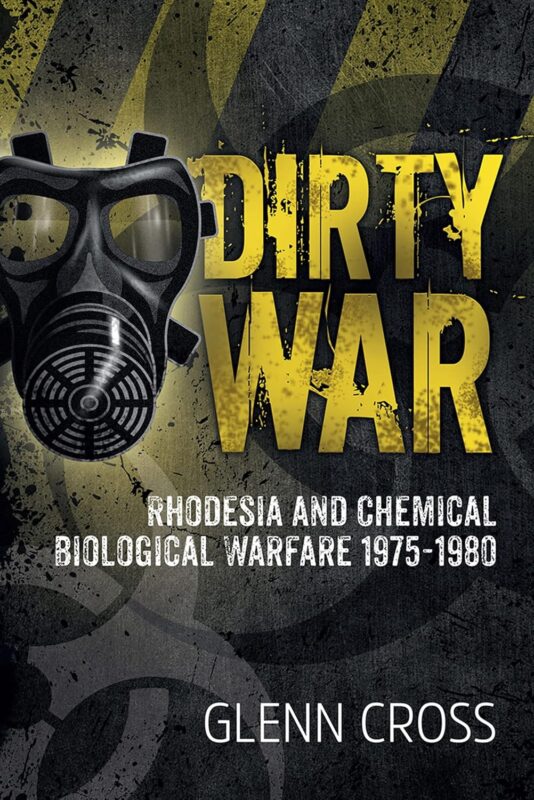
Dirty War: Rhodesia and Chemical Biological Warfare 1975–1980 by Glenn Cross examines how Rhodesia secretly developed and deployed chemical and biological weapons against insurgents during the final years of its colonial existence. Cross traces the operational logic, strategic intent, and tactical applications of Rhodesia’s CBW program, using rare documents, interviews, and firsthand accounts.
Origins of the Rhodesian CBW Initiative
The emergence of Rhodesia’s CBW program coincided with the unraveling of its security environment in the mid-1970s. After Mozambique gained independence in 1975 and offered sanctuary to guerrilla forces, Rhodesia faced a two-front war. The regime lacked the manpower to match insurgent growth. Intelligence assessments showed that conventional military operations could no longer decisively counter guerrilla mobility and rural support networks.
Senior officials within the Rhodesian Central Intelligence Organization (CIO) and Special Branch authorized an alternative approach. They directed a select team under Chief Superintendent Michael “Mac” McGuinness to explore non-conventional solutions. This authorization established a rudimentary CBW program designed to disrupt insurgent logistics and demoralize fighters using poisons and pathogens.
Structure and Secrecy of the Program
CBW operations unfolded within a confined institutional architecture. The Rhodesian program involved a core of scientists, police officers, and military collaborators, working from concealed installations near Bindura and Mount Darwin. Recruited students and technical staff received on-the-job training in toxicology and bacteriology. The team operated under the strict authority of the CIO Director-General and reported directly to Rhodesia’s Prime Minister.
Command and control remained tightly restricted. The Selous Scouts, Rhodesia’s elite counter-insurgency unit, provided cover and assisted in field deployment. Special Branch officers coordinated sabotage efforts and managed information flow. This compartmentalized structure helped the program remain hidden from foreign intelligence and most of the Rhodesian military hierarchy.
Operational Use of Toxins and Pathogens
Field deployment focused on contaminating guerrilla supplies and infrastructure. Operatives introduced poisons into clothing, beverages, food, and medicine intended for insurgents. Contaminated jeans soaked in organophosphates triggered neurological collapse. Canned goods laced with thallium produced gastrointestinal failure. Infiltrators inserted tainted materials into rebel camps in Mozambique and Zimbabwe.
Several vectors extended beyond direct poisoning. Cross documents Rhodesia’s weaponization of biological agents such as Vibrio cholerae and Bacillus anthracis. Evidence suggests they tested dissemination of anthrax spores and deployed cholera bacteria in water sources. The 1979 anthrax epidemic, which infected over 10,000 and killed at least 182 black Rhodesians, aligns with the program’s capabilities. Attribution remains contested, but circumstantial evidence suggests deliberate use.
Strategic Objectives and Psychological Warfare
The Rhodesian leadership sought strategic force multiplication through CBW. Sabotage created asymmetric lethality with minimal manpower. By targeting guerrilla lifelines, CBW disrupted logistics and eroded insurgent morale. The program did not aim for mass casualties; it focused on targeted disruptions, localized epidemics, and psychological dislocation.
Cross shows how chemical sabotage aimed to undermine trust between guerrillas and rural supporters. Villagers grew suspicious of contaminated supplies. Guerrilla cohesion frayed under the fear of betrayal and invisible attacks. These outcomes suited Rhodesia’s doctrine of indirect engagement, where the enemy became isolated through calculated, deniable violence.
The Role of Belief and Cultural Interpretation
Traditional belief systems shaped local interpretations of disease and poisoning. Among Shona communities, spiritual explanations—ancestral displeasure, witchcraft, curses—emerged as frameworks to understand mysterious deaths. These interpretations amplified the psychological effect of CBW use. Villagers internalized disruption without clear attribution to state actors, which enhanced Rhodesia’s operational cover.
By embedding chemical attacks within cultural myths, the regime displaced blame and masked its tactics. Rhodesian officials exploited this ambiguity to maintain plausible deniability and avoid international backlash.
Rhodesia’s Relationship with South Africa
South African involvement adds a regional dimension to the CBW narrative. Rhodesia’s apartheid neighbor shared intelligence, technical resources, and experimental data. South African scientists visited CBW facilities and later incorporated insights into their own clandestine project—“Project Coast.”
Cross shows that personnel from Rhodesia’s program found later roles in South Africa’s CBW infrastructure. The transfer of knowledge and operational lessons from Rhodesia to apartheid-era South Africa formed a continuity of doctrine centered on chemical control of insurgent populations.
Failure of Detection by International Intelligence
Western intelligence agencies failed to detect Rhodesia’s CBW operations during the conflict. The United States and Britain received only vague reports years after the program’s peak. Compartmentalization, lack of signals intelligence, and Rhodesia’s diplomatic isolation helped preserve secrecy. Most revelations surfaced through postwar accounts, whistleblowers, and accidental disclosures.
Cross’s analysis underscores the vulnerabilities of intelligence oversight when small, isolated regimes adopt deniable tactics. Rhodesia’s case highlights how CBW programs can thrive in limited-resource environments if external scrutiny remains fragmented.
Attribution and the Challenge of Historical Proof
Assigning responsibility for CBW use remains complex. The 1979 anthrax outbreak exemplifies the challenge. Official records attribute the epidemic to veterinary service collapse and poor livestock management. Some clinicians and researchers argue otherwise, pointing to the unprecedented spread, the demographic pattern of infection, and the wartime context.
Cross emphasizes the forensic limits of CBW attribution. Without direct documentation or verified orders, legal responsibility becomes speculative. Eyewitnesses, secondary reporting, and post-conflict narratives fill the gaps, but these sources struggle against official silence and memory manipulation.
Legacy and Relevance to Contemporary Conflict
Dirty War frames Rhodesia’s CBW history as an essential case study for understanding unconventional warfare under regime threat. The program’s scale remained modest, but its impact on counterinsurgency doctrine, regional proliferation, and norm erosion continues. Cross positions this example as a precedent for future conflicts where fragile states, lacking strategic options, may deploy CBW for regime survival.
The erosion of international taboos in conflicts like Syria echoes the Rhodesian logic. When rulers believe their survival requires absolute methods, legal and moral boundaries recede. Cross compels readers to consider what signals, conditions, and ideological factors activate this shift from restraint to escalation.
Methods, Sources, and Testimonial Reconstruction
Cross relies on a blend of declassified documents, interviews with surviving participants, and fragments from secondary literature. He interrogates contradictions, cross-references memories, and situates claims within operational timelines. Much of the material rests on firsthand interviews, especially with McGuinness and others in the Special Branch network.
These testimonies anchor the book’s credibility. Despite the passage of time and the veil of secrecy, Cross assembles a coherent narrative through persistent inquiry. He treats silence, denial, and omission as data—clues pointing toward patterns of concealment.
Limits of Institutional Accountability
Rhodesian military elites disavowed knowledge of CBW operations. Cross documents consistent denial from senior officers across branches. The disconnect between Special Branch operations and the broader military apparatus reveals the intentional firewalling of the CBW program. This structural opacity obstructs postwar accountability.
Even within Rhodesian veteran circles, discussions about CBW remain taboo. The desire to preserve a heroic self-image resists confrontation with the realities of poison, disease, and experimentation. Cross confronts these silences directly and positions the record as a challenge to institutional mythmaking.
Implications for Intelligence and Policy Frameworks
Rhodesia’s experience forces a reconsideration of how CBW threats evolve. Intelligence frameworks must adapt to detect small-scale, deniable programs that operate outside conventional state structures. Cross argues for a focus on intent, resource flows, and program enablers rather than signature weapons systems.
Policy responses should account for the ideological and survival-driven motives behind CBW use. Compliance with treaties depends less on enforcement mechanisms than on regime stability, perception of threat, and access to alternative options. Cross’s conclusions warn against complacency in the face of fragile norms.
Conclusion
Dirty War transforms a neglected historical episode into a vital case study in chemical and biological warfare. Glenn Cross delivers an investigation that bridges forensic detail, strategic analysis, and ethical confrontation. The Rhodesian CBW program may have vanished in the smoke of collapsing regimes, but its lessons remain embedded in the terrain of contemporary insurgencies and covert warfare. What actions do regimes take when conventional tactics collapse, resources vanish, and political legitimacy drains away? Cross answers with clarity: some choose poison.