Murder by Injection: The Story of the Medical Conspiracy Against America
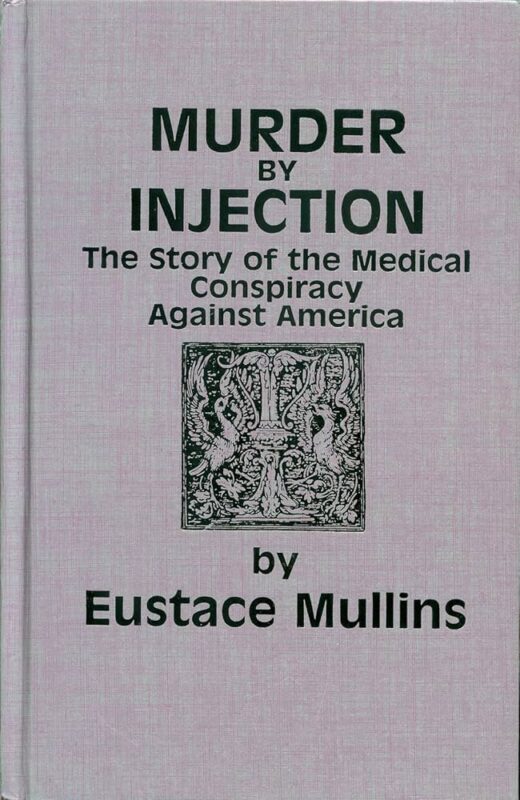
Murder by Injection by Eustace Mullins investigates the formation of a medical monopoly in America and traces its consequences across health, economics, and politics. The book names institutions, exposes historical turning points, and identifies the financial structures that shaped modern medicine. Mullins argues that the system of healthcare in the United States grew from deliberate strategies of control designed by powerful interests that valued profit and influence over patient well-being.
The Rise of the Medical Monopoly
The American Medical Association began as a professional body but transformed into a gatekeeping institution that excluded competitors and defined legitimacy in medicine. Mullins shows how the AMA asserted authority through licensing, accreditation, and alliances with government regulators. The strategy was simple: reduce the number of practitioners, stigmatize alternative healing methods, and centralize power in a small circle of allopathic doctors. Control did not emerge from scientific superiority. It emerged from organizational dominance backed by financial sponsors.
The Flexner Report of 1910, financed by Carnegie and coordinated with Rockefeller interests, closed hundreds of medical schools across the United States. Requirements for expensive laboratories, extended training programs, and academic credentials forced small, independent schools out of existence. Within a decade, 650 schools shrank to 50. The number of graduates dropped from 7,500 annually to 2,500. By narrowing access, the new structure guaranteed scarcity and prestige. It guaranteed higher earnings for approved physicians and eliminated competition from homeopaths, naturopaths, and midwives.
Rockefeller Influence and Institutional Power
Mullins documents how John D. Rockefeller identified medicine as a field capable of generating profits larger than oil. Philanthropic foundations served as vehicles for control. The Rockefeller Institute of Medical Research and the General Education Board shaped education and research agendas. Philanthropy concealed financial engineering. Every grant and board membership reinforced a monopoly strategy.
Daniel Coit Gilman, an academic administrator tied to secret societies and foundation networks, established Johns Hopkins University and embedded German-trained allopathic models at the center of American medicine. Abraham and Simon Flexner, both tied to Rockefeller institutions, delivered the report that redefined medical education. These connections reveal a coordinated network, not a loose collection of reformers.
The Campaign Against Alternatives
Homeopathy, herbalism, chiropractic, and other practices faced relentless campaigns of discreditation. The AMA branded them as quackery, not through rigorous testing but through systematic exclusion. Mullins recounts how statistics demonstrating lower mortality rates in homeopathic hospitals during epidemics were suppressed. In the cholera epidemic of 1854, London Board of Health concealed data showing superior survival rates in homeopathic treatment centers.
The Committee on Quackery, launched in the 1960s, extended this campaign into the modern era. Federal agencies, including the Post Office, the Food and Drug Administration, and the Federal Trade Commission, coordinated raids on small practitioners. Elderly women selling herbal teas or vitamins faced prosecutions, confiscations, and financial ruin. By contrast, pharmaceutical companies continued to market drugs later proven harmful, often shielded by regulatory approval.
Profits of Cancer
Mullins devotes extensive attention to the cancer industry. He argues that the American Cancer Society and allied organizations maintained allegiance to chemotherapy, radiation, and surgery because these methods generated immense revenues. The industry discredited laetrile, a compound derived from apricot kernels, and prosecuted distributors who claimed therapeutic effects. He presents this as evidence of suppression of low-cost alternatives to protect a multibillion-dollar system.
Hospitals, research grants, and fundraising campaigns reinforced public perception that progress required large institutions and expensive treatments. Mullins emphasizes that corporate and charitable foundations merged financial interests, making cancer less a disease to be cured than an industry to be managed.
Vaccination and Public Health Policy
The book scrutinizes the record of vaccination campaigns. Mullins points out that declines in scarlet fever, diphtheria, whooping cough, and measles mortality rates occurred decades before antibiotics or immunizations were widely adopted. From 1860 to 1896, child mortality from these diseases fell by 90 percent, largely due to sanitation and improved living conditions. Vaccines were later credited for progress that had already occurred.
By presenting vaccination as the central defense against disease, the medical monopoly reinforced dependency on pharmaceutical interventions. The state mandated compliance, extending monopoly power from clinical practice into public policy. Mullins describes this as a deliberate alignment of federal authority with private profit.
Fluoridation as Industrial Strategy
Mullins situates fluoridation within a broader industrial strategy. He claims that fluoridation programs allowed aluminum and chemical companies to dispose of toxic byproducts under the guise of public health. Fluoride, introduced into municipal water supplies, became framed as a preventative measure against dental decay. The scientific evidence, according to Mullins, did not support the claims, yet corporate and medical alliances ensured adoption.
The pattern repeats: industrial waste management transformed into a health campaign, defended by official associations and enforced through government mandates. Fluoridation became another example of how industrial interests embedded themselves into the fabric of daily life through health policy.
The Drug Trust
Central to Mullins’ thesis is the “Drug Trust,” a network of pharmaceutical companies, banks, and foundations that controlled research, approval, and distribution of medications. The AMA’s Seal of Acceptance became a powerful tool. Companies seeking approval faced unspoken financial obligations. Stories of shakedowns, bribes, and suppression of competitors populate the book.
Abbott Laboratories, initially denied approval, ultimately forced George Simmons of the AMA to relent by exposing his fraudulent credentials and scandals. From that moment, Abbott products received swift endorsements. This anecdote reveals how control of approval processes translated into commercial dominance.
Drugs like sulfathiazole and dangerous sulfanilamide mixtures received AMA endorsement despite lethal consequences. Meanwhile, vitamins and natural therapies faced rejection. Mullins argues that the seal functioned as an instrument of extortion and selective promotion, not scientific evaluation.
The Role of Media and Public Relations
Mullins traces the role of journalism in shaping medicine. George Simmons began as a journalist before seizing power in the AMA. Morris Fishbein, who succeeded him, never practiced medicine yet became the most influential spokesman for American healthcare. He authored syndicated columns, advised magazines, and wrote popular health manuals. His authority rested not on practice but on control of media narratives.
Fishbein transformed the AMA into a machine for publicity and revenue. He leveraged advertising from pharmaceutical companies while policing which products received endorsement. His tenure demonstrated that the medical monopoly required constant reinforcement through media persuasion.
AIDS and the Question of Engineered Epidemics
Mullins raises questions about the origins of AIDS and other modern epidemics. He situates these diseases within a context of medical research funded by government and private foundations. The speculation concerns the possibility of laboratory creation or manipulation of viruses as part of population management strategies. Whether readers accept this claim or not, the point advances Mullins’ larger argument: diseases become opportunities for profit and control when aligned with monopoly structures.
Contamination of Food and Fertilizers
The book extends beyond pharmaceuticals into agriculture. Mullins identifies fertilizers and food processing practices as mechanisms of health deterioration. Artificial additives, preservatives, and chemical residues enter the food supply and create long-term health problems. This degradation generates demand for medical intervention, reinforcing the cycle of dependency on the medical system.
Structural Outcomes
By the 1980s, healthcare costs in the United States reached $1,800 per person annually, compared to $800 in England and $600 in Japan. Outcomes, however, ranked lower. Mullins interprets the discrepancy as evidence of systematic looting by the medical monopoly. The difference between American costs and international standards represented hundreds of billions of dollars siphoned annually.
Infant mortality rates, chronic disease prevalence, and life expectancy metrics placed the United States behind nations with lower expenditures. These outcomes, Mullins insists, confirm that the system operates to enrich its controllers rather than to heal the population.
The Rockefeller Syndicate
The final sections emphasize the central role of the Rockefeller family in shaping modern medicine. Their foundations directed education, research, and public policy. Their banks financed the corporate infrastructure of pharmaceutical companies. Their philanthropic image concealed a structure of control that linked finance, medicine, and government.
Mullins presents the Rockefeller syndicate as the hub of a wheel whose spokes included the AMA, the pharmaceutical corporations, the foundations, and the universities. Together they forged a medical-industrial complex whose reach extended from the classroom to the clinic to the family kitchen faucet.
Conclusion
Murder by Injection constructs a history of medicine as a history of power. Mullins shows how the American Medical Association, pharmaceutical companies, and philanthropic foundations aligned to create a monopoly that redefined healthcare. He follows the sequence from the suppression of homeopathy, through the Flexner Report, to the dominance of pharmaceutical drugs, to the policing of alternatives as quackery. The narrative depicts a convergence of finance, industry, and state power.
What kind of health system emerges when approval, licensing, and research funding depend on corporate and foundation interests? Mullins answers through historical detail: a system of high costs, restricted access, and questionable outcomes. The book challenges readers to see medicine as more than a humanitarian profession. It presents medicine as a domain shaped by economic strategy, political ambition, and calculated control.