A Conspiracy of Cells: One Woman’s Immortal Legacy – And the Medical Scandal It Caused

A Conspiracy of Cells by Michael Gold exposes the origins and consequences of one of the most far-reaching medical scandals in modern science.
The Birth of an Immortal Cell Line
In 1951, a surgeon at Johns Hopkins Hospital removed a cervical tumor from a 30-year-old Black woman named Henrietta Lacks. He passed samples to researcher George Gey, who succeeded in culturing the first human cell line capable of indefinite replication. These cells, named HeLa, grew rapidly in Gey’s lab, doubling every 24 hours and thriving in conditions that killed other human samples. They enabled a vast expansion in biomedical research, from polio vaccine development to cancer and virology studies.
The Culture Explosion
HeLa cells circulated freely among laboratories. Researchers marveled at their robustness, shipping them globally in flasks, envelopes, and eventually across continents. Scientists used HeLa to study viral infections, cell division, radiation effects, and drug responses. The momentum behind tissue culture escalated, propelling HeLa into thousands of labs. Its apparent immortality and adaptability shaped foundational knowledge in biology and medicine.
Scientific Collapse through Contamination
By the late 1950s, researchers noticed anomalies. Cultures of liver, lung, and bone marrow cells began displaying identical properties. Enzymatic tests revealed that many were genetically indistinguishable. In 1966, geneticist Stanley Gartler demonstrated that at least 18 supposedly unique human cell lines were in fact HeLa. He showed that each culture expressed G6PD type A and other enzyme patterns associated with African American heritage, inconsistent with the donors' reported backgrounds. Gartler concluded that HeLa had overtaken other cultures through contamination.
Denial and Institutional Paralysis
Tissue culturists resisted Gartler’s findings. Researchers dismissed evidence that their meticulously derived samples had transformed into HeLa. Labs rejected the idea that one cell line could so thoroughly infiltrate their systems. Institutions, including the National Cancer Institute, hesitated to acknowledge the breadth of contamination. Protocols for cell identification remained inconsistent, and many scientists continued using compromised lines.
The Russian Incident
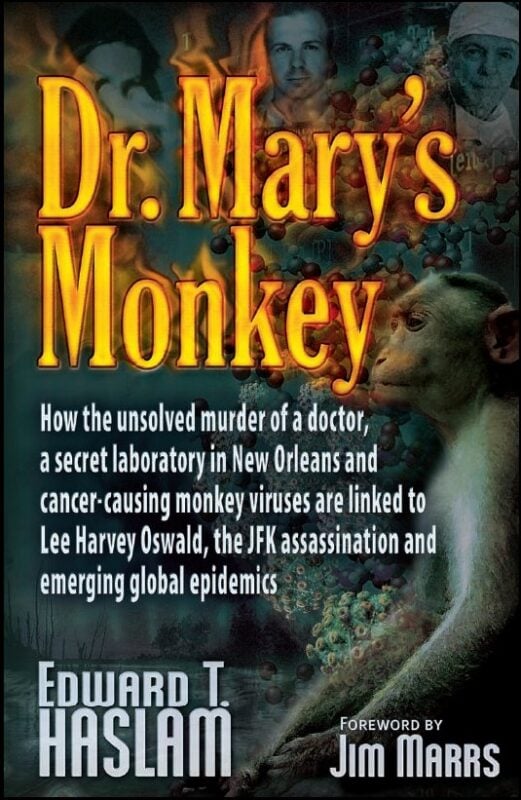
In 1972, during a scientific exchange with the Soviet Union, American researchers received six human tumor cultures purportedly infected with cancer-causing viruses. The National Cancer Institute distributed these samples to a handful of trusted labs, including that of Walter Nelson-Rees. Upon analysis, Nelson-Rees discovered all six lines matched the genetic profile of HeLa. Despite originating from six different Soviet patients, each carried the same enzyme markers, lacked Y chromosomes, and harbored the same simian virus.
Institutional Risk Management
Officials at the National Cancer Institute sought to suppress the discovery. The cultures had entered the U.S. without proper agricultural clearance and violated federal quarantine procedures. Acknowledging the HeLa contamination risked diplomatic embarrassment and undermined the credibility of American researchers involved in the exchange. Rather than investigate the breadth of the issue, bureaucrats cautioned Nelson-Rees against speaking publicly.
The Ethics of Identification
Nelson-Rees, driven by precision and scientific integrity, pressed forward. Using a newly developed chromosome banding technique, he compared the Soviet cultures to known HeLa samples. The banding patterns—microscopic fingerprints unique to each line—matched perfectly. With that evidence, Nelson-Rees confirmed that all six samples were HeLa. The implications stretched beyond diplomacy. This was not a singular incident. The contamination of Soviet samples revealed how easily HeLa infiltrated labs worldwide.
Contamination Mechanisms
HeLa’s pervasiveness stemmed from its unique combination of aggressive proliferation and environmental resilience. Airborne particles, unclean pipettes, and shared media allowed HeLa to colonize adjacent cultures. Coriell’s 1961 study had already shown that HeLa cells could travel on microscopic droplets and settle in petri dishes across the lab. Once established, they rapidly outgrew native cells, overtaking cultures through sheer biological dominance.
The Illusion of Spontaneous Transformation
Researchers observed normal human cells becoming malignant in culture and celebrated discoveries of “spontaneous transformation.” This became a widely accepted model for studying cancer. Further analysis revealed that most of these transformations were false. HeLa contamination, not internal mutation, explained the malignant behavior. The cell line had silently rewritten the trajectory of cancer research for years, rendering numerous conclusions void.
Legacy of Misinformation
The extent of the contamination invalidated decades of experiments. Studies based on liver, nerve, and kidney cells derived from mislabeled cultures yielded conclusions founded on HeLa behavior, not the biology of the target tissue. When scientists unknowingly published findings based on HeLa, the line’s characteristics shaped false understandings about cancer progression, chromosomal abnormalities, and drug responses.
Institutional Atonement and Revision
In 1968, the American Type Culture Collection issued corrections, identifying which cultures were actually HeLa. They recommended new standards for tracking, labeling, and verifying cell identities. Though Nelson-Rees’s work prompted internal audits and reforms, resistance to full transparency persisted. Some labs quietly replaced compromised cultures without retracting research. Others implemented verification protocols only under pressure from funding agencies.
HeLa and the Human Subject
Beneath the biological phenomenon stood a person: Henrietta Lacks. Her name, identity, and family were unknown to the scientific community for decades. Johns Hopkins had taken her cells without consent. She received no compensation. Her family remained unaware of her enduring presence in science until journalists began probing the HeLa story. The absence of informed consent, coupled with global exploitation of her biology, catalyzed a reckoning in medical ethics.
Systemic Silence
For years, the institutions that profited from HeLa research declined to contact the Lacks family or recognize Henrietta’s role. The lack of attribution reflected a systemic failure to see research subjects as people. Lacks became emblematic of broader issues in biomedical ethics, including the exploitation of vulnerable populations and the unequal distribution of scientific benefit.
The Legacy of Disclosure
Eventually, the magnitude of HeLa’s scientific contributions forced recognition. HeLa cells underpinned the development of vaccines, cancer therapies, cloning techniques, and gene mapping. Researchers began citing Henrietta by name. Her descendants, though long denied agency, gained visibility. The story triggered global conversations about consent, compensation, and the human costs behind scientific progress.
Permanent Reform
The HeLa contamination crisis triggered structural reform in cell culture practices. Labs now authenticate cell lines using short tandem repeat profiling and maintain rigorous contamination controls. Journals require verification of cell identity before publication. While scientific systems adapted, the HeLa scandal persists as a case study in how unexamined assumptions and institutional silence can distort knowledge.
The Human in the Culture
HeLa cells created modern cell biology. They enabled decades of discovery but carried with them an unresolved tension: the erasure of the person who made it possible. Henrietta Lacks lives through her cells, her story engraved into the foundation of biomedical research. Her case demands continued scrutiny of the balance between scientific exploration and ethical responsibility. Who benefits from research? Who is acknowledged? Who bears the cost? The answers begin with recognition. The story ends where it began—in the culture, and in the cell.