The Truth about Wuhan: How I Uncovered the Biggest Lie in History
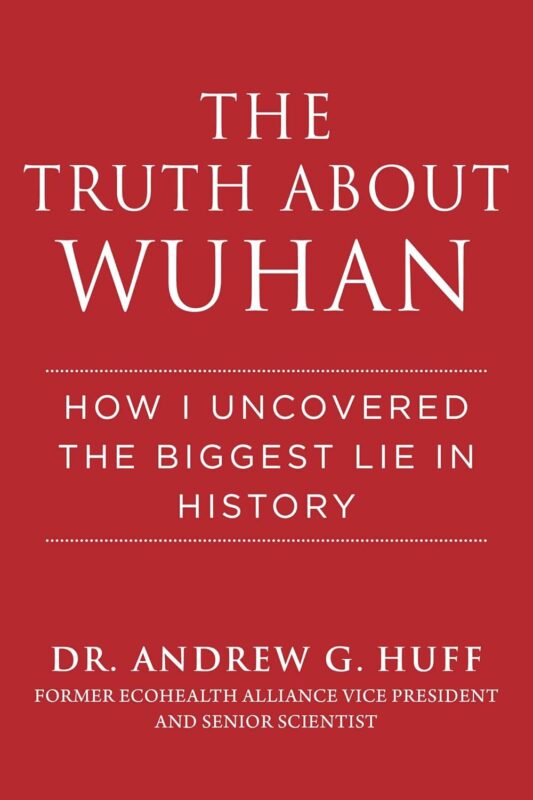
The Truth About Wuhan by Andrew G. Huff asserts a firsthand insider’s account of the institutional, scientific, and governmental breakdowns surrounding the origin and spread of COVID-19. As a former vice president at EcoHealth Alliance and a scientist with a background in biodefense, Huff presents a detailed account of systemic failures, funding corruption, and covert operations that intersected to obscure the pandemic’s genesis.
A Fractured Scientific Establishment
Huff begins with a direct critique of the American scientific infrastructure, indicting its regulatory bodies and research networks for abandoning rigor in favor of funding incentives and political convenience. He identifies a culture where the definition of terms such as "vaccine" is manipulated to fit policy rather than reflect scientific reality. Within this context, he describes the mRNA COVID-19 vaccines not as preventive vaccines but as gene therapies. He explains how institutional actors, including scientists with governmental affiliations, published peer-reviewed articles to reshape public understanding and suppress dissenting expertise.
EcoHealth Alliance and Intelligence Involvement
Huff’s role at EcoHealth Alliance, a non-profit that funneled U.S. government grants to viral research labs, provides the platform for his deeper allegations. He claims that the organization engaged in gain-of-function research at the Wuhan Institute of Virology. More critically, he alleges that EcoHealth's leadership, including Dr. Peter Daszak, maintained relationships with the Central Intelligence Agency. Huff presents these connections as integral to a pattern of obfuscation, asserting that EcoHealth was both a scientific collaborator and an operational asset within a global intelligence framework.
Signals of the Outbreak: Ignored and Suppressed
In December 2019, Huff identified early signals of an outbreak in Wuhan by analyzing particulate matter data around crematoriums. He interpreted the spike in pollution as a signal of mass body disposal, a conclusion corroborated later by global mortality data. Despite this, he observed no meaningful early response from the U.S. government. Huff uses this lapse to frame a larger argument about the failure of global disease surveillance and the politicization of pandemic warnings. He claims this absence of action was not rooted in ignorance but in a deliberate decision to suppress warnings for strategic or financial reasons.
The Role of mRNA Technology and Corporate Interests
The book scrutinizes the deployment of mRNA vaccines under emergency authorization. Huff argues that the platforms were introduced without adequate testing for transmission efficacy, and he uses statements from pharmaceutical executives to support his view that the pandemic offered a unique opportunity to normalize gene therapy technologies. He frames this rollout as an experiment conducted under duress, in which populations were misled about the nature and capacity of the medical products administered. Huff documents how platforms like LinkedIn and Facebook silenced his posts, despite their scientific grounding, reinforcing his claims of coordinated censorship.
The Mechanics of Scientific Corruption
Scientific authority, Huff argues, is constructed through publication and peer consensus rather than empirical validation. He outlines the process by which institutions align peer reviewers, journal editors, and public communications to shape a narrative. This orchestration, he claims, allows politically connected scientists to redefine terminology, shift culpability, and secure continued funding. He situates Anthony Fauci, Ralph Baric, and Peter Daszak at the center of this mechanism, asserting that their leadership roles allowed them to suppress conflicting evidence and control discourse about the pandemic's origin.
Personal Cost of Speaking Out
Huff recounts the consequences of his whistleblowing—surveillance, hacking, and attempts to suppress the publication of his work. He includes accounts of drones monitoring his home, break-ins, and attempts to access his communications. These events form a backdrop to his deeper assertion that systems of public accountability have eroded. He frames his own narrative as emblematic of the broader social consequences for those who challenge orthodoxy in a captured regulatory environment.
Military Background and Intelligence Training
Before entering public health, Huff served in the Minnesota Army National Guard. He recounts deployments, counter-narcotics operations, and intelligence missions in Central America. These experiences, he argues, trained him to recognize patterns of geopolitical manipulation, psychological operations, and covert logistics. He uses this background to frame his interpretation of EcoHealth’s dual role in scientific research and intelligence activity. Through specific examples, such as interdiction missions and CIA activities in Honduras, he presents a landscape in which U.S. foreign policy objectives often supersede public health mandates.
COVID’s True Origins and Timeline
The book advances a thesis that SARS-CoV-2 was likely engineered and accidentally released. Huff situates this release at the Wuhan Institute of Virology and argues that U.S. funding facilitated the research that created the virus. He details the structure of NIH grants, the intermediary role of EcoHealth Alliance, and the lack of oversight in international lab partnerships. He challenges timelines proposed by official bodies and presents evidence that the virus was circulating weeks before it was formally acknowledged.
Systemic Breakdown During the Pandemic
Beyond origins, Huff critiques the U.S. government’s handling of the pandemic. He argues that lockdown policies, vaccine mandates, and media coordination revealed an authoritarian shift masked as public health. He describes how policy decisions ignored evolving evidence about viral transmission and vaccine limitations. He attributes this persistence to a refusal among leadership to admit error, combined with the financial entanglements of the pharmaceutical industry in regulatory processes.
The Future of Public Health and Policy
In the final chapters, Huff turns to prescriptions. He advocates for the reformation of grant processes, greater transparency in research partnerships, and the decoupling of intelligence agencies from scientific institutions. He warns of future pandemics and biosecurity failures unless governance structures are re-engineered for accountability. He closes with a call for public engagement in science policy, arguing that concentrated authority without external oversight produces systemic risk.
What kind of system sustains itself by punishing its whistleblowers?
This question drives the emotional undercurrent of the book. Huff does not present himself as a perfect messenger but insists that his testimony is supported by evidence, technical insight, and experience. The structure of his narrative reinforces his thesis: that truth in scientific policy must be wrested from institutional interests through exposure and direct confrontation. His account stands as both a case study and a warning—an insider's map of how global health was managed not by science, but by networks of power.