COVID-19: The Great Reset
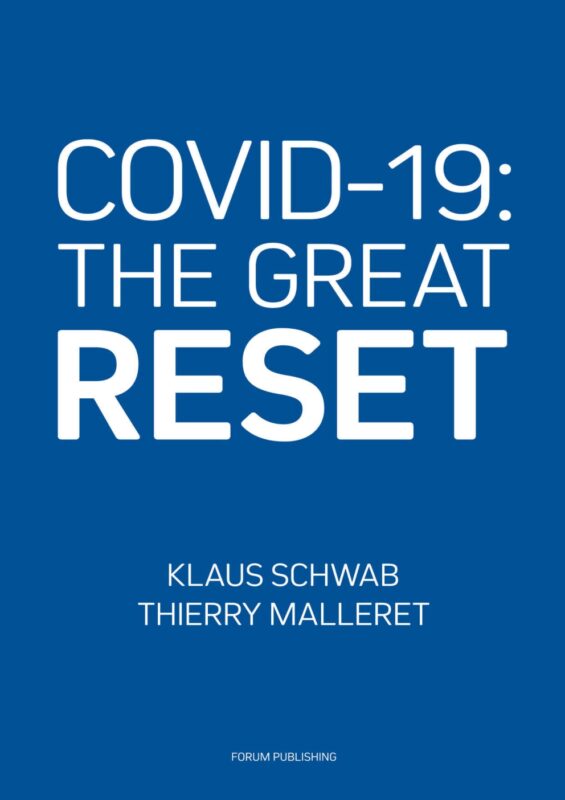
COVID-19: The Great Reset by Klaus Schwab and Thierry Malleret positions the global coronavirus pandemic as an epochal rupture that accelerates deep structural shifts across economies, societies, and systems of governance. Schwab, founder of the World Economic Forum, and Malleret, managing partner of the Monthly Barometer, draw upon history, systemic analysis, and data to frame the pandemic not as a standalone crisis, but as the ignition point of a sweeping “reset.” Their analysis offers a panoramic, structured examination of the transformations underway, urging readers to confront the convergence of risk, opportunity, and responsibility in defining what comes next.
Understanding the Architecture of the Crisis
COVID-19 upended routine, disrupted commerce, fractured social interactions, and catalyzed technological adoption on a global scale. The authors contend that the virus has torn through the existing script of economic growth, governance, and individual life. It challenges states, markets, and communities to rethink their priorities, infrastructures, and value systems. Schwab and Malleret assert that human history, marked by pandemics, revolutions, and technological shifts, now enters a period in which global interdependence, digital velocity, and systemic complexity become inescapable realities. They describe the 21st century as an era defined by these three forces, shaping responses to crises and opportunities for transformation.
The Mechanics of Interdependence
Globalization and technology forge unprecedented links between societies, markets, and institutions. Interdependence ensures that risk in one sector, such as infectious disease, reverberates across economics, geopolitics, technology, and the environment. The authors invoke the metaphor of humanity in “cabins on the same boat,” arguing that local responses prove insufficient when shared exposure and systemic connectivity define outcomes. Interdependence invalidates silo thinking. Solutions demand an integrated perspective, as cascading effects of a shock manifest rapidly and unpredictably across sectors.
Velocity: The Pace of Change
The pandemic revealed the real-time speed of modern systemic shifts. Information, commerce, and pathogens move through hyperconnected networks at rates that compress policy response windows and demand new forms of resilience. Schwab and Malleret highlight the proliferation of smartphones, the Internet of Things, and just-in-time supply chains as vectors of velocity. Decision-makers, confronted by exponential processes, often underestimate the acceleration of risk and the urgency of response. The COVID-19 case curve—where global infections doubled in days, not months—exemplifies how velocity determines the scope and scale of crisis impact.
Complexity and the Limits of Prediction
Schwab and Malleret frame the modern world as a complex adaptive system: dynamic, interconnected, and characterized by non-linear outcomes. Complexity increases the probability of “black swan” events—unforeseeable disruptions that propagate through economic, social, and political networks. The authors define complexity by the volume of information, the density of interactions, and the effect of non-linearity or tipping points. In this environment, small changes trigger outsized consequences, and expertise within narrow fields struggles to capture systemic risk. The pandemic, they argue, exemplifies a “white swan”—a highly probable event foreseen by many, yet poorly managed due to complexity blindness.
Economic Upheaval and the Policy Response
COVID-19 initiated the steepest, fastest contraction of the global economy since World War II. Schwab and Malleret trace the shock to both supply and demand, with service industries and informal labor bearing disproportionate losses. In weeks, unemployment soared and GDP plunged by double digits across the G7. Economic catastrophe ensued as consumer sentiment evaporated and investment collapsed. The authors analyze policy responses: income support, employment retention schemes, and business relief. These interventions reflect underlying structural differences—flexible labor markets in the US, stronger employment protections in Europe—shaping the trajectory of recovery and long-term inequality.
Growth, Employment, and Structural Transformation
Economic growth, employment, and investment patterns face lasting transformation. Services, accounting for the largest share of GDP in advanced economies, face enduring disruption. Lost revenues in sectors such as travel, hospitality, and entertainment cannot be recouped. Schwab and Malleret identify the “80% economy”—a scenario in which reduced capacity, heightened transaction costs, and consumer risk aversion lower output and raise unemployment for the foreseeable future. The prospects for recovery depend upon vaccine development, widespread immunization, and the return of confidence. Policy responses, from fiscal stimulus to monetary innovation, shape the landscape but cannot compensate for the loss of demand without solving the public health crisis.
The False Tradeoff: Health and the Economy
The authors reject the framing of “lives versus livelihoods” as a viable policy debate. Saving lives and protecting public health forms the prerequisite for sustainable economic recovery. Consumer and investor confidence only return when the risk of contagion recedes and a sense of safety emerges. Premature reopening, without controlling transmission, leads to recurrent waves of infection and prolonged economic stagnation. Schwab and Malleret present empirical evidence and scenario modeling to support this assertion, grounding the argument in data and observed outcomes.
Inequality, Social Contract, and Collective Action
COVID-19 exposes and intensifies pre-existing social and economic inequalities. Low-income workers, youth, and those in precarious employment bear the brunt of job losses, financial insecurity, and health risks. The authors describe divergent approaches: the US provides income support for the unemployed; European countries subsidize employment retention to keep workers connected to their firms. Structural risks threaten long-term employment prospects, especially for young entrants and those susceptible to automation-driven displacement. The pandemic tests the resilience of social contracts, trust in institutions, and the ability of societies to mobilize collective action for recovery and reform.
Geopolitical Dynamics and the Future of Globalization
The pandemic accelerates pre-existing geopolitical trends, including intensifying rivalry between the United States and China and growing skepticism toward global governance. Rising nationalism, border controls, and protectionism reshape the landscape of international cooperation. Schwab and Malleret analyze how interdependence persists even as political discourse turns inward. The need for coordinated action, information sharing, and collective preparedness remains structurally embedded in the dynamics of trade, finance, public health, and environmental stewardship.
Environmental Reset and the Green Opportunity
COVID-19 creates both risks and openings for environmental transformation. The collapse of travel, commuting, and industrial activity during lockdowns temporarily reduced emissions and pollution. The authors argue that this disruption, while fleeting, demonstrates the possibility of rapid change. Policy makers, investors, and businesses now confront the imperative to embed sustainability, resilience, and decarbonization in recovery strategies. Schwab and Malleret highlight the potential for a “green reset,” leveraging the crisis to accelerate clean energy, circular economies, and nature-positive investment. The window for transformative environmental policy narrows as economic pressures mount and attention shifts.
Technological Acceleration and the Digital Divide
The crisis catalyzes digital transformation at scale. Remote work, virtual education, e-commerce, and automation leap forward, entrenching new behaviors and business models. The authors examine the acceleration of artificial intelligence, surveillance, and data analytics as tools for crisis management and continuity. They also identify risks: digital divides, privacy erosion, surveillance creep, and the displacement of routine jobs. The pandemic intensifies the tension between efficiency gains and the preservation of rights, agency, and inclusivity in the digital future.
Resilience, Innovation, and Stakeholder Capitalism
Schwab and Malleret advocate for the embrace of resilience as a guiding principle across business, government, and civil society. Organizations that adapt supply chains, diversify risk, and invest in stakeholder well-being outperform those reliant on efficiency at the expense of flexibility. The authors champion “stakeholder capitalism”—the alignment of business strategies with social and environmental outcomes. ESG (Environmental, Social, and Governance) metrics, long discussed in boardrooms, now move to the forefront as investors, regulators, and the public demand accountability for systemic impacts.
Industry and Sectoral Implications
Industries face divergent paths as a result of the pandemic. Some—such as technology, pharmaceuticals, and logistics—benefit from heightened demand and capital inflows. Others—tourism, aviation, hospitality, and brick-and-mortar retail—confront existential challenges. The structure of supply chains shifts toward greater localization, redundancy, and transparency. Behavioral changes, including remote consumption and de-densification, persist beyond the immediate crisis. The authors map the micro-level consequences, arguing that firms must invest in adaptability, skills development, and digital infrastructure to thrive in the new environment.
Individual Reset: Priorities and Mental Well-being
The pandemic prompts individuals to reassess values, time allocation, consumption patterns, and priorities. Mental health, creativity, and well-being emerge as focal points, both as sources of risk and opportunities for renewal. Schwab and Malleret emphasize the role of individual agency in shaping post-pandemic realities, urging reflection, solidarity, and purposeful engagement. The reset at the personal level converges with macro and micro shifts, reinforcing the interplay between collective and individual adaptation.
Scenario Analysis and the Horizon of Change
The authors outline plausible scenarios for the trajectory of the pandemic and its aftermath: repeated waves of infection, a large secondary surge, or a persistent, low-level “burn.” The outcomes depend upon public health interventions, vaccine deployment, and global cooperation. Schwab and Malleret stress that uncertainty prevails, yet the convergence of structural forces propels society toward a phase of accelerated transformation. The window for shaping the direction of change remains open, contingent on the actions of leaders, communities, and individuals.
Conclusion: Seizing the Opportunity for a Reset
COVID-19: The Great Reset concludes with a call to action. The pandemic, by exposing vulnerabilities and failures, also unlocks possibilities for regeneration and improvement. Schwab and Malleret urge stakeholders—governments, businesses, citizens—to seize the opportunity to build more inclusive, equitable, and sustainable systems. The pandemic marks the end of an era, dissolving outdated assumptions and making room for innovation and renewal. The direction of the reset depends upon the imagination, courage, and cooperation of those who engage with the challenge.
By synthesizing systemic analysis, historical precedent, and scenario planning, Schwab and Malleret provide a framework for interpreting the pandemic as a structural watershed. Their vision asserts that the future remains open to those who design, invest, and act with foresight, commitment, and collective purpose. The book’s SEO relevance draws from its articulation of global trends—interdependence, velocity, complexity, resilience, inequality, environmental policy, technological acceleration, stakeholder capitalism, and post-pandemic strategy—positioning it as an essential resource for understanding the stakes and pathways of the current transformation.