Me & Lee: How I Came to Know, Love and Lose Lee Harvey Oswald
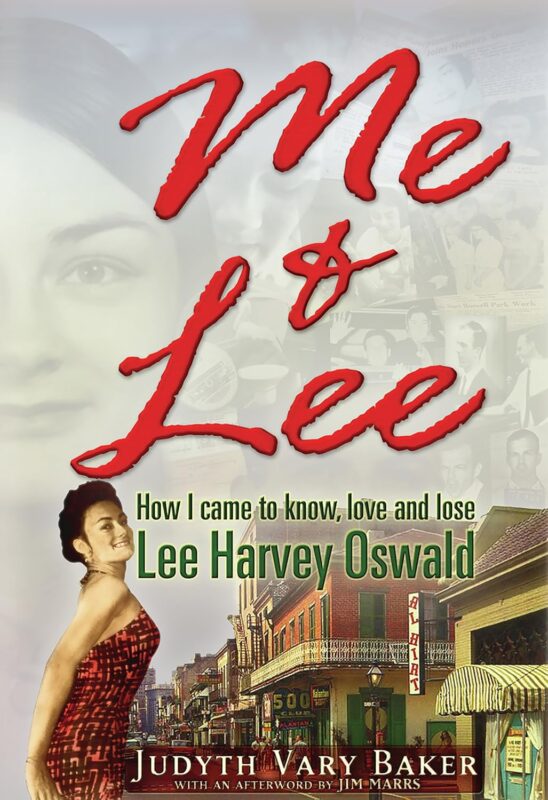
Me & Lee: How I Came to Know, Love and Lose Lee Harvey Oswald by Judyth Vary Baker reconstructs a tightly sealed narrative from 1963, exposing layers of personal, scientific, and political intrigue that challenge the historical record. Baker, a prodigious cancer researcher by her late teens, recounts her secret relationship with Lee Harvey Oswald in New Orleans. Her testimony interweaves bioweapons research, government intelligence operations, and a covert campaign aimed at Fidel Castro—all connected to the broader context of John F. Kennedy’s assassination.
Early Genius and the American Cold War Imperative
Baker's trajectory began in Florida, where she stood out as a teenage science prodigy. From dissecting mollies and mice to experimenting with cancer-inducing compounds, her precocity caught the attention of doctors, educators, and even political figures. She sought to defeat cancer, the disease that killed her grandmother, and this urgency guided her early work in experimental oncology. Her victories at science fairs led to recognition by institutions and even the Florida governor. The United States’ post-Sputnik educational push shaped her opportunities, aligning her scientific passion with national interests.
Military, Medicine, and the Anatomy of a Recruitment
By her mid-teens, Baker was introduced to Dr. Alton Ochsner, an anti-smoking advocate and former president of the American Cancer Society. Ochsner, along with intermediaries, invited her into a shadowy cancer research project headquartered in New Orleans. Baker describes a pivot in her education: from public demonstrations of chemistry to hidden labs developing aggressive cancer strains. These experiments, framed as patriotic duty, ultimately served a bioweapons program. The work centered on fast-acting cancer viruses designed to assassinate foreign leaders, with Castro the principal target.
Lee Oswald’s Double Identity
When Baker met Lee Oswald in 1963, she entered a world already at the edge of visibility. Oswald was introduced to her as an intelligence operative working under deep cover. Far from the image of a lone gunman, Oswald in Baker’s account emerges as a double agent attempting to sabotage the weaponized cancer program from within. He also sought to avert Kennedy’s assassination by infiltrating plots swirling through Cuban exile circles, intelligence assets, and organized crime figures. Their relationship developed rapidly, rooted in shared disillusionment, operational secrets, and a desperate drive to make moral sense of their entrapment.
The Bio-Project and Its Discontents
The narrative situates much of the clandestine science within the care of Dr. Mary Sherman, a physician affiliated with Ochsner's clinic. Sherman and Baker handled the most sensitive biological materials—cancerous tissues designed for rapid proliferation in primates and humans. The intention was to introduce terminal cancer into Castro through a network of intermediaries. The ethical breaches multiplied: animal testing escalated, then human trials surfaced. Baker resisted when it became clear that prisoners and mentally ill individuals were being marked for infection. Her refusal to continue implicated her in operational failure. Those above her eliminated risk by terminating the project—and its participants.
New Orleans: Convergence Point of Conspiracy
New Orleans in the summer of 1963 becomes the stage where disparate forces converge. Baker, embedded in the Ochsner lab, observed patterns among operatives, doctors, and political actors. Oswald’s movements—his interactions with Guy Banister, David Ferrie, and Clay Shaw—mirror what Garrison’s later prosecution would suggest. These individuals, all linked to intelligence or far-right agendas, organized loosely around anti-Castro fervor. Baker asserts that Oswald worked to derail the momentum toward Kennedy’s assassination, reporting to both American and Soviet intelligence.
Countdown to Dallas
In November, Baker’s contact with Oswald waned as he relocated to Dallas under increasingly tense circumstances. Their final communications revealed his despair. Oswald had been pulled into a role he could no longer navigate or subvert. Baker recounts their final conversation—he believed he would not survive past the weekend and begged her to disappear. As she watched Oswald gunned down live on television, the trauma solidified her silence. She buried the story for decades, fearful of the same machinery that consumed him.
Systemic Suppression and Public Amnesia
Baker exposes how mainstream media, operating in parallel with covert agencies, erased alternate accounts. CBS's 60 Minutes investigated her story extensively, only to shelve the episode. The History Channel briefly aired an exposé, then withdrew it under legal pressure. When Baker’s first manuscript circulated, publishing houses dropped the project. Gatekeeping extended from media networks to academic historians and JFK conspiracy communities, both of which treated her claims as destabilizing to their models.
Scientific Legacy and Emotional Reclamation
Aside from the political and historical dimensions, the book excavates Baker’s sense of loss—of her career, of her innocence, of Oswald. Her lab notebooks, credentials, and awards preserved her early trajectory, but she never returned to cancer research. Instead, she raised a family in anonymity, surfacing decades later after reassembling the events from archival research, contacts, and surviving evidence. She describes the act of writing as a form of witness testimony, fulfilling a vow made to Oswald to one day reveal the truth.
Technological Evidence and Institutional Silences
The narrative incorporates physical artifacts: documents, photographs, lab logs, and correspondence, scrutinized by independent researchers and featured briefly in documentaries. These materials substantiate her involvement in the Ochsner clinic and her proximity to Oswald during the critical period. Baker challenges institutional memory by presenting these fragments as counter-history. Each piece, verified or suppressed, confronts official narratives and demands reevaluation of Kennedy’s murder.
Romance and Resistance
Though deeply enmeshed in state operations, Baker’s story centers on emotional defiance. Her relationship with Oswald offered a rare mutual recognition—two individuals aware of the cost of complicity, trying to limit its damage. Their intimacy carried no delusions. Both understood the impossibility of survival within systems built on secrecy, betrayal, and plausible deniability. Their love, then, operated as resistance: brief, concealed, but fully aware of its stakes.
Unraveling a Cold War Myth
The book dismantles the architecture surrounding the Warren Commission findings. Baker compels readers to see Oswald not as a passive instrument, but as a man aware of being weaponized. His role, she argues, was not that of assassin but scapegoat—selected for his visibility, his murky allegiances, and his perceived expendability. The broader mechanism of misdirection, media compliance, and public manipulation becomes a recurring structure in her analysis.
The Return of the Witness
By testifying, Baker alters the landscape of JFK assassination literature. She refuses to parse truth from love, history from memory. Instead, she positions herself as a witness to converging paths: science, politics, and human vulnerability. Her narrative insists that emotional fidelity can coexist with factual precision. In exposing her role, she implicates a system that consumed both her research and her lover.
Legacy and Reckoning
Judyth Vary Baker presents a coherent, sustained challenge to the official record of the Kennedy assassination. Her account reveals a concealed apparatus of scientific exploitation, intelligence operations, and political violence. Through her experience, a new lens sharpens: one that connects personal trauma to national crisis, and private love to public betrayal. Her book becomes both document and indictment, demanding reconsideration of what America was willing to sacrifice for geopolitical control.