Dr. Mary’s Monkey: How the Unsolved Murder of a Doctor, a Secret Laboratory in New Orleans and Cancer-Causing Monkey Viruses Are Linked to Lee Harvey Oswald, the JFK Assassination, and Emerging Global Epidemics
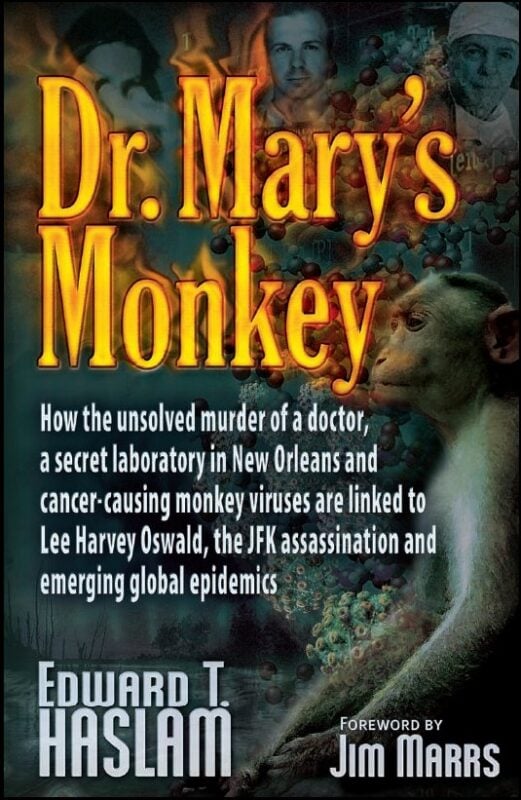
Dr. Mary's Monkey: How the Unsolved Murder of a Doctor, a Secret Laboratory in New Orleans and Cancer-Causing Monkey Viruses Are Linked to Lee Harvey Oswald, the JFK Assassination, and Emerging Global Epidemics by Edward T. Haslam reveals a covert medical project in New Orleans that merged biological experimentation with Cold War politics and assassination plots. Haslam traces a web of connections between a secretive cancer research lab, contaminated polio vaccines, and the 1964 murder of Dr. Mary Sherman, proposing a historical link to the 1963 assassination of President John F. Kennedy and the emergence of modern epidemics.
The Murder that Opened a Vein of Secrets
Mary Sherman’s death in New Orleans stunned colleagues and baffled police. Her body, charred and stabbed, showed signs of exposure to extreme heat without corresponding damage to her apartment. The cause of death appeared inconsistent with an accidental fire. Haslam, the son of a Tulane medical professor and personally familiar with Sherman, builds his narrative on her violent end as a breach point into a larger and buried narrative of experimental science, government secrecy, and suppressed medical disasters.
The setting in New Orleans was more than a backdrop. The city hosted a confluence of intelligence operations, medical innovation, and political power. Sherman worked with prominent figures in orthopedic surgery but also moved within circles connected to clandestine research on viruses. Her proximity to an underground laboratory irradiating cancer-causing monkey viruses points to a dangerous intersection of science and covert operations.
A Secret Laboratory in the Shadows of Public Health
The book identifies a hidden facility operating on the grounds of the U.S. Public Health Service Hospital in New Orleans. Haslam claims this lab used a linear particle accelerator to mutate viruses extracted from African monkeys. The intention was twofold: develop a cure for cancers sparked by contaminated vaccines and engineer a biological weapon capable of inducing cancer in selected targets.
Haslam presents evidence that this lab’s focus extended beyond medical research. The same viruses contaminating polio vaccines in the 1950s, particularly SV-40, were studied for their carcinogenic potential. Scientists irradiated the viruses, hoping to understand and possibly weaponize their mutagenic effects. A select group, including Sherman and David Ferrie—a figure connected to both the Mafia and the CIA—conducted this work with direct implications for national security agendas.
Virus Research, Vaccines, and the Epidemic Within
The polio vaccine campaigns of the 1950s inoculated millions. Haslam asserts these vaccines, prepared using monkey kidney cells, carried unintended viral passengers. Among them, SV-40—a virus later proven to cause tumors in lab animals—entered the bloodstream of an entire generation. The resulting explosion of soft-tissue cancers, Haslam suggests, reflects this hidden biological insult.
Public institutions certified these vaccines under pressure. Haslam links the approval process to prominent medical figures, including Dr. Alton Ochsner, a towering figure in New Orleans medicine. The book posits that once the contamination became known, a race began to create a counter-virus or remedy in secrecy. Haslam documents how this pressure drove the establishment of clandestine research efforts outside standard institutional oversight.
The Weaponization of Cancer
Haslam’s narrative sharpens as it approaches the role of intelligence agencies. He argues that the CIA, seeking a subtle and deniable method of assassination, viewed a cancer-inducing virus as an ideal tool. Injecting a target with a carcinogen masked as a vaccine would kill slowly and obscure culpability. The target: Fidel Castro.
Lee Harvey Oswald enters this context not as a lone gunman but as a courier and participant in this research network. The book contends that Oswald worked with Ferrie and others in ferrying viral materials and protecting the secrecy of the cancer research. Oswald’s documented movements in New Orleans and his curious associations with both pro- and anti-Castro activists support the premise that he served multiple masters and pursued a covert role far more complex than commonly accepted.
Judyth Vary Baker: Witness and Catalyst
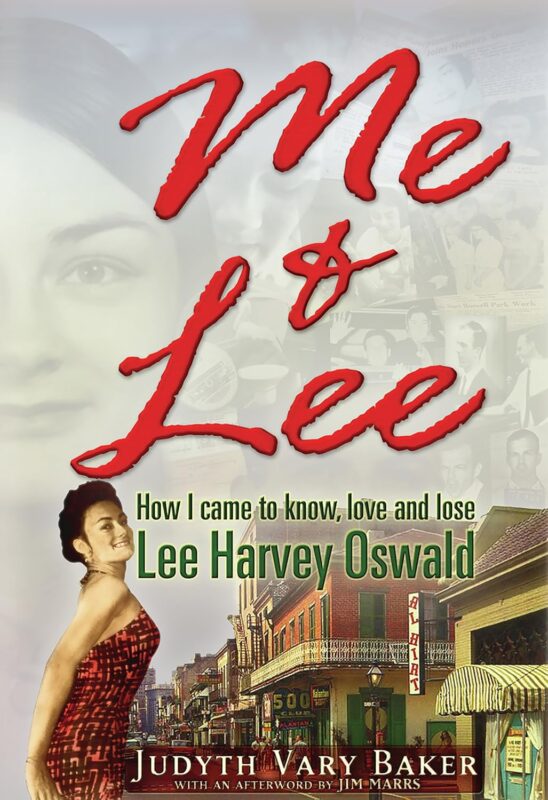
Haslam introduces Judyth Vary Baker, a young cancer researcher who later claimed intimate knowledge of the secret lab and a romantic connection to Oswald. Her detailed testimony, recorded years later and corroborated by independent researchers, anchors the claim that Oswald was deeply enmeshed in the medical project. Baker described her training in handling lethal viruses, her work with Ferrie, and her first-hand observations of Sherman’s involvement.
Baker's presence provides continuity to the fragmented historical record. Her recollections fill in gaps left by destroyed files, censored reports, and vanishing witnesses. Haslam argues that her emergence strengthens the case that the lab’s existence was real, its function central to Cold War intelligence aims, and its activities directly tied to a network that included Oswald.
Tulane’s Unseen Role and the Silence of Academia
Tulane University, through its medical school and faculty, facilitated aspects of this project under the radar of public scrutiny. Haslam shows how the university received federal funds and hosted specialists in retrovirology and pathology who could support such research. Yet public acknowledgment never followed. Faculty and administrators, whether from complicity or concern, maintained silence about the use of their resources and personnel.
Haslam emphasizes that Tulane’s cooperation did not emerge from scientific enthusiasm alone. Political patronage, CIA influence, and the ambitions of prominent doctors intersected. Through these pathways, Haslam situates the university within the national security state’s broader apparatus for conducting classified research.
Political Power and the Protection of Secrecy
The Louisiana congressional delegation, holding key positions in committees overseeing defense and intelligence budgets, possessed the clout to direct funds and protect operations. Haslam identifies figures like F. Edward Hébert and Allen Ellender as enablers of covert medical experimentation through their control over military appropriations. This political shielding allowed the lab to function without press coverage, regulatory interference, or public accountability.
These officials also shaped responses to emerging concerns. When researchers raised alarms about viral mutations and potential epidemics, funding decisions and political maneuvering ensured the secrecy endured. Haslam links this containment effort to the broader Cold War logic of suppressing damaging revelations that could erode public trust or expose national vulnerabilities.
From Lab Virus to Global Catastrophe
The implications of the secret lab reach beyond the JFK assassination. Haslam charts a line from the monkey viruses of the 1960s to the AIDS epidemic of the 1980s. Scientists have long traced HIV’s ancestry to simian immunodeficiency viruses. Haslam raises the question: who was manipulating these viruses, and when did they cross the species barrier?
The timeline matches the years in which New Orleans’ lab irradiated monkey viruses. Haslam suggests that one of these experiments may have inadvertently—or deliberately—produced a mutation capable of infecting humans. Once released, it would spread through blood and sexual contact, hidden by latency and global mobility. The mutation window and geographical origin align with the research described in the book.
The Shadow of Disclosure
Haslam recounts efforts to publish his findings, the resistance from publishers, and the suppression of media coverage. CBS’s 60 Minutes conducted interviews but never aired the segment. The History Channel featured the topic once, then pulled it. Despite this, Haslam distributed his early work independently and continued to expand the documentation behind his claims.
Through firsthand accounts, interviews, and archival research, the book reconstructs a hidden history of biological experimentation intertwined with political agendas. The implications challenge official narratives and call into question the integrity of medical and governmental institutions. Haslam contends that the truth has been buried not by accident, but by design.
A Convergence of Epidemics, Assassinations, and Unanswered Questions
Haslam’s thesis compels a reconsideration of historical causality. He argues that the same network responsible for developing a cancer virus also harbored the personnel and motive to remove political threats. Mary Sherman’s death becomes a hinge event—linking science, secrecy, and violence. Her arm, reportedly incinerated by a machine more powerful than any house fire, stands as physical evidence of unauthorized technology at work.
This convergence did not arise from coincidence. Haslam posits that operational needs, technological capability, and political ambition aligned in a single location, under the protection of elite patrons. The outcomes—epidemics of cancer and AIDS, an unresolved assassination, a silenced witness—reflect the costs of secrecy, not speculation.
What was unleashed in that lab in 1960s New Orleans? Haslam urges readers to follow the evidence across domains—medical, political, and personal—and confront the consequences of power unbound by scrutiny. The past does not simply inform the present. It infects it.