Essays to Do Good, Addressed to All Christians, Whether in Public or Private Capacities
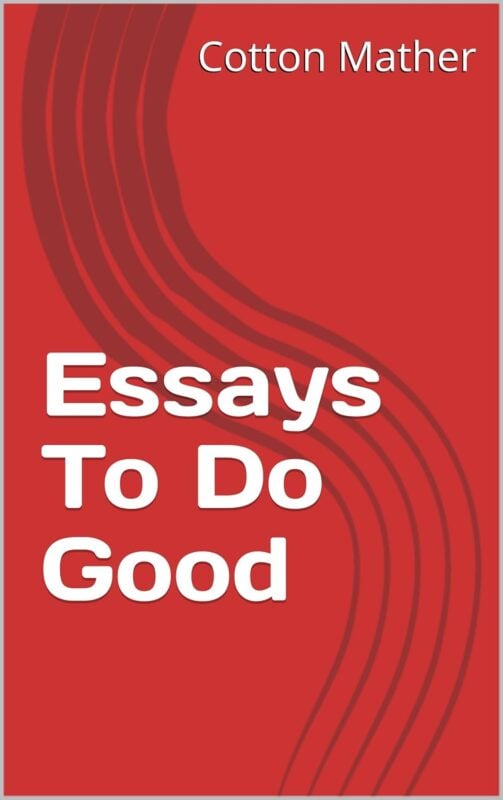
Essays to Do Good, Addressed to All Christians, Whether in Public or Private Capacities by Cotton Mather offers a direct call to action for Christians, framing the pursuit of benevolence as an active, daily discipline rather than an abstract virtue. The book orients the reader from its first pages toward practical engagement with the needs of society, family, church, and self, insisting that spiritual life and community benefit converge through intentional good works.
The Origin and End of Christian Action
Cotton Mather roots the responsibility to do good in the foundational Christian conviction that opportunity and ability entail obligation. To possess the power or means to help, teach, comfort, or elevate another person creates a duty to act. Mather does not treat this duty as a legalistic burden but frames it as the natural outgrowth of true faith—a spiritual law as intrinsic as gravity. The premise advances: God equips individuals with resources, gifts, or moments of influence expressly so they may serve. Mather claims that this imperative to do good spans temporal and spiritual needs alike, whether the work involves feeding the hungry, visiting the sick, advancing education, reforming public manners, or promoting religious devotion.
He builds narrative tension through the assertion that much remains undone. He sketches the world’s “thousand millions” of inhabitants as a vast, open field of possible benefit, confronting the reader with the reality that vast swathes of need remain unaddressed. Why does so much misery persist? Why do communities remain unreformed? The answer lies in missed opportunities and neglected duties—those moments when individuals could have intervened, yet hesitated or ignored the call. This diagnosis leads to the book’s central proposition: devise good continually, and execute those designs energetically.
The Structure of Daily Benevolence
Mather gives his call to action a framework. He urges readers to weave intentional good works into the fabric of everyday life, refusing to treat them as special projects or episodic gestures. The author’s method involves both planning and spontaneity. He recommends the assignment of specific days to particular spheres of benevolence: attend to the needs of family on one day, seek to benefit the church on another, focus on the larger community next, and reserve a day for personal spiritual renewal. Through this structure, the reader learns to multiply the reach of his or her influence, moving outward from the intimate circle of the home to the wide circles of society.
Planning does not substitute for heart. Mather insists that benevolence must issue from gratitude and humility, not self-promotion. He recounts his own practice of daily reflection, asking every morning, “What good may I do this day?” and every evening, “What have I done for God or my neighbor?” The result is a life oriented around usefulness rather than self-interest, a stance that welcomes interruption by the needs of others as a privilege rather than an annoyance.
Portrait of the Benevolent Life
The book details the characteristics of the person who embraces this calling. Such a Christian lives with a heightened sensitivity to opportunities for service. The reader hears stories of Mather’s own life, such as his rule to never join company without attempting to benefit someone present. Mather describes his commitment to giving away a tenth of his income, his practice of keeping a diary of good works, and his resolve to never let a day end without having attempted something useful.
He observes that fruitful lives require method and self-discipline, using his schedule as a model. Mather’s attention to structure does not diminish the need for invention; he urges continual reflection on new ways to help, new problems to solve, and new means of advancing good. He welcomes suggestions from friends, prizes creative approaches to charity, and regards the exchange of ideas for doing good as a kind of sacred commerce.
Opposition and Endurance
Mather acknowledges that those who strive to do good will encounter misunderstanding, resistance, and even ridicule. The book anticipates the full spectrum of discouragements: suspicion from others, envy from rivals, ingratitude from beneficiaries, and even direct mockery from the irreligious or cynical. He counsels prudence to avoid unnecessary conflict, but patience and fortitude when it proves unavoidable.
He relates that attacks—whether in the form of gossip, slander, or satire—often arise precisely because visible good unsettles the status quo and exposes the inactivity of others. Rather than advocate retreat, Mather urges endurance: “Be not uneasy.” He observes that spiritual benefit accrues to those who persevere through adversity, and the integrity of the doer of good will eventually prevail over misrepresentation. He recounts the examples of historical figures who faced similar resistance, reminding the reader that the worthiest endeavors often attract the sharpest opposition.
Repentance and Resolve
Throughout the essays, Mather presses readers to examine their own track record of service and candidly repent of neglect. He asserts that most Christians—regardless of external reputation—have failed to realize their potential for usefulness. The honest reckoning with missed opportunities serves both to humble the reader and to clear the way for new purpose. Mather argues that this spirit of repentance must lay the foundation for renewed diligence; he repeatedly calls for confession of “sins of omission” and for a heartfelt resolution to seize future opportunities.
This movement from self-examination to action defines the book’s spiritual arc. Mather does not stop at regret. He commands renewed effort, declaring that God’s mercy supplies both forgiveness and fresh strength to do good. Through this cycle of repentance and resolve, the Christian life gains momentum, turning regret into fuel for future service.
Community and Societal Reform
Mather addresses not only the individual but the entire spectrum of social relations. He envisions reform at every level: families, churches, professions, and public institutions. He dedicates sections to magistrates, teachers, physicians, lawyers, and other influential roles, urging them to consider how their specific skills and positions can become channels for blessing. He advocates for educational improvement, the establishment of charitable societies, the formation of public libraries, and the protection of the poor and oppressed.
He describes the contagious nature of benevolence. When a community commits to mutual benefit, kindness grows into custom. He notes that the Christian impulse to do good has the power to invent new forms of charity, launch institutions, and inspire reforms that outlast any single person. Mather believes in the creative capacity of the faithful to generate ideas, movements, and institutions that meet unaddressed needs.
Reward in the Work
The essays offer a vision of reward intrinsic to action. Mather asserts that those who pursue good experience deep satisfaction and joy, a sense of dignity that transcends external recognition. The opportunity to serve becomes a spiritual privilege. He testifies that the most meaningful form of gratification lies in realizing one’s capacity for usefulness—a value that aligns with the “divine nature” Christians profess to seek.
He quotes approvingly from both Christian and pagan sources to reinforce his argument. He claims that beneficence aligns with the highest human instincts and reflects God’s own character. The book thus presents the act of doing good as both duty and delight: its exercise fulfills the essential purpose of human life and brings the soul closest to God.
Imitation and Influence
Mather strengthens his case by referring to the impact his work had on prominent figures such as Benjamin Franklin, who credited Essays to Do Good for inspiring his lifelong pursuit of service and invention. The author presents himself as an exemplar—not as an idealized figure, but as a fellow laborer who has struggled, erred, and persisted. He insists that influence extends in unexpected ways, sometimes touching people or communities far removed from the initial act.
He calls on the reader to consider the legacy of their actions. Each deed sets an example, creates precedent, and invites imitation. The ripple effect multiplies when individuals work together, forming societies and partnerships for common causes. Mather repeatedly emphasizes unity—“brethren dwelling together in unity”—as a condition for the greatest achievements.
The Danger of Idleness
Throughout the book, Mather warns against idleness as the most insidious enemy of good works. He contends that sloth breeds decay in both personal character and society at large. The book’s tone intensifies in these passages, as Mather denounces complacency and urges vigilance against the paralysis of habit. He compares the diligence of those who do harm—those who “devise mischief”—with the lethargy of the well-intentioned. This juxtaposition serves as a goad, motivating the reader to channel their own energy and ingenuity into productive avenues.
Innovation and Adaptation
Essays to Do Good does not present a static blueprint; it advocates for continual adaptation and invention. Mather expects his readers to survey the world, discern emerging needs, and respond creatively. He prizes original suggestions and celebrates the spread of “new essays to do good.” The capacity to devise, implement, and improve charitable projects constitutes the living heart of Christian service.
He views the challenges and setbacks that accompany benevolence as opportunities for further refinement. Failures prompt reassessment and inspire new efforts. Mather’s model incorporates both continuity and change, tradition and innovation, holding the two in dynamic balance.
Conclusion: The Enduring Call
Cotton Mather’s Essays to Do Good, Addressed to All Christians, Whether in Public or Private Capacities presents a bold, clear, and enduring summons to action. The work grounds its challenge in theological conviction, but extends its reach into the practical affairs of daily life. Mather moves the reader from principle to practice, from introspection to engagement, and from solitary effort to communal purpose. He structures his vision of Christian service around relentless intentionality, inventive adaptation, and spiritual joy.
The book endures as a template for lives organized around usefulness. It imparts specific strategies and enduring principles, creating a convergence between personal growth, spiritual fulfillment, and social transformation. Mather leaves no ambiguity about his expectation: those who can do good must do so, and in that doing, they find both the fulfillment of their purpose and the advancement of the world they inhabit. The narrative of Essays to Do Good remains, three centuries later, a living challenge and a proven source of influence for those who seek to make their faith the engine of action.