The Political Economy of the American Revolution
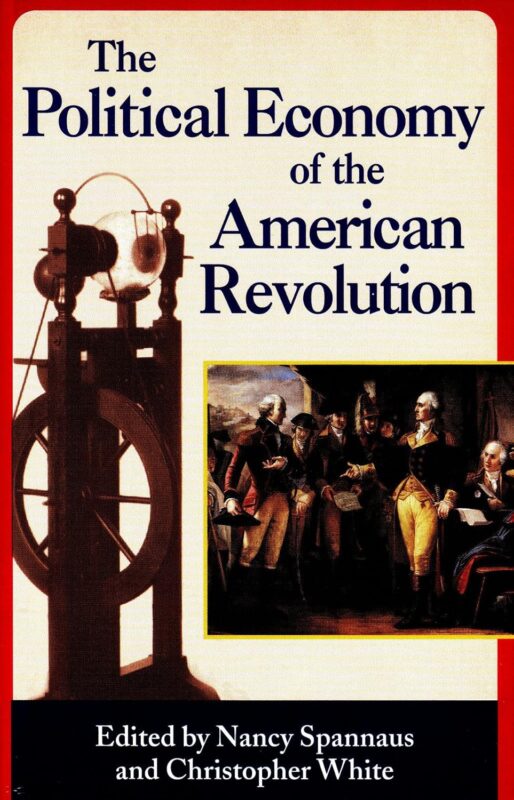
The Political Economy of the American Revolution by Nancy B. Spannaus and Christopher White investigates the material, intellectual, and institutional origins of the American Revolution, tracing the forces that shaped the emergence of the United States as a center of technological and republican advancement.
Revisionist History and the Foundations of Economic Progress
Historians have reinterpreted the American Revolution by stripping away its driving ideas, focusing on the presumed motivations of self-interest, group advancement, or political maneuvering. Spannaus and White challenge this approach, exposing how such reductionist accounts obscure the project of building a nation rooted in scientific discovery, economic innovation, and republican government. The text begins with a bold assertion: the American Revolution marked the concrete realization of the humanist conception of progress—a deliberate fusion of political design and technological expansion.
Franklin’s Vision and the Culture of Advancement
Benjamin Franklin emerges as a central architect in this new world, orchestrating institutions that served both intellectual curiosity and communal benefit. He moved beyond personal inquiry, catalyzing networks of printers, scientists, and civic organizers. Franklin did not treat the natural world as a realm to be endured or admired, but as a field for mastery through social organization and experimental method. He recognized the necessity of surplus production as the foundation for human flourishing and advocated its continual reinvestment. Franklin’s engagement with both British and French circles underscores a commitment to international collaboration, where the export of scientific knowledge and technological method could strengthen republican society against predatory empires.
Hamilton, Credit, and the Architecture of the Republic
Alexander Hamilton transformed the insights of Franklin into political and economic infrastructure. His reports on public credit and manufacturing systematized the means by which the new nation could generate, preserve, and direct surplus toward national goals. Hamilton understood that government authority had to secure the conditions for private investment, coordinate the deployment of capital, and harness the country’s productive potential. He tied the fate of American prosperity to the creation of a national bank, the assumption of state debts, and the forging of an integrated commercial policy. Hamilton’s advocacy for a federal system and his role in The Federalist Papers reveals the indispensable logic of unity: only a central government could mobilize resources at the scale required for growth, security, and innovation.
Education, Literacy, and Republican Leadership
The Revolution did not depend solely on military victories or diplomatic maneuvers; it relied on a highly literate, intellectually ambitious population. Spannaus and White document a colonial society that prized education, mechanical skill, and public learning. Local ordinances established schools for boys and girls, public funds supported scientific investigation, and newspapers flourished as forums for political debate. The authors underscore the importance of a civic elite—figures such as John Adams, Thomas Jefferson, George Washington, and Thomas Paine—who pursued learning not for personal elevation but as a means of guiding and educating the public. These leaders formed a republic of intellect, actively shaping opinion and refusing to subordinate principle to popularity.
Mercantilism, Monopoly, and the Struggle for Economic Sovereignty
The British imperial system restricted the economic development of the colonies through mercantilist controls, prohibiting the manufacture of finished goods, manipulating trade, and treating America as a source of raw materials. Colonial resistance arose not from a vague longing for freedom, but from the systematic denial of productive capacity. Leaders recognized that prosperity depended on breaking free from foreign domination and building domestic industry. The Revolution’s urban centers—Boston, Philadelphia, New York—became sites of organizing, propaganda, and economic mobilization. Merchants, artisans, and farmers aligned around the mutual benefit of expanded markets, technological improvement, and the end of imperial restrictions.
War, Organization, and the Path to Constitutional Union
The conflict with Britain necessitated both military coordination and economic reorganization. Spannaus and White examine the mechanisms by which revolutionary leaders unified disparate colonies, educated skeptical populations, and built the institutions required for victory. Franklin’s postal reforms, Adams’ political strategy, Washington’s command, and Hamilton’s economic planning each contributed to a web of resistance capable of withstanding the pressures of war and internal dissent. The authors trace the evolution from ad hoc committees and congresses to the Continental Congress, and ultimately to the Constitutional Convention, where structural solutions to problems of trade, credit, and taxation crystallized.
The Constitution and the Science of Government
The drafting and ratification of the U.S. Constitution represented a decisive move toward a republican form of government designed to support scientific and industrial progress. The document established the conditions for national unity, authorized the collection of taxes, created a legal foundation for contracts and property, and guaranteed support for science and invention. Spannaus and White foreground the Constitution as an agreement among capitalist innovators and public intellectuals to channel private ambition within the boundaries of national welfare. The resulting federal system did not merely limit power; it enabled the deliberate cultivation of capital, knowledge, and infrastructure on a continental scale.
Debt, Credit, and National Development
The Revolution produced a tangled legacy of debt—owed to foreign creditors, domestic investors, and soldiers. Hamilton’s approach harnessed this liability into a source of strength. By assuming state debts and issuing federal securities, the new government transformed scattered obligations into the backbone of national credit. Interest payments served as the means to attract further investment, while a national bank enabled productive reinvestment. Spannaus and White argue that Hamilton’s financial architecture turned potential chaos into a framework for expansion, where the management of debt supported the creation of roads, canals, and manufacturing capacity.
Slavery, Labor, and the Boundaries of Progress
Within the debates of the Constitutional Convention, the institution of slavery emerged as both a political and moral fault line. The authors document efforts by Hamilton, Franklin, and other Federalists to oppose slavery, viewing it as a degradation of labor and a barrier to industrial progress. Some states began the process of abolition, while Federalist leaders advocated policies to limit and ultimately end the slave trade. The compromises of the convention reflected the complexities of forging unity among states with divergent interests, but the overall trajectory pointed toward the expansion of free labor and technological development.
Faction, Leadership, and the Pursuit of National Goals
Spannaus and White devote significant attention to the internal struggles among the Founding Fathers. The Hamilton-Jefferson divide, often caricatured as a battle between autocracy and democracy, appears here as a tension between competing models of economic and political development. Hamilton insisted on the necessity of aligning private wealth with public purpose, using state authority to stimulate investment and coordinate growth. Jefferson, wary of centralized power, advocated for a more agrarian vision but ultimately recognized the need for strong institutions as president. The authors argue that both leaders, in their own ways, pursued the security and expansion of the republic, navigating the demands of war, diplomacy, and domestic division.
International Context and the American System
The Revolution unfolded within a global context of imperial competition, economic warfare, and shifting alliances. Britain imposed trade embargoes, flooded American markets with cheap goods, and sought to divide the new nation through diplomacy and subversion. France offered military and financial support but pursued its own interests. American leaders played these powers against each other, securing recognition, territory, and commercial rights. Spannaus and White emphasize that survival depended on the creation of an independent manufacturing base, a navy, and the infrastructure necessary for self-defense.
The Legacy of the Revolution and the Promise of Industrial Capitalism
Spannaus and White close by asserting that the American Revolution created the world’s first successful industrial capitalist republic, grounded in the deliberate advancement of science, education, and productive capacity. The Founders designed institutions that reward innovation, mobilize capital, and secure liberty through collective effort. The authors argue that the revival of these principles—scientific inquiry, public education, national investment, and republican governance—offers the key to future prosperity. As economic pressures mount and challenges to the public good multiply, the political economy of the American Revolution stands as a living model for those who seek to integrate technological advance with civic responsibility.
Renewing the Vision of Progress
The book calls on readers to rediscover the spirit of the American Revolution, not as an event locked in the past, but as a process of continual self-renewal. The interplay of economic policy, scientific ambition, and institutional design has shaped the trajectory of the United States from its founding. By foregrounding the connections between material development and political structure, Spannaus and White invite a new generation to engage in the work of building and sustaining a society where the expansion of knowledge, productivity, and liberty converge in the public interest. The challenges of debt, division, and foreign competition remain, but the precedent of republican ingenuity and industrial advancement offers a path forward. The book’s sustained analysis reveals how the American Revolution achieved far more than independence; it created the template for national development grounded in the creative potential of free citizens.

About the Book