British Security Coordination: The Secret History of British Intelligence in the Americas, 1940-1945
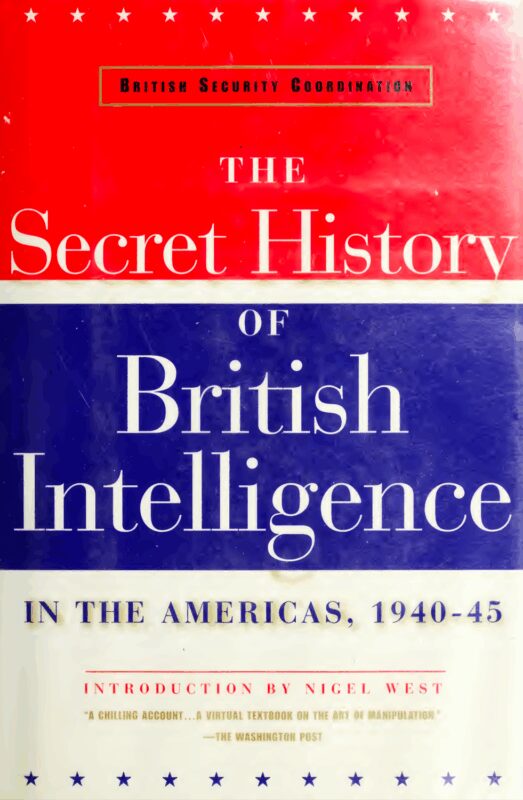
British Security Coordination: The Secret History of British Intelligence in the Americas, 1940–1945 by William Samuel Stephenson reveals a dense, concealed history of British espionage strategy implemented across the Western Hemisphere during the most critical years of World War II.
The Genesis of a Covert Empire
In June 1940, William Stephenson arrived in New York under the pretense of a Passport Control Officer. In reality, he was the newly appointed head of British Security Coordination (BSC), a covert umbrella organization tasked with unifying British intelligence efforts throughout the Americas. From an unremarkable office at the Rockefeller Center, Stephenson oversaw operations that eventually spanned the continent, integrated SIS, MI5, SOE, and the Political Warfare Executive, and operated from hubs as dispersed as Bermuda, Trinidad, and Bogotá.
What triggered this strategic deployment? British intelligence, constrained by U.S. neutrality laws, could no longer directly engage with American counterparts. The task required a figure with the initiative, influence, and discretion to build a clandestine network under legal scrutiny. Stephenson stepped into this role with the explicit goal of pre-empting Axis infiltration, securing U.S. material support for Britain, and laying the groundwork for postwar intelligence collaboration.
Forging the FBI Connection
Stephenson’s liaison with J. Edgar Hoover defined BSC’s early trajectory. Hoover, devoted to the reputation and control of the FBI, initially resisted any British intrusion into American intelligence spheres. But with the personal endorsement of President Roosevelt, Stephenson secured a secret channel of cooperation. Through Hoover, BSC obtained access to surveillance networks, intercepted communications, and intelligence about German espionage rings embedded within the U.S.
This alliance shaped both organizations. The FBI adopted many practices from British counterparts. BSC used FBI resources to identify enemy agents and prevent sabotage against British shipping and armament efforts. The Roosevelt-approved agreement between BSC and the FBI circumvented State Department objections, building a shadow network of intelligence exchange under a veil of plausible deniability.
Propaganda as Strategic Warfare
BSC’s success extended beyond espionage into the domain of political warfare. The organization engineered covert campaigns to shift American public opinion toward intervention. Using sympathetic journalists, front organizations, planted stories, and rumors, BSC disrupted isolationist narratives. Stephenson’s teams fed radio commentators and columnists with anti-Axis material disguised as independent journalism.
The Roosevelt administration, while constrained by official neutrality, saw value in these efforts. British intelligence subverted Nazi propaganda in American media markets and strategically aligned public sentiment with Allied objectives. Where overt diplomacy stalled, covert manipulation steered cultural and political alignment.
Latin America as a Battlefield
Latin America emerged as a critical frontier in the intelligence war. Axis embassies operated openly in Brazil, Argentina, and Chile, using cultural ties and trade to advance subversive agendas. BSC established outposts in key cities, infiltrated enemy operations, and collaborated with local governments to dismantle spy networks.
These operations took multiple forms: surveillance, double-agent recruitment, sabotage prevention, and economic disruption. Stephenson’s agents exposed Nazi financial networks laundering funds through neutral countries. They prevented technology smuggling, countered pro-Axis propaganda, and coordinated with emerging American intelligence efforts to neutralize subversion.
Economic Intelligence and Corporate Surveillance
BSC waged a parallel campaign of economic warfare. Intelligence agents infiltrated German-American businesses to uncover illicit financial flows, monitor trade violations, and disrupt funding pipelines to the Reich. British agents investigated German debts, tracked commodity shipments, and worked with U.S. Treasury officials to freeze enemy assets.
This intelligence fed directly into policy. U.S. economic sanctions were often guided by BSC discoveries. British operatives influenced corporate policy by exposing businesses complicit with the Axis. The intelligence war extended into boardrooms and banks, creating a pressure system that economically isolated Nazi agents operating under commercial guise.
Building a Communications Empire
Secure communication was the logistical backbone of BSC. Stephenson developed a continent-spanning network of secret transmissions. The Communications Division managed encrypted traffic between London, New York, and Latin America. British engineers installed clandestine radio equipment and created wireless relays from Canada to South America.
This infrastructure enabled rapid intelligence sharing, coordinated multi-nation operations, and transmitted intercepted enemy communications to Bletchley Park for decryption. By 1945, BSC managed over one million code groups daily, an operational volume that eclipsed most Allied communication systems.
Security in Depth
Stephenson’s reach extended to industrial and personnel security. BSC embedded officers in factories, ports, and diplomatic offices. These operatives vetted workers, monitored supply chains, and thwarted sabotage attempts. The Security Division ensured that the flow of munitions, aircraft, and supplies to Britain faced minimal interference from Axis agents or domestic sympathizers.
The protective measures went further. BSC trained ship crews in counter-sabotage protocols, installed physical surveillance on docks, and developed vetting procedures for sensitive materials. The scale and scope of this preventive apparatus established a security precedent adopted by postwar intelligence agencies.
Training for a Global Intelligence Future
Recognizing the long-term implications of clandestine warfare, Stephenson founded Camp X in Canada, a covert training facility for Allied agents. Here, BSC trained saboteurs, cryptographers, and field operatives. Many of these graduates became key players in Europe’s resistance movements or founders of postwar intelligence services.
The training emphasized tradecraft, weapons use, disguise, psychological manipulation, and wireless operations. Camp X became a prototype for the future CIA’s training schools. It produced agents who would later shape Cold War intelligence doctrine.
Counter-Espionage and Double Agents
BSC’s counter-espionage operations neutralized dozens of Axis spy rings across the Americas. Through double agents, deception strategies, and coordinated raids, Stephenson’s teams dismantled networks that sought to monitor U.S. defenses and disrupt Allied logistics.
BSC monitored embassy traffic, trailed couriers, and used compromised agents to feed false information to Berlin. These operations, conducted in parallel with MI5’s domestic efforts and the FBI’s regional enforcement, revealed the deep integration of Axis intelligence in nominally neutral countries.
Postwar Legacy and Strategic Continuity
The operational blueprint developed by BSC influenced the formation of the Office of Strategic Services (OSS), the precursor to the CIA. Donovan’s admiration for Stephenson’s methods shaped American intelligence doctrine. Many OSS officers trained with BSC, adopted British protocols, and integrated into postwar intelligence communities.
The British Security Coordination operation concluded in 1945 with the war’s end, but its legacy continued. Stephenson ensured that key records were preserved, summarized, and selectively shared. These documents, buried for decades, became foundational references for historians and intelligence professionals seeking to understand the origins of transatlantic intelligence cooperation.
What did BSC achieve that no other agency had?
Stephenson unified secret operations across multiple domains: intelligence, propaganda, counter-espionage, economic warfare, and military training. He proved that decentralized field operations could operate under a coherent strategic umbrella. His structure enabled British influence in neutral territory without triggering diplomatic crisis. He demonstrated the viability of influence campaigns in free societies. He laid the procedural groundwork for future democratic intelligence services.
By integrating with U.S. intelligence at its moment of genesis, BSC ensured that postwar security coordination would be rooted in trust, shared methods, and overlapping networks. The history Stephenson preserved is more than a wartime narrative. It is the origin story of modern Western intelligence.