Dark Winter: How the Sun Is Causing a 30-Year Cold Spell
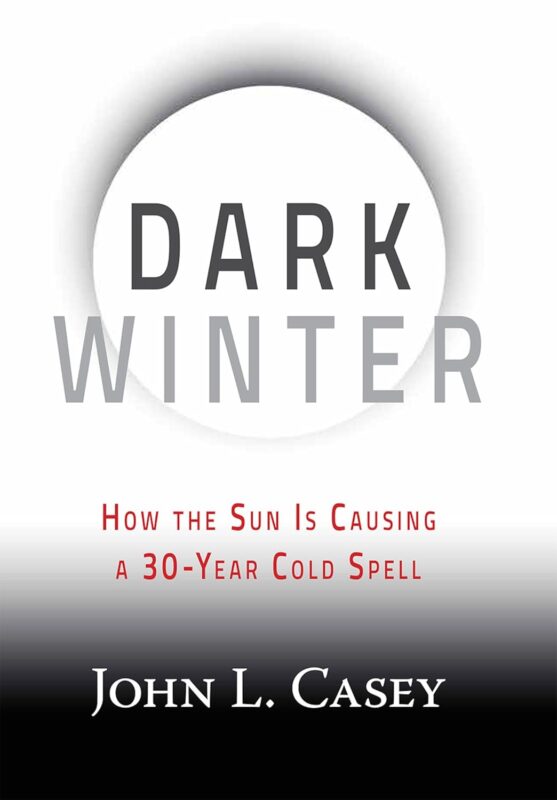
Dark Winter by John L. Casey introduces a theory that the Earth's climate is entering a prolonged period of cooling due to reduced solar activity. This forecast stems from a detailed analysis of historical solar cycles and their correlation with global temperature trends. Casey presents this shift as an imminent and disruptive force with far-reaching impacts on agriculture, infrastructure, and geopolitical stability.
The engine of climate
Casey defines solar energy output as the principal driver of Earth's climate. He identifies cyclical patterns in sunspot activity—particularly a 206-year cycle known as the Bicentennial Cycle—as the mechanism behind alternating warm and cold epochs. These cycles correspond to periods of increased and decreased solar radiation. When sunspot numbers decline sharply, solar energy reaching Earth drops, leading to global cooling. Casey argues that this process initiated a new cold era starting in the early 21st century, marking the end of the Modern Warm Period.
Historical parallels and climatic causality
The last comparable cold phase occurred during the Dalton Minimum (1793–1830), a period marked by widespread crop failures, social upheaval, and climatic extremes. Casey illustrates how events such as the “Year Without a Summer” in 1816 and Napoleon’s failed Russian campaign arose during this solar-induced cooling. He draws a causal line between solar minima and increased volcanic activity, suggesting that lower solar output influences tectonic stresses, leading to more frequent eruptions and earthquakes.
Solar cycles and predictive modeling
Casey formalizes his framework in the Relational Cycle (RC) theory, which defines a family of solar cycles with durations ranging from decades to centuries. These include the Centennial Cycle (~100 years) and the dominant Bicentennial Cycle (~206 years). The RC theory proposes that these cycles govern temperature shifts, allowing for long-range climate forecasts with a purported accuracy exceeding 90%. Casey asserts that this solar-based modeling system has outperformed greenhouse gas-based models over the past several decades.
Climatic implications for food and energy
As solar output declines, agricultural zones shift. Growing seasons shorten. Regions that currently support staple crops may become inhospitable. The result is widespread food insecurity. Cold temperatures also increase energy demand, especially for heating. In a world with strained energy infrastructure and globalized supply chains, these dual pressures could trigger economic and humanitarian crises. Casey anticipates massive geopolitical ramifications, including internal migration, economic downturns, and international conflict over shrinking resources.
Institutional resistance and systemic failure
Casey attributes the lack of preparedness to institutional inertia and political interests embedded in the greenhouse gas paradigm. He criticizes the United Nations Intergovernmental Panel on Climate Change (IPCC) and associated entities for excluding solar physics from their climate models. He frames this exclusion as deliberate, motivated by political agendas rather than scientific accuracy. This misdirection, he claims, has diverted resources from meaningful adaptation efforts.
Scientific dissent and emerging consensus
Casey aligns his predictions with those of numerous international researchers who have also projected cooling based on solar observations. He references studies by Russian, Bulgarian, and American scientists who, using various methodologies, arrive at similar timelines for the onset of cooling. These parallel findings suggest an emerging consensus among solar physicists and paleoclimatologists that supports the core of Casey’s argument.
Technological fragility under climate stress
Modern infrastructure depends on stable environmental conditions. Cold weather strains electric grids, disrupts transportation systems, and damages physical assets through freeze-thaw cycles and extreme weather events. Casey emphasizes that digital communication networks, healthcare systems, and logistics chains lack resilience to prolonged climatic stress. The consequences of this vulnerability compound the risks posed by food and energy shortages, creating the potential for cascading systemic failures.
Geological instability in a cooling world
Volcanic eruptions and major earthquakes correlate with solar minimums. Casey links these geophysical phenomena to changes in solar magnetic activity. He cites the increased incidence of large-magnitude earthquakes during past solar minima as evidence. The eruption of Mount Tambora in 1815, for example, not only intensified the cold of the Dalton Minimum but also triggered a global food crisis. He warns of similar or worse events in the coming decades, with regions like the Pacific Rim and Iceland posing particular risks.
Geopolitical consequences and national resilience
As populations face food scarcity, rising energy costs, and deteriorating infrastructure, governments will encounter rising civil unrest and pressure to secure resources. Countries with weak institutions may collapse or resort to aggressive foreign policies. Casey identifies the United States as particularly vulnerable due to its energy consumption patterns, urban density, and polarized political climate. He urges preemptive adaptation strategies, including investment in resilient agriculture, hardened energy systems, and revised emergency planning.
Timeline and forecast
The solar minimum that Casey describes began around 2011. He projects its effects to deepen throughout the 2020s and persist into the 2040s. During this period, global average temperatures will decline by 1 to 1.5°C, with greater effects in continental interiors. This cooling will increase the frequency and severity of winter storms, reduce oceanic evaporation and precipitation, and disrupt atmospheric circulation. The consequences will not be uniform; some regions may experience temporary warming or extreme variability.
Strategic preparation and adaptive capacity
Casey calls for a shift in policy orientation—from mitigation of hypothetical warming to adaptation for imminent cooling. He advocates for the decentralization of food systems, expansion of renewable and off-grid energy sources, and the development of local emergency response infrastructure. Preparation should account for both climatic and geological risks, including the potential for large-scale seismic and volcanic events.
Cultural denial and cognitive dissonance
The dominant climate narrative reinforces political and financial structures that benefit from carbon regulation. Casey argues that this narrative persists despite mounting empirical evidence of solar-driven cooling. Media, academic institutions, and governmental agencies have invested in the greenhouse gas model, creating a feedback loop that suppresses alternative theories. He warns that this denial endangers billions by delaying critical preparation.
Disruption as historical pattern
Casey views solar minima not as anomalies but as recurring structural features of Earth’s environmental history. Civilizations rise and fall with the climate. When food becomes scarce, empires fracture. The historical record—spanning the Roman Empire, medieval Europe, and early modern revolutions—supports this cyclical understanding. Dark Winter extends this pattern forward, interpreting the current solar cycle as the trigger for a new period of global transformation.
Moral imperative and civic duty
Forecasting disaster without action is insufficient. Casey implores scientists, journalists, and policymakers to reassess foundational assumptions. He encourages citizens to learn the science of solar cycles and advocate for preparedness within their communities. The timeline is short. The indicators are visible. The consequences of inaction will affect generations.
Structural basis for urgency
The transition into a solar minimum creates simultaneous stresses across interlinked systems. Crop failures reduce food availability. Cold damages energy infrastructure. Economic shocks trigger political instability. Geological events destroy physical and civic assets. These converging factors generate systemic risk. Managing this risk requires understanding its structural origin—solar physics—and preparing accordingly. The opportunity to act lies in recognizing the causality before it becomes catastrophe.