Hiroshima Revisited
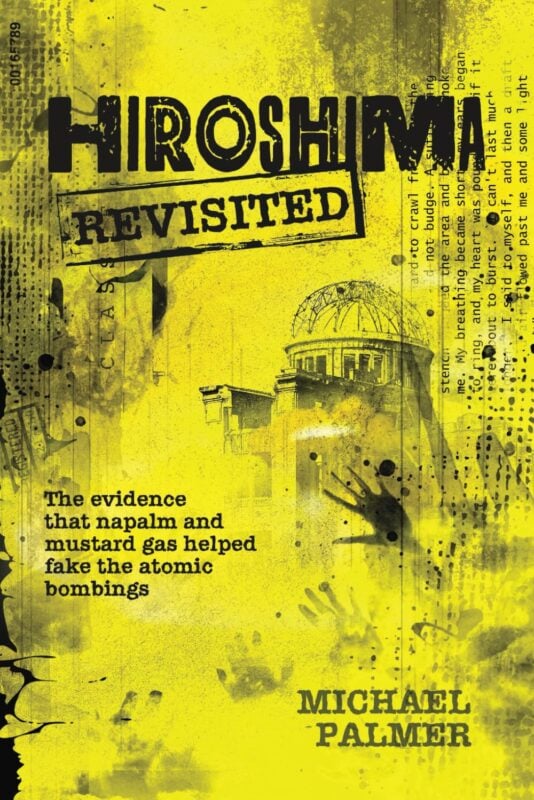
Hiroshima Revisited by Michael Palmer, MD scrutinizes the prevailing narrative of the Hiroshima and Nagasaki bombings by systematically analyzing physical, medical, and historical evidence. Palmer constructs a detailed alternative chronology of events, exposing the mechanisms, motivations, and outcomes that shaped the public understanding of the so-called atomic age.
Unveiling the Historical Premise
Palmer asserts that the destruction witnessed in Hiroshima on August 6, 1945, and Nagasaki days later, resulted from an operation employing conventional weapons, incendiaries, and chemical agents, rather than nuclear devices. He traces the origins of the atomic narrative to a convergence of wartime secrecy, postwar propaganda, and selective presentation of scientific data. The book launches with a careful assessment of the timeline: the discovery of nuclear fission in 1938, the subsequent development of uranium enrichment technologies, and the ostensible Manhattan Project achievements.
He frames his inquiry by engaging the doubts voiced by early nuclear physicists such as Werner Heisenberg, who found the reported rapid progression from theory to a deployable atomic weapon highly implausible. Palmer investigates the pace of scientific progress within the Manhattan Project, referencing documented trial-and-error experiments, late-stage uncertainties in bomb design, and the technical obstacles to achieving bomb-grade uranium enrichment by 1945.
Physical Evidence and Forensic Analysis
Palmer analyzes the aftermath in Hiroshima through the eyes of contemporary expert witnesses, most notably Alexander P. de Seversky. De Seversky’s field observations revealed urban destruction that mirrored the firebombing patterns observed in Tokyo, Osaka, and Yokohama. De Seversky reports the presence of standing steel and concrete structures, intact bridges, and surviving urban infrastructure within the area of maximum destruction—features incongruent with the hypothesized effects of a nuclear explosion.
Palmer closely examines scientific investigations into the fallout and residue from the bombing. He reviews studies on “black rain” contamination and the search for uranium-235 and radioactive fission products in the city. Mass spectrometric analysis of samples from the most contaminated areas found only minimal deviation from natural uranium isotope ratios, with bomb-derived uranium accounting for at most 0.2% of the detected content. Measurements of cesium-137—the primary fission product—remained consistently low. Palmer connects these findings to broader discrepancies in the historical record, noting the persistent inability of researchers to locate the vast majority of fissile material allegedly deployed.
Eyewitness Testimony and Narrative Discontinuities
Eyewitness accounts form a core strand of Palmer’s argument. Survivors’ testimonies reveal a striking absence of certain signature phenomena associated with atomic detonations. Many witnesses failed to recall a defining auditory shockwave or heat flash. The book highlights the survival of individuals located mere meters from the hypocenter, protected only by wooden structures. Palmer scrutinizes John Hersey’s compilation of survivor narratives, pointing to the divergence between the official narrative and the lived experiences of those who endured the bombing.
Palmer cross-references these accounts with medical and hospital records, extracting granular data from American and Japanese clinicians who treated survivors. He catalogs the spectrum of symptoms—skin detachment, hair loss, bone marrow suppression—and aligns their manifestation more closely with chemical injuries than with radiation sickness. Palmer identifies sulfur mustard, a radiomimetic agent deployed as a chemical weapon in previous conflicts, as the probable source of the observed injuries. He supports this claim through detailed clinical comparison, drawing parallels to documented effects in victims of the Bari, Italy incident in 1943, when German bombing released American stockpiles of mustard gas.
Mechanisms of Destruction and Aftermath
Palmer outlines a plausible operational sequence for the attacks, incorporating airburst explosives, photoflash bombs to simulate the visual signature of a nuclear detonation, and widespread deployment of napalm and chemical agents. He explains the generation of the mushroom cloud as a consequence of pyrocumulus formation, a well-understood atmospheric phenomenon arising from the intense city-wide fires induced by incendiary bombs.
He investigates the deployment of “dirty bomb” techniques—dispersion of reactor waste and radioactive materials via conventional explosives—to create residual contamination compatible with a staged nuclear event. Palmer references American military preparedness for chemical warfare, citing the stockpiling of sulfur mustard, documented medical experiments on U.S. servicemen, and extensive operational knowledge of napalm deployment.
Medical Analysis and Radiological Findings
The book deconstructs the medical investigations conducted by the Atomic Bomb Casualty Commission (ABCC) and affiliated scientific bodies. Palmer traces the methodologies behind dose estimation, chromosome aberration analysis, and epidemiological surveys. He points to a lack of correlation between the spatial distribution of reported radiation sickness and predicted exposure gradients. Statistical records demonstrate high rates of “acute radiation sickness” in individuals well outside the expected blast radius, including those who entered the city after the attack. He identifies the persistence of acute symptoms, weeks after the event, as an indicator of environmental contamination by stable chemical agents rather than by radioactive fallout.
Palmer parses the medical literature for evidence of pathognomonic signs of nuclear exposure, such as retinal burns and rapid onset fatalities among those at the epicenter, and finds their reported absence significant. He reconstructs a pattern of clinical presentations—respiratory tract irritation, gastrointestinal symptoms, delayed onset hair loss—matching the toxicology of sulfur mustard.
Suppression, Censorship, and Propaganda
Palmer investigates the mechanisms through which the nuclear narrative achieved dominance. He documents instances where contrary evidence was censored, minimized, or omitted from the public record. Reports by credible witnesses—engineers, physicians, and journalists—who described alternative causes for the destruction and medical effects encountered hostility, professional censure, and removal from official discourse.
He chronicles the influence of Allied censorship policies in postwar Japan, including explicit restrictions on reporting alternative theories, reference to poison gas, or any deviation from the atomic story. He details the compartmentalization of research, selective publication of findings, and the formation of scientific orthodoxy around the atomic bomb hypothesis.
Technological Feasibility and Historical Context
The text presents a critical analysis of uranium enrichment capabilities and the practical limitations of nuclear weapons engineering in the 1940s. Palmer examines the logistical requirements for separating bomb-grade uranium-235, referencing the known technical status of enrichment processes at Oak Ridge and the scientific literature of the time. He questions the reported operational sequence of events leading to the production, testing, and deployment of the Hiroshima device.
He situates his investigation within the broader history of the atomic age, tracing the emergence of nuclear mythology and its integration into the fabric of global geopolitics. Palmer attributes the adoption of the atomic narrative to the requirements of postwar reconstruction, psychological warfare, and the consolidation of Allied power. He suggests that the iconography of Hiroshima and Nagasaki became instrumental in shaping the modern era’s relationship to science, technology, and authority.
Statistical Evidence and Survivor Outcomes
Palmer draws on a comprehensive body of statistical data regarding the health outcomes of Hiroshima and Nagasaki survivors. He compares cancer rates, birth defect prevalence, and late-onset disease incidence among exposed and unexposed populations. He identifies only marginal differences between survivors and controls, drawing attention to the lack of a consistent dose-response relationship for radiation-linked conditions.
He highlights anomalous patterns in the distance distribution of acute symptoms, identifying clusters of sickness far from the blast center and among late entrants. He synthesizes this evidence with the clinical profile of chemical warfare casualties, reinforcing his central claim regarding the operational method of the attacks.
Motives, Method, and Meaning
Palmer dedicates the final chapters to analyzing the underlying motives and broader implications of the nuclear narrative. He describes the staged bombings as operations designed to achieve specific psychological and strategic goals. He argues that the bombings enabled the rapid and unopposed reconstruction of Japan, cemented American dominance in the postwar order, and laid the foundation for the nuclear arms race.
He posits that the construction and maintenance of the atomic myth functioned as a tool of social control, justifying expanded state power and secrecy, while enshrining a particular vision of scientific authority. Palmer presents this process as emblematic of the twentieth century’s epistemic crises—an era where perception, expertise, and institutional trust converged to produce durable myths.
Enduring Impact and Call to Inquiry
Palmer concludes by challenging readers to approach historical narratives with skepticism and analytical rigor. He advocates for transparency, open debate, and the restoration of empirical inquiry in the assessment of major world events. He calls attention to the risks inherent in the uncritical acceptance of official stories and underscores the need for independent verification in science and history alike.
He presents Hiroshima Revisited as a catalyst for re-examining foundational stories of the modern era. The book stands as a detailed case study in the interplay of evidence, authority, and belief—a structural invitation to re-evaluate the history and meaning of the atomic age.