Sleight of Mouth: The Magic of Conversational Belief Change

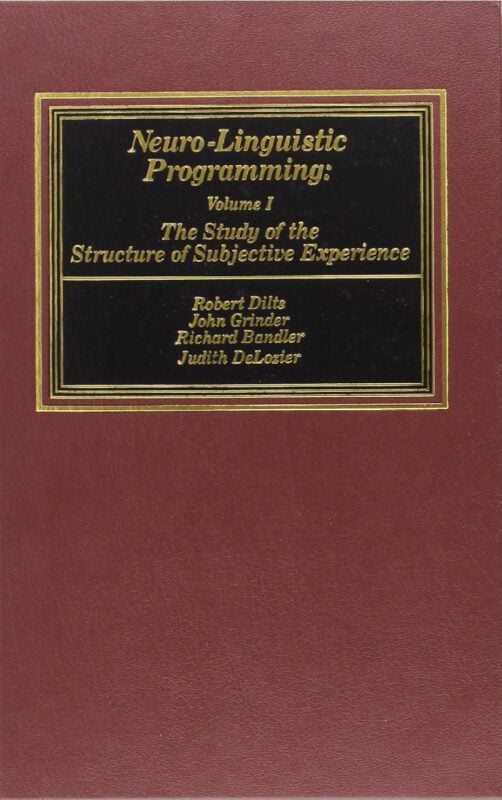
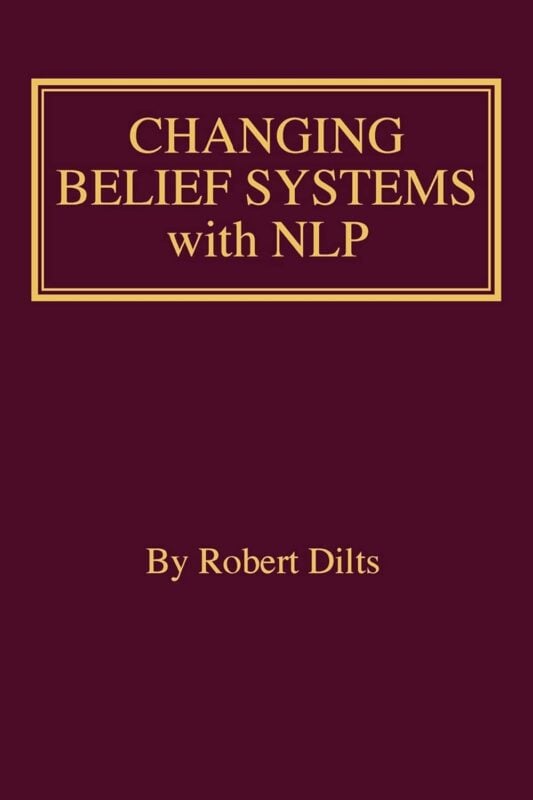
Sleight of Mouth: The Magic of Conversational Belief Change by Robert B. Dilts reveals how precise shifts in language can trigger profound transformations in personal belief systems. Drawing on the foundational principles of Neuro-Linguistic Programming (NLP), Dilts maps the structure of persuasive speech into repeatable, learnable patterns. These patterns—sleights of mouth—do not simply win arguments. They reframe reality. They convert doubt into possibility. They open cognitive space for action.
Language as Intervention
Words shape perception. This is not metaphor. The way an experience is described determines its place in memory, the feelings it evokes, and the actions it enables. Dilts presents language as a primary instrument of change, not a secondary reflection of thought. Sleight of Mouth patterns function as linguistic lever points—tiny shifts in syntax or framing that redirect the trajectory of a conversation, and through it, the internal logic of belief.
He builds from the foundational NLP insight that people do not respond to the world directly. They respond to their internal representations of the world. These representations—their "maps"—are built through sensory filters and linguistic generalizations. When a person says, “I’ll never succeed,” they describe not an objective truth, but a filtered projection. Change the framing of the statement and you alter the implications it carries.
Framing and Reframing Experience
Framing determines relevance. A frame selects, amplifies, and arranges meaning. An outcome frame focuses attention on desired states. A problem frame centers dysfunction and cause. By switching from a problem to an outcome frame, the same content becomes fertile ground for action. Dilts teaches readers how to identify the operating frame in any communication, and how to shift it.
Reframing operates on both context and content. A context reframe locates a problematic behavior in a setting where it becomes valuable. A content reframe shifts the interpretation of an action or event by altering its implication or function. Dilts presents both as fundamental moves in belief negotiation. When someone sees aggression as protection, their judgment softens. When failure becomes feedback, persistence increases.
Structure of Beliefs
Beliefs have linguistic form. They encode cause-effect relationships, equivalences, and expectations. “If I fail, I am worthless” implies a causal logic. “She doesn’t call because she doesn’t care” translates behavior into meaning. Dilts dissects these structures and shows how to challenge them with precision. For example, questioning the generalization behind a belief exposes its weakness. Reversing cause-effect invites alternative explanations. Identifying counterexamples destabilizes certainty.
Each sleight of mouth pattern addresses a specific structural feature of belief. The consequence pattern draws out implications. The intention pattern searches for the positive purpose behind a behavior. The hierarchy of criteria pattern shifts evaluation by comparing values. Through systematic application, these tools enable belief change without confrontation.
Anchoring and State Access
Language influences internal states. Internal states determine access to resources. Dilts emphasizes the need to stabilize empowering states when introducing new perspectives. He draws from NLP techniques such as anchoring to associate positive states with new beliefs. The shift is not purely logical. It is experiential. A belief becomes more acceptable when it is felt to be empowering.
The Belief Change Cycle outlines a sequence: identify the limiting belief, destabilize it through sleights of mouth, install a new empowering belief, and reinforce it through congruent action and internal state. This model integrates cognitive, emotional, and behavioral dimensions of change.
Thought Viruses and Logical Levels
Beliefs replicate. They embed in culture, infect dialogue, and persist across generations. Dilts describes limiting beliefs with viral properties as “thought viruses.” These can be countered only through reframing at a higher logical level. Logical levels include behavior, capability, belief, identity, and purpose. To change a belief that exists at the identity level—such as “I am a failure”—one must often address purpose or spiritual alignment.
Meta reframing operates across these levels. When someone challenges a belief not by argument but by addressing its presuppositions or changing its level, the entire belief structure can collapse. Dilts explores how effective communicators use this strategy to shape social narratives.
Conversational Mastery
Sleight of Mouth patterns function conversationally. They require no formal therapy setting. They apply in boardrooms, classrooms, and casual exchanges. Dilts recounts examples where a single sentence shifted a life trajectory. A police officer diffused a violent encounter by introducing humor and disorientation. A psychiatrist transformed a delusion into productivity by leveraging identity. A surgeon catalyzed healing with a phrase that returned agency to the patient.
These are not tricks. They are targeted interventions rooted in understanding the structure of human meaning. They work because they align language with lived experience and because they respect the ecology of belief systems.
From Argument to Influence
The patterns apply beyond personal change. They provide tools for leadership, negotiation, and conflict resolution. Dilts details how historical figures such as Gandhi, Lincoln, and Jesus used language to reframe entire cultural paradigms. Their speech carried structural clarity. Their words redefined identities and realigned social values.
Using Sleight of Mouth as a system means more than memorizing responses. It means training perception to detect the logic behind statements, listening for frames, and choosing interventions that expand maps. The outcome is influence that respects autonomy and fosters growth.
Modeling and Mastery
Dilts encourages readers not only to apply the patterns but to model them. Modeling means observing skilled communicators, identifying the patterns they use, and integrating those into one’s own language. This recursive process builds fluency. It converts technique into habit and strategy into style.
He includes exercises that guide learners through each pattern, moving from recognition to generation. These exercises build the muscle of reframing, turning insight into capability. Over time, users develop the intuition to select the right pattern in the moment it is needed.
The Power of Precise Language
Language is not only descriptive. It is generative. It creates access to possibilities or closes them down. Dilts treats language as a living system, dynamic and recursive. Each statement carries a network of implications. A single shift—a new connector, a reversed causal link, a redefined equivalence—can transform experience.
Precision in language yields precision in thought. With that comes precision in action. Dilts offers Sleight of Mouth as a discipline of precision, a craft of verbal strategy grounded in the structure of meaning.
Convergence of Change Principles
Through chapters on chunking, belief structure, values, expectations, and state management, Dilts builds a convergence of change principles. Each contributes to the whole. Language reframes belief. Belief shapes perception. Perception guides action. Action confirms belief. Intervene at any point, and the system shifts.
Sleight of Mouth stands as both a technical manual and a philosophical exploration of persuasion. It presents belief change not as manipulation, but as a collaborative unfolding of more useful realities. Dilts positions language at the heart of that unfolding. Within conversation lies the architecture of transformation.