The Weaponization of Loneliness: How Tyrants Stoke Our Fear of Isolation to Silence, Divide, and Conquer
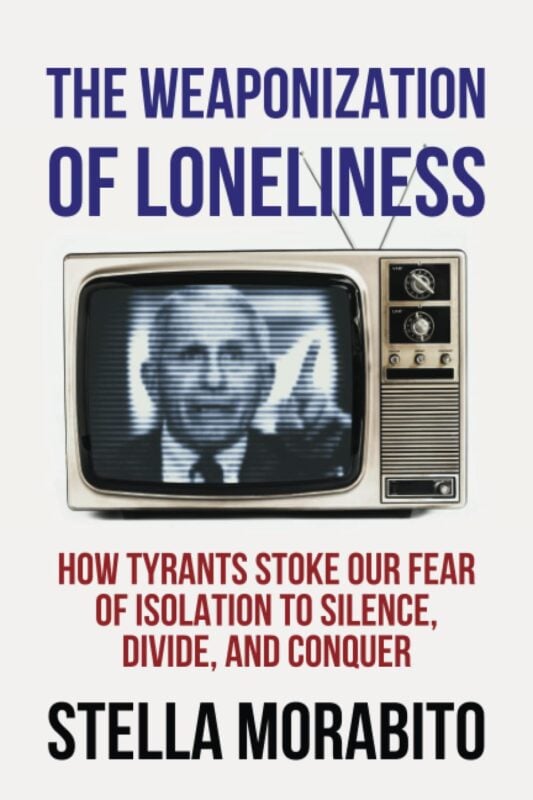
The Weaponization of Loneliness by Stella Morabito investigates how tyrannical systems exploit the fear of social isolation to erode individual autonomy, manipulate public consensus, and impose cultural conformity. Morabito outlines how isolation functions as both a psychological weapon and an infrastructural tool of social control, explaining the dynamics that make modern totalitarianism more insidious, more technological, and more impersonal than previous regimes.
The Mechanics of Loneliness as Control
Loneliness is not merely an emotion—it is a lever of coercion. Morabito asserts that tyrants activate the innate human fear of abandonment to push people toward self-censorship and dependency. When individuals believe their survival or reputation depends on adherence to groupthink, they modify behavior to align with dominant narratives. The result is silence, fragmentation, and a population unable or unwilling to form organic resistance.
Mechanisms of control range from gaslighting in intimate relationships to mass deplatforming campaigns by digital conglomerates. Whether through social shunning, professional ostracization, or online mobbing, the end result concentrates power in institutions and removes it from relational bonds.
How Tyrannies Emerge from Isolation
The architecture of authoritarianism builds on atomization. Morabito identifies identity politics, political correctness, and mob dynamics as the primary tools in the modern tyrant’s arsenal. These mechanisms fracture society into hostile camps, induce self-censorship, and enforce ideological orthodoxy through fear of expulsion. Fragmented individuals seek security in conformity, enabling totalitarian systems to embed deeper without overt resistance.
Social conformity operates as a fuel source. The threat of isolation acts as a spark. The machinery of loneliness requires both to operate. When people suppress opinions out of fear, they become complicit in their own subjugation. Over time, suppressed thought decays into suppressed speech and evaporates from public discourse. The internal silence becomes external compliance.
Institutional Capture and Subversion
Morabito traces a deliberate march through American institutions, arguing that bureaucracies in education, media, religion, and healthcare have become tools of behavioral manipulation. Education systems, in particular, serve as cloning centers, training children to respond to labels rather than reason. The result is a citizenry primed for mob formation, unable to detect or counter propaganda.
Control extends into family life, where policies discourage parent-child bonds and elevate state narratives over private judgment. Faith communities are infiltrated by ideological filters. Friendships erode under suspicion and loyalty tests. In every case, the goal is to dismantle trust structures that could otherwise serve as havens for dissent or bulwarks of autonomy.
The Pandemic as Accelerant
COVID-19 acted as a high-speed trial run for digital totalitarianism. Morabito outlines how lockdowns, mandates, and social distancing protocols severed millions from each other, accelerating the normalization of isolation. Compliance was sold as solidarity. Dissent became deviance. Public health became a framework for behavioral obedience, often enforced by corporate policy and social media.
People were told to accept surveillance, censorship, and separation as moral duties. Morabito highlights how family members turned on each other, colleagues severed ties, and neighborhoods disintegrated into zones of suspicion. The emotional devastation prepared fertile ground for state dependency and ideological submission.
Modern Mob Dynamics
Mobs no longer form spontaneously; they are engineered. Morabito examines how media narratives, viral videos, and digital platforms coordinate to produce flashpoints of moral outrage that justify erasure. These mobs don’t need physical presence. Online platforms perform the same function with greater efficiency and permanence. Once mobilized, mobs coerce apologies, demand firings, and define boundaries of acceptable speech.
Participation is coerced by silence. When one person is punished publicly, others adjust their speech to avoid similar consequences. Morabito draws connections to historical precedents in Soviet purges, Maoist struggle sessions, and French Revolutionary tribunals. The mechanisms endure, even if their mediums change.
Utopianism as Pretext for Terror
Morabito argues that utopian ideologies provide cover for domination. Every revolutionary elite presents its agenda as a pathway to justice, equality, or harmony. What these ideologies demand is the dissolution of dissent, the elimination of private life, and the obliteration of cultural memory. Under the banners of progress, communities are dissolved into demographic units. People are reduced to avatars of their group identity.
She traces this trajectory through several revolutions, from Cromwell’s Puritan theocracy to Robespierre’s Cult of Reason, Lenin’s Soviet collectivism, and Mao’s Cultural Revolution. In every case, the pattern repeats: isolate, indoctrinate, erase, and rebuild from above. The goal remains constant—the unmaking of selfhood in service to an engineered collective.
The Role of Language and Surveillance
Language becomes a battlefield. Control over vocabulary equates to control over thought. Morabito illustrates how pronoun mandates, hate speech laws, and forced confessions operate not as protections but as tools of ideological conformity. These constructs force people to speak in approved formulas, abandoning language that reflects private judgment.
Digital platforms serve as surveillance tools, compiling psychological profiles that anticipate behavior. Algorithms flag deviation. Data mining personalizes propaganda. Morabito warns that artificial intelligence now mediates relationships, rewires perception, and replaces intimacy with simulation.
Atomization as Gateway to Tyranny
Tyranny feeds on disconnection. Morabito argues that technocratic systems thrive when people feel alone, directionless, and desperate for community. The promise of belonging—offered through ideological allegiance—becomes irresistible. What follows is submission to the only power promising relief: the state or its proxies.
Children separated from family traditions adopt state-endorsed values. Individuals disconnected from religious faith adopt moral frameworks approved by institutions. Workers alienated from colleagues adjust speech to survive. The cycle continues: isolation enables control, control deepens isolation.
Breaking the Machinery
Morabito concludes with a call for conscious resistance. She emphasizes the importance of rebuilding private life—strengthening families, renewing friendships, cultivating real conversations. Trust becomes revolutionary. Dissent becomes relational. When people reconnect in truth, the machinery seizes. Tyranny loses fuel.
She draws from neglected research in psychology and social science to chart counterstrategies. Historical studies from Milgram to Asch to Canetti reveal how conformity and fear are not immutable. People can resist when they understand the dynamics and support each other in truth.
The family stands as the core of resistance. Religious faith provides moral direction. Local communities offer refuge from engineered consensus. Real-world conversations repair the fractures. Morabito asserts that survival depends on defending the private sphere and reactivating human connection.
Why It Matters Now
The future is converging fast. Surveillance expands. Algorithms intensify. Digital interfaces mediate expression. Institutions grow more intolerant of dissent. The conditions for systemic tyranny align more completely with each technological leap. The war is waged silently—through policies, education, media scripts, and corporate mandates.
This book does not speculate. It diagnoses. Morabito’s insight locates the battle not in elections or debates but in the choice to speak truthfully and to connect meaningfully. When people refuse isolation and seek genuine fellowship, they dismantle the infrastructure of fear. The tyrant’s greatest weapon ceases to function. Human freedom begins where loneliness ends.