The Babylonian Woe: A Study of the Origin of Certain Banking Practices, and of Their Effect on the Events of Ancient History, Written in The Light of The Present Day
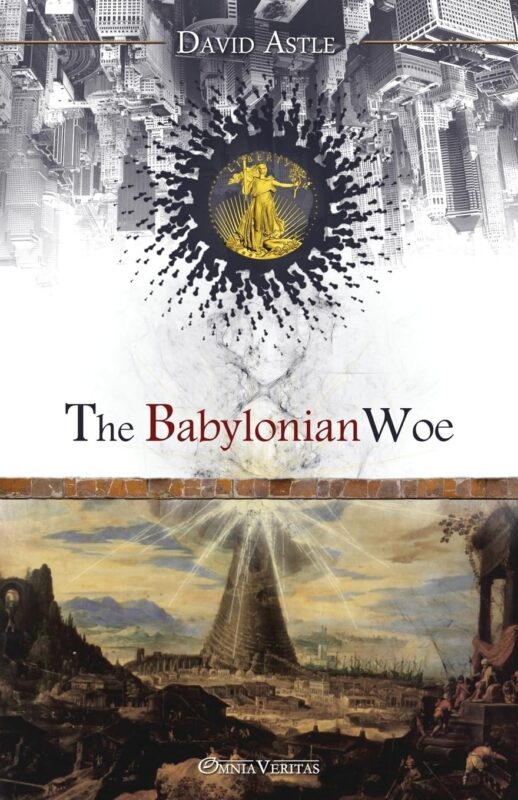
The Babylonian Woe by David Astle presents a critical inquiry into the origins of monetary systems and their enduring political consequences. Astle excavates the economic infrastructure of ancient Mesopotamian civilizations, revealing how the manipulation of money, particularly silver, shaped the spiritual, governmental, and military destinies of early societies.
The Engine of Civilization: Money as Primary Force
Astle begins with a challenge to archaeological orthodoxy. He observes that the standard histories of ancient civilizations—Egypt, Sumer, Babylon—largely omit or marginalize the mechanics of monetary systems. He asserts that money, in its earliest incarnations, did not merely facilitate exchange. It governed the distribution of surpluses, determined political authority, and dictated the conditions for war and peace. Monetary issuance defined power and framed the social hierarchy. The economic infrastructure of early temples operated not only as centers of worship but as de facto central banks, issuing orders of payment from their granaries and treasuries, effectively orchestrating the rhythm of everyday life.
Sacred Power and the Control of Surplus
In Sumer, the temple's control of distribution upheld a sacred social order. Priests, acting as intermediaries of the gods, allocated barley and other essentials based on divine law inscribed on clay tablets. These tablets represented claims on real goods, functioning as proto-money. Astle identifies this mechanism as the earliest model of an exchange system tied directly to spiritual governance. The temple's economic role did not merely reflect religious centrality; it constituted the foundation of sovereign control.
Silver and the Rise of Private Issuance
The introduction of silver into circulation marked a pivotal shift. As silver became the medium of trade, especially across city-states, it bypassed temple authority. Internationally mobile, easily standardized by weight, and universally accepted among merchant classes, silver enabled a new economic class—private money brokers, bullion traders, and caravan merchants—to displace the temple's monopoly on exchange. These actors issued promises to pay, or receipts, against reserves of silver they claimed to possess. Astle identifies this practice as the first breach in centralized economic sovereignty.
Monetary Manipulation and the Collapse of Order
Astle contends that this decentralization of monetary authority constituted the core engine of historical destabilization. With the rise of private money creation, city-states lost control over their economies. The unregulated issuance of claims on silver—unchecked by temple oversight or royal law—allowed an elite class to manipulate scarcity, control credit, and incite war. Monetary scarcity followed bullion hoarding; inflation followed issuance of false receipts. Political collapse followed economic anarchy.
Kingship, Godship, and the Struggle for Issuance
Throughout the early civilizations, kings presented themselves as divinely appointed guardians of economic justice. The legitimacy of their rule depended on control over the issuance and value of money. Astle underscores the conflict between temple-backed sovereign rulers and merchant-financiers who sought to erode that control. When kings lost their grip on monetary creation, they also lost the capacity to stabilize the social pyramid. Wars, revolutions, and foreign invasions became the symptoms of an underlying monetary crisis.
The Apiru, the Temple, and the Transnational Shift
Astle identifies a historical actor shrouded in ambiguity: the Apiru. These itinerant traders, carriers of silver, and handlers of slaves operated across city-states without loyalty to any. Through their networks, silver flowed from mines in distant lands into the vaults of temples and counting houses. They facilitated the rise of an economic network that transcended the city-god system. By introducing an abstract, standardized value system based on silver bullion, they laid the groundwork for a proto-capitalist structure that operated beyond divine law.
The Temple as Front for Economic Power
Temples adapted. In cities like Delos, Ephesus, and Delphi, temples served both as sacred spaces and financial hubs. They received deposits, made loans, and protected reserves. More critically, they masked the emergence of a new economic class—bankers who issued credit and directed trade while cloaked in religious legitimacy. Astle traces this transformation across Greece, Babylon, and Judea, where sacred institutions increasingly became fronts for economic manipulation.
The Invention of Abstraction and Credit
Astle views the development of abstract money as a revolutionary weapon. No longer tied to physical reserves, credit instruments multiplied the effective money supply without equivalent backing. This transformation allowed financiers to generate wealth through ledger entries rather than production or trade. Abstract money, untethered from temple law or sovereign issuance, gave rise to an invisible power structure. Those who controlled credit flows came to dominate governments, direct economies, and initiate wars.
Law No. 7 and the Fight Against Fraud
Astle highlights Hammurabi’s Law No. 7 as a key legal attempt to suppress private monetary fraud. It mandates the death penalty for transactions involving goods received without formal witness or contract, signaling a systemic effort to clamp down on unauthorized money creation. The law sought to prevent the use of fraudulent claims on silver—a practice that Astle likens to modern banking malpractices. Yet its failure to halt the proliferation of private issuance only confirmed the entrenched power of emerging financial elites.
Delos, Credit Systems, and the Slave Trade
Delos exemplified the fusion of sacred sanctuary and financial dominance. Through the temple of Apollo, international bankers operated expansive credit networks, using the island’s sanctity as both literal and symbolic security. From Delos, grain shipments, bullion movements, and slave trading converged under the hidden direction of banking families. These families leveraged abstract money to orchestrate the Mediterranean economy, bypassing national sovereignty and priestly supervision.
Money, War, and the Machinery of Empire
Astle draws a direct connection between monetary control and imperial warfare. Military conquests required vast resources, which only complex credit systems could sustain. Armies marched not merely by royal decree but through lines of credit extended by financiers. These money networks fueled expansion, dictated political alliances, and bankrolled revolutions. Monetary policy, rather than territorial ambition alone, determined the success or failure of empires.
The Final Betrayal: Temple and Throne in Collapse
Astle views the eventual alignment of priests and kings with international financiers as the moment of historical betrayal. In seeking personal gain or military advantage, rulers compromised their divine mandate, surrendering issuance powers to private interests. Priests, once mediators of divine will, became accomplices in economic manipulation. As kings lost authority over money, they became puppets of the counting house. Civilization, once anchored in sacred law, now turned on the whims of unseen creditors.
The Structural Legacy of Monetary Conspiracy
The Babylonian Woe positions this shift not as a singular moment in history, but as a long arc whose consequences stretch into modernity. Astle sees continuity between ancient private issuance and contemporary banking systems. He argues that the same principles—issuance of credit without sovereign backing, manipulation of scarcity, and control of value through abstraction—continue to shape global economics. The disappearance of the divine lawgiver and the ascendance of the banker mark a spiritual and political crisis that defines the modern world.
Monetary Sovereignty as Political Foundation
At the heart of Astle’s thesis is the claim that political autonomy rests on control of monetary issuance. Where the temple ruled the vault, the people received life, order, and justice. Where private interests seized that power, civilization succumbed to war, slavery, and collapse. Economic justice demands a return to publicly controlled issuance rooted in transparent authority. Without it, no system—spiritual, political, or social—can endure.
The Call to Recognize Monetary Power
Astle compels readers to confront the hidden mechanisms of history. Who creates money? Who directs its flow? Who benefits from scarcity and debt? These questions do not belong to economists alone. They shape the rise and fall of nations. The Babylonian Woe insists that monetary systems are not neutral tools—they are engines of power, capable of remaking the world. Understanding their origin is the first step toward reclaiming collective destiny.