Political Ponerology: The Science of Evil, Psychopathy, and the Origins of Totalitarianism
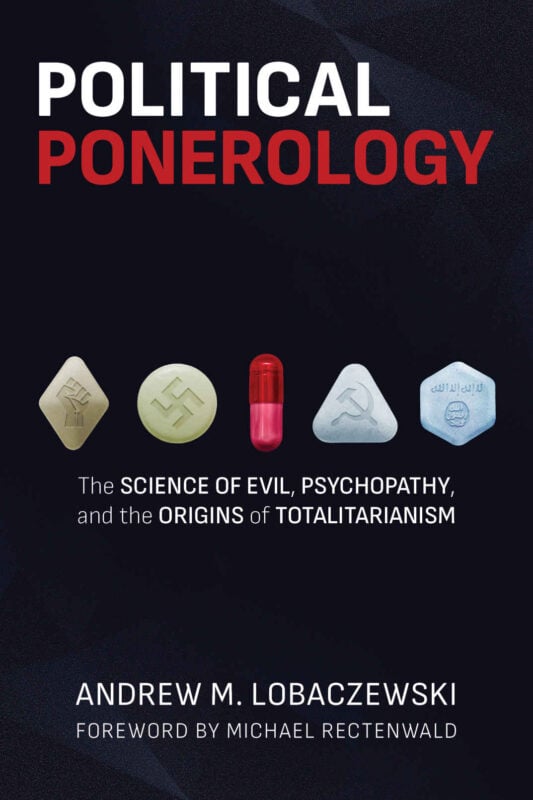
Political Ponerology: The Science of Evil, Psychopathy, and the Origins of Totalitarianism by Andrew M. Łobaczewski stands as a unique investigation into the genesis of macrosocial evil and the mechanisms by which pathological individuals shape the fate of nations. Łobaczewski advances a thesis that fuses clinical psychology, political analysis, and history to construct a framework for understanding how a minority of personality-disordered individuals—psychopaths and their allies—engineer totalitarian systems, capturing entire societies in their pathological web.
The Genesis of Evil in Society
Evil manifests not as an abstraction but as the deliberate consequence of human behavior. Łobaczewski anchors his analysis in precise definitions, drawing on clinical research and direct experience with authoritarian systems in Eastern Europe. Ponerology, the science of evil, seeks to identify the mechanisms that drive individuals to commit acts of harm, domination, and deception, whether in private life or on the grand scale of history. The author locates the origins of political evil in pathological factors: inherited and acquired deviations from psychological norms that lead some individuals to exert coercive power over others. He explores the processes by which such individuals aggregate into networks, exert influence, and ultimately seize control of social and political institutions.
Pathocracy and Its Architects
Pathocracy, as Łobaczewski defines it, emerges when individuals with specific psychological disorders—especially psychopathy—consolidate power at every level of governance. These figures do not simply gain office or ascend through charisma; they methodically infiltrate, displace, and replace those who resist their influence. Psychopaths exhibit glib charm, emotional shallowness, and an absence of remorse. They manipulate, deceive, and exploit structural vulnerabilities within political systems, using ideologies as camouflage for personal motives. Łobaczewski presents this dynamic as a process, not a sudden takeover. Over time, negative selection purges the talented, the ethical, and the competent, ensuring that only those willing to abandon conscience survive and thrive.
Ideology as Instrument and Cover
Ideologies serve as operational tools for the pathocratic elite. Łobaczewski details how slogans such as “equality,” “justice,” or “the people” acquire dual meanings. The general public interprets these words literally, while insiders wield them as code for domination, control, and exclusion. This semantic duplicity enables pathocrats to mobilize broad support, deceive their opponents, and gaslight dissenters. Language ceases to be a medium for truth; it becomes an instrument of manipulation. The party’s public face radiates concern for the masses; its private actions center on maintaining power. The convergence of rhetoric and deception forms a critical element of totalitarian culture, shaping both policy and perception.
Social Hysterization and Mass Formation
Macrosocial evil requires the transformation of normal individuals into accomplices, enablers, or passive observers. Łobaczewski introduces the concept of social hysterization—a process in which emotional manipulation, ideological indoctrination, and punitive enforcement dissolve rational discourse and collective conscience. The author draws on real-world examples from Soviet and Eastern European history, recounting how waves of propaganda, surveillance, and denunciation sever social bonds and create climates of fear and suspicion. Minority factions—often around 6%—adopt the new orthodoxy with zeal, becoming the nucleus of the pathocratic hierarchy. The majority, sensing the threat to survival, adapts outwardly, while internalizing anxiety, guilt, and alienation. The structure of society bends under this psychological pressure, reshaping relationships at all levels.
Psychopathy’s Influence on Institutions
Institutions do not simply reflect the will of the populace. They encode and perpetuate the psychological character of those who govern. Łobaczewski tracks how pathocrats seize educational, legal, and medical systems, hollowing out standards and using authority to legitimize deviance. Policies normalize surveillance, repression, and arbitrary punishment. Schools and universities no longer cultivate critical thought; they become tools for ideological enforcement. Courts apply laws inconsistently, targeting the nonconformist and protecting the loyal. Psychiatry, under pathocracy, no longer serves healing; it identifies political opposition as mental illness. The result: a reversal of natural hierarchies, where pathological traits—cunning, duplicity, callousness—become the criteria for success.
The Role of Ordinary People
Łobaczewski dissects the interplay between the pathological minority and the so-called ordinary majority. The author rejects the simplification that atrocities stem from ideology alone or from some inherent evil in humanity. He insists on a structural analysis: Psychopaths drive the process, but social conditions—trauma, poverty, conflict—amplify their influence. Ordinary people, under stress and coercion, succumb to rationalizations, passivity, or moral compromise. The phenomenon of reluctant compliance emerges in historical studies: the functionary who follows orders while privately disapproving, the neighbor who stays silent to protect family, the professional who censors himself to avoid punishment. The pathology at the top distorts the conscience at the bottom.
Historical Case Studies
The book draws on a vast archive of case studies from Nazi Germany, Stalinist Russia, Maoist China, and Communist Poland. Łobaczewski documents patterns that recur across time and place. Genocidal campaigns, mass purges, and ideological show trials do not erupt spontaneously; they grow from incremental changes: the hiring of unqualified loyalists, the elimination of dissent, the redefinition of virtue. He provides clinical profiles of both leaders and enforcers, showing how the structure of pathocracy mirrors the interpersonal dynamics of dysfunctional families and abusive relationships. The result is a fractal pattern of domination—replicated from the ruling elite down to the smallest unit of society.
Language and Taxonomy: Tools of Clarity
Łobaczewski places special emphasis on the importance of objective language. He develops a taxonomy of pathological phenomena, distinguishing between forms of psychopathy, acquired deviations, and ponerogenic associations. Precise terminology, he argues, protects thought from ideological distortion. Naming phenomena creates the conditions for recognition, defense, and eventual healing. The author draws analogies to advances in medical science: just as the identification of pathogens transformed medicine, so the identification of psychological pathogens promises to revolutionize political science and social healing.
Prevention and Immunization
The final chapters of Political Ponerology turn to strategies for resistance and healing. Łobaczewski advocates the cultivation of psychological immunity: the development of discernment, critical thinking, and emotional resilience. Societies that recognize the warning signs of pathocracy—ideological rigidity, punitive enforcement, semantic confusion, and negative selection—can mount defenses before pathology reaches critical mass. The author calls for the integration of psychological education at all levels, the creation of institutions that reward virtue and competence, and the establishment of transparent systems of accountability. He asserts that healing depends on truth-telling, forgiveness, and the recovery of objective standards.
Contemporary Relevance
Łobaczewski addresses the ongoing relevance of his insights. The rise of new ideological movements in Western societies, the proliferation of “cancel culture,” and the spread of semantic manipulation all echo the historical patterns described in his work. He observes the migration of pathological influence from the margins of academia to the center of political, corporate, and cultural life. He warns that the failure to confront the realities of psychological deviance, the neglect of scientific analysis, and the substitution of ideology for evidence endanger the future of democratic institutions. He urges readers to examine current events through the lens of ponerology, asking not only what is happening, but who benefits, who drives the process, and what psychological traits emerge in those who set the agenda.
Conclusion: The Science of Evil as Societal Safeguard
Political Ponerology offers both diagnosis and prescription. Łobaczewski establishes that the genesis and maintenance of societal evil hinge on the interplay between pathological individuals and the susceptible structures of institutions. He contends that the only reliable safeguard lies in the rigorous, interdisciplinary study of evil as a clinical, social, and historical phenomenon. The synthesis of psychology, history, and political analysis opens the possibility of prevention, resistance, and recovery. The science of evil, once developed and disseminated, becomes a societal immune system—one that detects, isolates, and neutralizes the mechanisms of pathocracy before they metastasize. As societies face new forms of ideological extremism, the lessons of Political Ponerology offer a roadmap for discernment, vigilance, and collective resilience.