The Secret History of the American Empire: The Truth About Economic Hit Men, Jackals, and How to Change the World

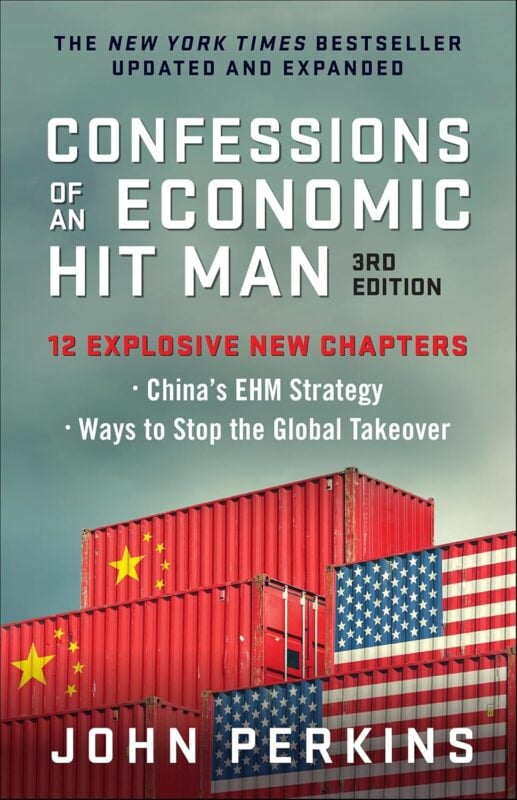
The Secret History of the American Empire: Economic Hit Men, Jackals, and the Truth About Global Corruption by John Perkins investigates the hidden architecture of global power, tracing the deliberate creation of economic dependencies and detailing the people and methods that sustain a global system of wealth extraction and political dominance. Perkins draws on direct experience as an economic hit man, then expands the narrative through confessions, case studies, and on-the-ground reporting from Asia, Latin America, Africa, and the Middle East. The narrative maps a network where corporations, financial institutions, government agencies, and covert operatives act in coordinated sequence, leveraging debt, infrastructure, and violence to achieve global objectives. What does it mean for a nation to possess the outward symbols of sovereignty while the real power flows through unseen channels? Who engineers these flows, and for what ends?
Defining the Modern Empire
The United States, through its corporatocracy—a blend of elite business, financial, and government interests—operates as a modern empire. This empire displays clear markers: it extracts resources from targeted countries, consumes a disproportionate share of global output, builds and deploys unmatched military force, projects language and culture, imposes financial obligations on others, and positions the dollar as the reference currency for global commerce. The architecture of this system emerges from historical precedent and is reinforced through policy, military posture, and transactional control. Decisions and strategies crafted in boardrooms, executive suites, and intelligence agencies set the terms of engagement for nations seeking aid, investment, or diplomatic favor.
The Mechanisms of Economic Hit Men
Economic hit men (EHMs) act as advance agents of empire, orchestrating complex financial arrangements that promise prosperity to developing nations. Under their influence, recipient governments accept massive loans for infrastructure, often brokered through institutions like the World Bank and IMF. These funds, while intended for national development, typically route back to American engineering and construction firms, reinforcing a closed circuit of benefit. As the debt accumulates, repayment proves impossible under the terms dictated. EHMs then present the consequences: policy concessions, resource access, or military basing rights flow to the lender’s interests. Local elites gain personal fortunes and political security as their countries' autonomy dissolves. In these exchanges, infrastructure projects rarely connect to the lives of the poor, whose labor and environment subsidize distant wealth.
From Economic Pressure to Covert Operations
When national leaders refuse to comply, another layer of empire emerges. Jackals—operatives skilled in destabilization—intimidate, coerce, or eliminate obstacles through threats, orchestrated coups, or assassination. The history of Indonesia in the 1960s and 70s demonstrates this dynamic with precision. The Suharto regime, elevated through a bloody anti-Communist purge, serves as a template: loans poured into prestige projects, oil and natural resources changed hands, and local opposition faced overwhelming force. American business interests, by design, remained insulated from the risks faced by those on the ground. In other regions, including Iran, Venezuela, and much of Africa, similar patterns unfold: economic leverage escalates to violence where resistance appears.
The Role of Global Institutions
The World Bank and International Monetary Fund are portrayed as vital instruments of the empire’s financial control. They administer conditional loans, structure privatizations, and promote market reforms that align with Western interests. When loans destabilize economies, local industries face fire-sale privatizations. Transnational corporations acquire utilities, energy, water, and land. The cycle of debt creates recurring leverage points, enforcing the empire’s strategic objectives. These processes accelerate under crisis—currency collapse, political upheaval, or natural disaster opens new ground for acquisition and control.
Sweatshops, Labor, and Consumer Complicity
Supply chains running through Asia’s sweatshops and Latin America’s plantations illustrate the human consequences of global corporatocracy. Workers manufacture goods for brands like Nike, Adidas, and Wal-Mart under conditions that mirror coerced labor: wages remain below subsistence, environments degrade, and protest meets reprisal. These arrangements stem from policies set in capital cities far removed from the lived reality of workers and their families. The book’s interviews with activists and whistleblowers underline the direct connection between consumer choices and distant suffering. This awareness presents a question: How do patterns of consumption sustain global systems of inequality, and what would it mean to disrupt them at scale?
Military Might and Enforced Compliance
Military presence, though often framed as defense or security, underwrites the empire’s leverage. The projection of force shapes negotiations even when bombs do not fall. Local resistance—from insurgents, labor movements, or independent leaders—often faces swift, decisive intervention. In the Middle East, for example, oil-rich states find themselves at the intersection of economic seduction and military threat. The U.S. military, capable of overwhelming intervention, serves as the guarantor of deals forged in boardrooms and brokered through diplomatic channels.
Corporatocracy and the Illusion of Democracy
The narrative foregrounds a system where the boundary between corporation and state dissolves. Leaders rotate between government and industry. Campaign finance and lobbying ensure that only candidates sympathetic to corporate interests rise. Decisions affecting global markets, environmental policy, and resource allocation follow the logic of profit maximization and risk management for a transnational elite. Voters face a narrowed set of choices, defined by funding and media exposure. In this environment, transparency, accountability, and popular will recede, as real power consolidates above public scrutiny.
Case Studies in Extraction and Resistance
Across continents, Perkins catalogues case studies where the tactics of economic hit men and jackals yield consistent results. In Ecuador, leaders who attempt to renegotiate oil contracts face removal or destabilization. In Africa, mineral wealth funds foreign accounts, while local populations remain impoverished. In the Middle East, client regimes maintain order as long as they cooperate with the empire’s energy and security priorities. These stories accumulate, demonstrating a convergence of method and outcome: local elites gain, the majority lose, and the structural patterns endure until actively contested.
What forces break this cycle? The narrative identifies moments of resistance—local leaders who reject the terms, activists who document and protest, whistleblowers who expose secret arrangements. These actions rarely succeed alone, but they lay groundwork for movements that demand different priorities. The arc of the book locates hope in collective action, international solidarity, and the reimagination of what development, prosperity, and sovereignty mean in a world of interdependence.
Environmental Degradation and Global Risk
Resource extraction, enabled by debt and military presence, brings profound environmental consequences. The clear-cutting of forests, pollution of rivers, and exhaustion of soils follow the logic of immediate gain. Perkins underscores the connection between ecological crisis and the mechanisms of empire. The same logic that extracts profit with disregard for future generations produces climate risk, food insecurity, and the potential for conflict. The narrative links these consequences to decisions made by a corporatocracy insulated from the outcomes it produces. Responsibility disperses through complex ownership and governance structures, enabling the deferral of accountability even as crises multiply.
Pathways Toward Change
Perkins advances a call to action grounded in structural clarity and practical agency. He advocates for whistleblowing, organized consumer resistance, and the transformation of corporate governance models. NGOs and grassroots movements provide practical examples of how local action can leverage global networks for justice and reform. The argument extends to personal and collective choices: where money flows, which leaders gain support, and how narratives of progress and prosperity are constructed and disseminated. The book calls for a new myth—a guiding story that prioritizes justice, stewardship, and democracy over extraction and exploitation.
Implications for the Future
The secret history detailed in Perkins’s account converges on a central thesis: empires built on coercion, secrecy, and inequality carry within them the seeds of their own undoing. History demonstrates cycles of rise and collapse. The present system’s legitimacy rests on narratives of progress, market efficiency, and security—narratives increasingly challenged by visible suffering, environmental breakdown, and demands for accountability. The urgency for change grows as resource limits, climate risk, and global inequalities sharpen structural tensions. The book’s conclusion envisions a world where power shifts from corporations to communities, from extraction to regeneration, from secrecy to transparency.
The Role of Individual and Collective Agency
Change emerges from the recognition that structures, while powerful, remain subject to collective will. The book emphasizes the importance of informed action: ethical consumption, political engagement, and support for alternative models of business and development. The narrative identifies the decisive moments when ordinary people become agents of history—standing up against sweatshop labor, organizing for debt relief, or advocating for a living democracy. The convergence of personal transformation and systemic change produces momentum for reform.
Structural Lessons and the Promise of Reform
The secret history revealed in Perkins’s work teaches that systems of control persist only as long as they remain invisible or uncontested. Transparency, education, and solidarity break the patterns that benefit the few at the expense of the many. The corporatocracy, having built structures of extraction and control, can become the site of reform when citizens demand accountability and redefine the metrics of success. As movements for justice and sustainability grow, the possibility for realignment—toward a world that reflects shared ideals—gains substance.
By documenting the processes, players, and outcomes of the American empire’s rise, John Perkins provides both a warning and a blueprint. The stakes involve not only the fate of nations but the prospects for a global order rooted in justice and dignity. The book’s legacy lies in its unflinching exposure of hidden structures and its invitation to imagine—and create—a future beyond empire.

About the Book