How Alexander Hamilton Screwed Up America
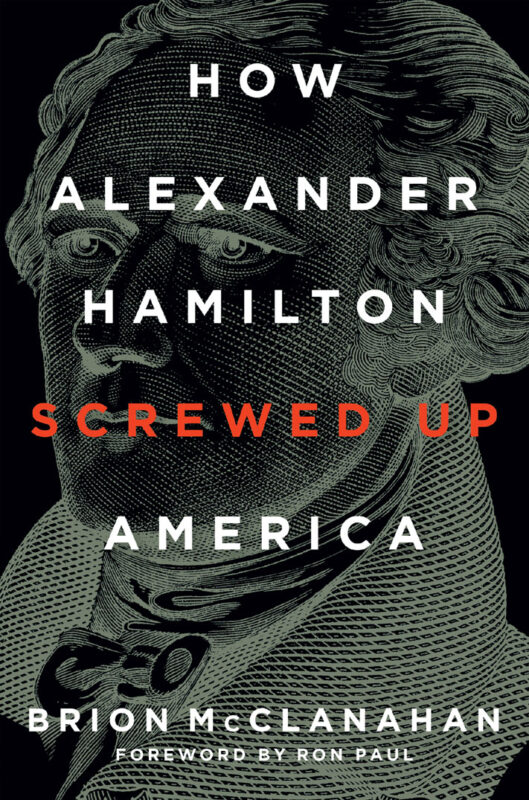
How Alexander Hamilton Screwed Up America by Brion McClanahan confronts the origins and expansion of federal power in the United States, tracing the centralization of authority to the constitutional vision, rhetoric, and political maneuvering of Alexander Hamilton. McClanahan argues that Hamilton designed, advocated, and executed a blueprint for a consolidated national government, providing the intellectual and practical foundation for a central authority that superseded local self-rule, state sovereignty, and the original balance of powers.
Hamilton’s Ascendancy and Political Vision
Hamilton entered the American scene as an outsider, arriving from the West Indies, untethered to any particular state and motivated by a personal attachment to the American idea. He rose quickly, first as a wartime aide to George Washington, then as a persuasive writer and political organizer. He understood that a strong, energetic central government would enable economic modernization, military security, and the creation of financial mechanisms suited to national objectives. From the start, Hamilton saw the United States as a potential world power, requiring institutional structures that could wield authority over commerce, credit, and foreign policy.
Hamilton’s nationalist instincts drove him to pursue a constitutional order that subordinated state interests to federal objectives. During the Constitutional Convention, he argued that the survival of the new nation depended on a powerful, consolidated government. His speeches at Philadelphia advanced a plan to reduce states to administrative corporations, governed by federal appointees and constrained in their legislative authority. He developed a supremacy clause and supported executive power unbounded by state resistance. Hamilton anticipated that this architecture would supply the “energy” needed to maintain the union and project American strength.
The Rhetoric of Ratification and the Politics of Persuasion
In the tumultuous debates that preceded ratification, Hamilton shifted rhetorical gears. He authored Federalist essays and took the floor at the New York Ratifying Convention, asserting that the Constitution provided only enumerated powers, securing state prerogatives and limiting central encroachment. He adapted his arguments to match the anxieties of wavering delegates, promising restraint and federalism, while privately preparing to advance a more expansive national vision once the new government convened.
Delegates like George Clinton, Melancton Smith, and John Lansing pressed Hamilton to clarify whether the new Constitution would transform the states into mere provinces. Hamilton responded with carefully tailored reassurances, insisting that state governments would remain indispensable to the system, with local control protected by the constitutional text. McClanahan documents the sequence of debates in Poughkeepsie, showing how Hamilton’s skillful argumentation, combined with political necessity, secured New York’s ratification but left a legacy of ambiguity about the true meaning and limits of federal power.
The Foundations of Centralization: Debt, Finance, and Implied Powers
Hamilton’s appointment as Secretary of the Treasury created the opportunity to translate theory into action. He introduced the assumption of state debts by the federal government, binding the states to the central authority through the machinery of finance. He pushed for the creation of a national bank, advancing arguments about the “implied powers” of the Constitution that would soon become precedent-setting for future expansions of federal authority. By focusing on economic integration, creditworthiness, and administrative efficiency, Hamilton established the practice of federal intervention into spheres previously managed by states or localities.
McClanahan identifies Hamilton’s doctrine of implied powers as the intellectual lever that lifted constitutional barriers. Hamilton argued that the government possessed not only those powers expressly granted, but also those necessary and proper to achieving the enumerated ends. This elasticity empowered Congress and the executive branch to adopt measures for internal improvements, commercial regulation, and national defense, often in ways that bypassed or preempted state authority.
Judicial Amplification: Marshall, Story, and Black
The consolidation of power did not occur in the executive and legislative branches alone. McClanahan identifies Supreme Court justices John Marshall, Joseph Story, and Hugo Black as pivotal agents in the long Hamiltonian arc. Marshall, as Chief Justice, interpreted the Constitution to favor federal supremacy, judicial review, and the enforcement of implied powers. His decisions set precedents for the judiciary to act as the ultimate arbiter of constitutional meaning, shaping law in ways that aligned with Hamilton’s centralizing agenda.
Joseph Story, a legal scholar and Marshall’s protégé, institutionalized these interpretations through his influential Commentaries, which became the standard for American legal education. Story’s message affirmed the dominance of the federal government over the states and positioned the Supreme Court as the final authority on constitutional questions. By training generations of lawyers and judges in this tradition, Story ensured the perpetuation of Hamiltonian doctrine within the legal system.
Hugo Black, serving in the twentieth century, completed the nationalization of legal and social standards. He interpreted constitutional rights expansively, incorporating the Bill of Rights against the states and removing local discretion over social policy, morality, and public standards. Black’s opinions in areas such as religious freedom, free speech, and criminal procedure established the national judiciary as the enforcer of uniform rules, marginalizing state legislatures and local governance.
From Theory to Practice: The Modern Administrative State
Hamilton’s constitutional legacy extends into the structures of the modern welfare and warfare state. The book traces the origins of national taxation, expansive federal spending, and centralized regulatory schemes to the assumptions and policies that Hamilton articulated and implemented. McClanahan points to the continuity from the early financial systems and executive actions through landmark Supreme Court decisions to contemporary controversies such as national healthcare, federal education mandates, and judicial interventions in social policy.
The logic of implied powers and judicial supremacy, forged in the founding era, underwrites the reach of the administrative state. McClanahan demonstrates how the federal government acquired the tools to intervene in economic life, social relations, and private conduct. Congress, executive agencies, and the judiciary collaborate to shape every major policy area, reducing the capacity of states and local communities to set their own priorities or experiment with alternative approaches.
Cultural Reverberations and the Politics of Memory
The resurgence of interest in Hamilton’s legacy in popular culture, epitomized by Lin-Manuel Miranda’s Broadway musical, provides an opportunity to reassess his influence. The book critiques the celebration of Hamilton as a self-made immigrant hero, arguing that this narrative obscures the consequences of his policies for constitutional government and local autonomy. The author urges readers to distinguish between Hamilton’s personal story and the political outcomes of his vision.
Historical memory shapes the boundaries of political possibility. McClanahan contends that reverence for Hamilton has enabled both progressives and conservatives to claim his mantle, thereby reinforcing the structures of centralization. Political leaders invoke Hamilton to justify programs that range from economic stimulus to social regulation to military intervention, constructing a bipartisan consensus for expansive government.
The Displacement of Localism and Federalism
McClanahan defines federalism as the principle that reserves authority over most matters to the states and local communities, reflecting the diversity of American society and securing liberty through decentralization. He observes that the expansion of federal power, rooted in Hamiltonian ideas and judicial enforcement, has displaced local governance in favor of national uniformity. Issues once managed by state legislatures—marriage, education, economic development, crime—now come under federal purview, with policy debates resolved in Washington or in federal courts.
The narrative traces the historical process by which Americans learned to expect federal intervention as the default response to social problems. This process reoriented political energies toward national elections, centralized lobbying, and federal litigation, leaving states with limited tools to protect local preferences or experiment with new policies. As a result, the fabric of self-government, anchored in communities and regional identities, eroded under the pressures of consolidation.
Restoring Balance: Jeffersonian Principles and the Case for Local Self-Government
The book concludes with a call to rediscover Jeffersonian principles of liberty, limited government, and community self-rule. McClanahan insists that Americans possess the power to recover the original intent of the Constitution by rejecting nationalist myths and reclaiming control over their communities. He argues that education, local activism, and constitutional vigilance can reverse the centralizing trends that began in the founding era.
By identifying the intellectual and institutional sources of centralization, citizens can chart a path toward decentralization, diversity, and meaningful participation in public life. The renewal of federalism and local self-government requires a clear understanding of how Hamilton’s strategies, doctrines, and legacies shaped the American political order. McClanahan maintains that only a sustained commitment to liberty, rooted in genuine community and local autonomy, can restore balance to the American constitutional system.
Hamilton’s Enduring Legacy and the Future of American Governance
Hamilton’s imprint on American governance persists in law, administration, and collective memory. His strategies enabled the construction of a national financial system, the rise of an assertive executive, and the entrenchment of judicial review. These elements, reinforced by later generations of legal and political actors, sustain the capacity of the federal government to direct national policy, control resources, and dictate terms across state boundaries.
McClanahan’s analysis demonstrates that the quest for efficiency, order, and national greatness shaped institutional choices at key junctures, with consequences for liberty and democratic participation. The evolution of the administrative state, judicial doctrine, and political culture reflects the convergence of constitutional theory and practical governance. To chart the future of American self-government, citizens and leaders must engage directly with the unresolved tensions and inherited frameworks of the founding era.
Understanding Hamilton’s choices and their consequences illuminates the pathways by which authority accumulates, communities adapt, and institutions transform. The historical narrative reveals that agency, persuasion, and structural incentives intersected to forge a centralized polity. The stakes of constitutional interpretation, local autonomy, and national identity animate debates across the American political spectrum.
The process of restoration demands clarity, resolve, and a willingness to challenge entrenched narratives. McClanahan urges a reconsideration of founding principles, a renewal of local commitment, and a disciplined skepticism toward centralizing impulses. The fate of American liberty, in this account, rests on the capacity of citizens to reclaim the mechanisms and ethos of self-rule, contesting the momentum of Hamiltonian centralization and shaping a more pluralistic, participatory future.