Fire in the Minds of Men: Origins of the Revolutionary Faith
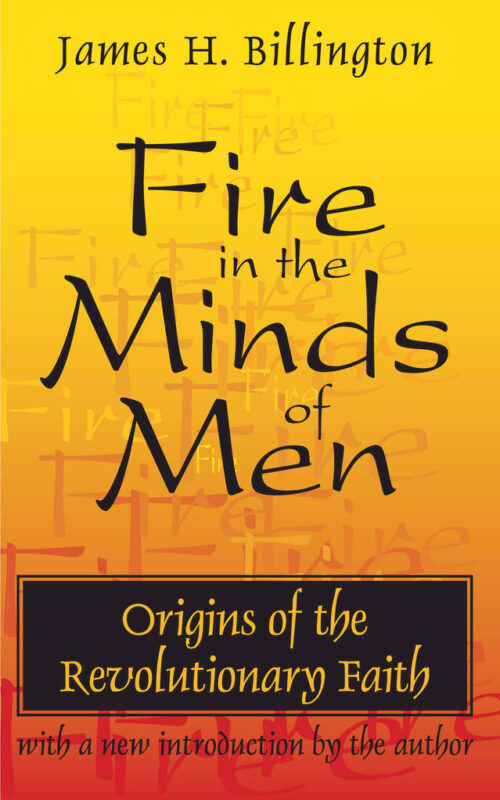
Fire in the Minds of Men by James H. Billington traces the origins and development of the revolutionary faith that transformed Europe from the late eighteenth to the early twentieth century. Billington asserts that the age of violent revolution, often misunderstood as an inevitable response to material conditions, represents a complex convergence of secular belief, elite creativity, and new modes of communication. The book identifies the architects of this faith—intellectuals, journalists, and secret society members—whose fervor and vision redefined both the structure of power and the meaning of faith in the modern era.
The Genesis of Revolutionary Faith
Modern revolutionary faith emerges from the convergence of Enlightenment ideals, proto-romantic mysticism, and the secularization of religious passion. Billington traces this genesis to a specific cultural milieu where intellectual elites, disillusioned with traditional religious and political structures, forge a new faith in secular deliverance. Their conviction that radical upheaval could usher in an era of justice and transformation finds its first organizational expression in late-eighteenth-century France and Germany. The faith in question claims total authority over human possibility and seeks to build a wholly new order through the destruction of the old. Revolutionary leaders anchor their legitimacy not in dynastic succession or divine right, but in their promise to realize fraternity, equality, and liberty as absolute goals.
Urban Crucibles and the Rise of the Intellectual Vanguard
The city, especially Paris and St. Petersburg, functions as the crucible for revolutionary innovation. Billington reveals how urban cafes, literary salons, and journalistic offices become incubators for new modes of association and collective action. Within these spaces, the language of revolution evolves rapidly, blending old words with new meanings. Revolutionary elites—often middle-class men with little connection to manual labor—begin to see themselves as prophets and apostles of a secular faith, driven by ideas rather than economic necessity. The formation of secret societies and the embrace of symbols drawn from occult and Masonic traditions deepen the sense of mission among these intellectuals.
The Schism: National vs. Social Revolutionaries
As the nineteenth century progresses, the revolutionary faith divides along two axes: national and social. Advocates of fraternity identify the nation as the primary agent of deliverance, channeling revolutionary energy into movements for national liberation and unity. These revolutionaries invent new forms of mythic history, vernacular poetry, and symbolic ritual to inspire mass participation. At the same time, proponents of equality insist that social class, not nation, must become the locus of transformation. They build organizations dedicated to the abolition of class hierarchy, envisioning an international community united by the principle of shared labor and collective ownership.
Occult Influences and Organizational Innovation
Billington spotlights the crucial influence of German occultism and proto-romanticism in shaping the revolutionary tradition. Revolutionary leaders draw upon alchemical metaphors, secret initiation rituals, and Pythagorean numerology to create a sense of sacred mission. This fascination with the arcane informs both the rhetoric and structure of revolutionary organizations. Secret societies operate with hierarchical secrecy, inner circles, and coded communication. Such structures provide resilience against state repression and instill a sense of destiny among members. The obsession with radical simplicity and geometric order manifests in the recurring ideal of the revolutionary vanguard—an elite group tasked with awakening the masses and guiding them toward the promised future.
The Mythic Model: Prometheus and the Fire
A central myth animates the revolutionary imagination: Prometheus stealing fire from the gods to bestow enlightenment upon humanity. Revolutionaries identify with this act of transgression and transformation, believing themselves destined to ignite the minds of their contemporaries. Fire serves as the unifying symbol, representing both destructive power and creative potential. Billington explores how revolutionary rhetoric employs solar imagery, alchemical transformation, and the language of apocalypse. The revolutionary quest, then, seeks to unleash a transformative energy capable of consuming the old world and illuminating a new dawn.
From Incubation to Insurrection: The Revolutionary Trajectory
The process of revolution advances from incubation within intellectual circles to widespread insurrection. Billington maps this trajectory through case studies of revolutionary moments: the French Revolution, the Paris Commune, and the Russian uprisings. The propagation of revolutionary faith depends on the spread of new communication technologies, including print journalism, pamphleteering, and, later, telegraphy. Revolutionary journalists become both chroniclers and instigators, crafting manifestos and polemics that circulate widely and galvanize public sentiment. The mythic narrative of revolution—incarnation, betrayal, martyrdom, and resurrection—structures the self-understanding of revolutionary movements and their leaders.
Ritual, Symbol, and Space: The Geography of Revolution
Physical and symbolic geography shapes the revolutionary tradition. Activists invest specific urban spaces—cafes, public squares, barricades—with sacred meaning. Rituals of initiation, collective singing, and the creation of flags and emblems reinforce group cohesion and historical memory. Billington describes how the mapping of revolutionary space extends beyond city boundaries, as exiled intellectuals and refugees carry their faith across borders and transform local insurrections into transnational causes. The interplay of sacred time (moments of crisis, martyrdom, and revelation) with sacred space (the revolutionary stronghold, the barricade, the prison cell) intensifies the sense of historical purpose.
The Early Church of Revolutionaries
As revolutionary movements mature, they develop institutions that mirror the organization of religious communities. The formation of parties, conspiratorial networks, and international alliances parallels the ecclesiastical structures of earlier faiths. Leaders assume roles akin to priests, prophets, and martyrs. The rhetoric of mission, sacrifice, and deliverance pervades revolutionary discourse. Internal schisms emerge as doctrinal disputes—such as the conflict between Marx and Proudhon—shape the trajectory of the movement. These debates center on fundamental questions: Should the revolutionary party pursue centralization and discipline or decentralization and spontaneity? Does social liberation require the destruction of the state or its capture and transformation?
Technology, Journalism, and the Magic Medium
The evolution of journalism transforms the revolutionary landscape. Newspapers, pamphlets, and clandestine bulletins carry revolutionary ideas into new social strata. Billington analyzes how the control of information becomes a battleground, with states and revolutionary movements competing for the power to shape public perception. The revolutionary press forges networks of solidarity across borders, creating imagined communities of the faithful. As technology advances, revolutionaries adapt their tactics, seizing telegraph offices and radio stations to broadcast their message. The image and the word acquire unprecedented power to mobilize, inspire, and sustain revolutionary action.
Women and the Expansion of Revolutionary Faith
Women play a critical role in broadening the scope and appeal of revolutionary movements. Their participation introduces new priorities, vocabularies, and forms of organization. Women revolutionaries champion issues of gender equality, education, and social justice. They provide crucial support as communicators, organizers, and sometimes as fighters. Billington highlights figures who break the boundaries of their time, demonstrating how the inclusion of women in revolutionary circles expands the movement’s vision and capacity for transformation.
From Revolution to Totalitarianism
The triumph of revolutionary faith after World War I yields new regimes in Italy, Germany, and Russia. The convergence of national and social revolutionary traditions produces ideologies that merge fraternity with equality, producing both national socialism and communism. These regimes prioritize collective identity over individual liberty, claiming to realize the revolutionary promise through the centralization of power. Billington traces the consequences of this transformation: the creation of modern dictatorships, the emergence of totalitarian control, and the costs imposed on human life and freedom. The internal logic of the revolutionary faith, once committed to liberation, now justifies repression and violence in the name of the future.
The Decline and Transformation of Revolutionary Ideology
By the late twentieth century, the revolutionary faith loses its hold over the European imagination. New social movements, often rooted in religion or local activism, supplant the secular ideologies of the past. Billington chronicles the rise of the Solidarity movement in Poland, the collapse of the Soviet Union, and the reemergence of religiously infused social activism in Iran and Eastern Europe. These movements derive legitimacy from their spontaneous, grassroots character and their invocation of higher moral standards. They mark a shift from revolution as violent rupture to evolution as nonviolent transformation.
The Evolutionary Alternative and the Future of Faith
Billington identifies an “evolutionary alternative” to the revolutionary tradition, embodied in figures such as Lafayette and in movements prioritizing liberty, rule of law, and local accountability. This alternative resists the messianic drive for total transformation, instead valuing gradual reform and the renewal of conscience. The book closes with a call to recognize the dangers that remain—the recurrence of violence, the rise of new forms of fanaticism, the depletion of shared moral resources—and to seek answers in responsibility, spiritual development, and pragmatic problem-solving.
The Enduring Legacy of Revolutionary Faith
Fire in the Minds of Men illuminates the enduring impact of revolutionary faith on political culture, language, and organization. Billington shows how the language and symbols of revolution continue to shape contemporary debates, even as their meaning evolves. The book provides a framework for understanding the intellectual and spiritual currents that have driven the modern world, revealing the capacity of ideas to inspire action, mobilize communities, and reshape the course of history. Who shapes the faith of an age, and how does that faith shape the destinies of nations? The story of revolutionary faith remains a central chapter in the unfolding drama of human aspiration and transformation.