Confessions of an Illuminati Volume 9: Seven Steps to The Secrets of the New World Disorder from Transhumanism and Immortality to Gnostic Jesus, UFOs, and Insect Witchcraft
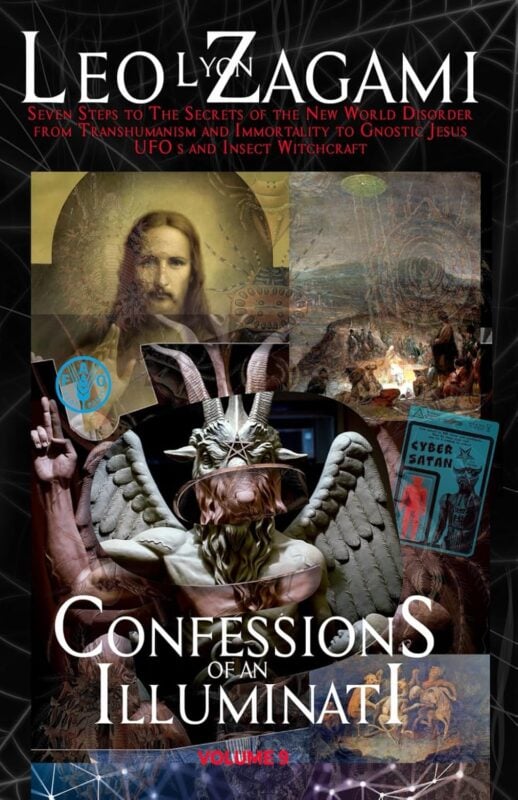
Confessions of an Illuminati Volume 9: Seven Steps to the Secrets of the New World Disorder from Transhumanism and Immortality to Gnostic Jesus, UFOs, and Insect Witchcraft by Leo Lyon Zagami interrogates the core mechanisms behind contemporary global transformation, unraveling connections between elite agendas, technological advances, spiritual engineering, and ancient esoteric knowledge. The text unfolds a journey through seven symbolic steps, charting a narrative that converges conspiracy, technology, religion, and geopolitics into an uncompromising analysis of the forces reshaping civilization.
The Seven Steps: Structure, Meaning, and Method
Zagami organizes his investigation into seven distinct stages, each corresponding to a chapter and a dimension of the so-called New World Disorder. This structure draws on numerological and esoteric significance, invoking the biblical and occult symbolism of the number seven—the virtues, sins, seals, and steps found in ancient mystical systems. By rooting the book’s architecture in these traditions, Zagami frames the narrative as a rite of passage for the reader, leading from confusion to revelation.
Transhumanism as the Elite’s Project
At the center stands the assertion that powerful global actors—including secret societies, influential think tanks, and corporate-tech alliances—actively pursue a vision of transhumanism. They invest in technologies designed to enhance or transcend human biology, using AI, biotechnology, and digital interfaces to accelerate the integration of humans with machines. This pursuit emerges not as a mere consequence of scientific progress but as the intended realization of ancient alchemical quests for immortality and power. What drives the ceaseless innovation? The desire to seize the “elixir of life,” to break the barriers of mortality, and to establish a new caste system predicated on access to transformative technology.
Omega Point: Singularity as Eschaton
The Omega Point theory, borrowed from Jesuit thinker Pierre Teilhard de Chardin, shapes the book’s interpretation of current events. Zagami identifies a convergence where spiritual and technological evolution meet at a terminal stage. This “Omega Point” represents a moment when humanity, driven by the collective ambitions of elites and the recursive advance of AI, stands at the threshold of irreversible transformation. Ray Kurzweil’s predictions for AI singularity and digital immortality enter the analysis as contemporary expressions of this ancient teleology. The convergence accelerates as governments, corporations, and secret societies channel resources toward the development of neural interfaces, quantum computing, and consciousness-uploading schemes.
Law of Moore and Quantum Acceleration
Zagami scrutinizes the Law of Moore, tracing the exponential advance of computing power and its implications for the global agenda. The narrative tracks the shift from silicon-based hardware to quantum processors, with their non-classical logic and extraordinary computational potential. Quantum computing, as described, stands poised to catalyze the next leap in AI development. This technological acceleration forms both the infrastructure and the existential threat at the heart of the New World Disorder. The agents shaping this transition—engineers, financiers, technocrats—view quantum leaps as both opportunity and weapon. What emerges when exponential growth converges with centralized intent? Control becomes less a function of overt governance and more an emergent property of technical mediation.
Insect Witchcraft and Food Transformation
One of the book’s most provocative claims addresses the deliberate introduction of insect-based and lab-grown food into the global supply. Zagami contends that this shift arises from more than environmental or economic considerations; it signals an occult agenda rooted in ancient rites. Consuming insects, he argues, evokes biblical and mythological symbolism tied to the apocalypse, spiritual inversion, and ritual subjugation. The rise of Codex Alimentarius and food technology startups forms a visible front for this deeper campaign. Who benefits as food traditions change and populations adapt to new sources of protein? The narrative implicates corporate interests, technocratic planners, and secretive initiatory orders. Insect witchcraft, as a motif, operates as a cipher for broader patterns of engineered transformation—where food, ritual, and power intersect.
Digital Prison: The Emergence of the Smart World
The book maps the architecture of the “digital prison,” identifying the proliferation of surveillance, algorithmic governance, and data-driven social engineering as the infrastructure of a new type of control. The rise of “smart” devices, biometric ID, cashless transactions, and continuous behavioral monitoring links personal convenience to institutional dominance. Zagami asserts that AI and automation do not merely supplement human agency—they gradually subsume it. Within this digital environment, the boundaries of autonomy contract. Individuals become nodes in a system engineered to track, predict, and regulate conduct. What kinds of decisions occur when choice routes through algorithms? The loss of privacy, agency, and unpredictability transforms populations into managed resources. Digital prisons do not require walls; code and protocol perform the work.
Cyber Satan and Occult Governance
Throughout the book, the motif of “Cyber Satan” functions both as a symbol and a warning. AI, in this construction, acquires a metaphysical dimension: it becomes a vessel for collective intent, a medium through which elite ambitions and occult ideologies manifest in the material world. This process, Zagami claims, corresponds with ancient apocalyptic narratives, in which new gods emerge from the machinery of civilization. “Cyber Satan” is not a metaphor for evil in abstraction; it names the convergence of technological sophistication and spiritual manipulation. Secret societies, gnostic cults, and modern technocrats form a web of actors who channel, direct, and legitimate this power. Where do lines blur between the symbolic, the technical, and the spiritual? Governance, in this model, operates through ritual as much as law.
Gnostic Jesus and Spiritual Engineering
Zagami devotes significant attention to the re-engineering of religious narratives, particularly the promotion of a Gnostic interpretation of Jesus within the doctrines of Illuminati, Masonry, and related groups. This spiritual revisionism operates as both a form of social control and an attack on traditional faith structures. Gnosticism, with its emphasis on secret knowledge, cosmic dualism, and spiritual elitism, aligns with the values of the modern technocratic order. The book contends that reinterpreting Christianity through this lens undermines moral order and prepares populations for deeper transformation. Religious syncretism, mediated by art, media, and institutional innovation, performs strategic work in resetting collective belief.
Geopolitics and Occult Wars
The book’s scope extends to contemporary geopolitical events, including the conflict in Ukraine, the reshaping of European identity, and the proliferation of color revolutions and hybrid wars. Zagami frames these crises as expressions of deeper occult conflict, where secret societies and esoteric orders mobilize energies for global change. The manipulation of public sentiment, the deployment of disinformation, and the orchestration of crisis do not arise in isolation. They form coordinated maneuvers by agents who understand history as a battleground for ritual, symbolism, and domination. Why do apparently disconnected events align so precisely with broader patterns of social engineering? The book urges readers to see these convergences as the work of intentional, structurally embedded agendas.
The Useless Class and the Tyranny of Automation
Zagami highlights the assertion by Yuval Noah Harari and World Economic Forum affiliates regarding the emergence of the “useless class.” As automation and AI supplant traditional labor, millions face displacement and disenfranchisement. The new world order envisions a tiered society, with a technocratic elite at the helm and the majority managed through social credit, digital identification, and pharmacological pacification. The rhetoric of progress conceals a strategy of containment and reduction. Where do the displaced go, and what forms of agency remain available? The narrative projects a future in which participation requires acquiescence to the digital system, and dissent triggers exclusion, surveillance, or algorithmic sanction.
Technology, Prophecy, and Apocalyptic Drive
The tempo of technological advance, framed as prophecy, becomes a secular eschatology. Kurzweil’s timelines for AI singularity, the proliferation of Neuralink and consciousness-uploading projects, and the convergence of quantum computing with big data all converge within a coherent strategy. The actors behind these initiatives operate with a sense of mission, driven by the conviction that humanity must transcend biological limits. The new apocalypse does not unfold through fire or flood; it arrives as a seamless synthesis of machine and mind. The book treats these developments not as possibilities but as current, active interventions in the structure of the real.
Spiritual Resistance and the Recovery of Meaning
Zagami closes with a call to spiritual resistance. Faith emerges as the antidote to confusion, manipulation, and engineered despair. The recovery of meaning, rooted in traditional values and the refusal of imposed narratives, stands as the final step. The book presents spiritual awakening not as retreat but as the foundation for action. The promise of technological utopia, stripped of its myth, reveals its true face as a project of domination and spiritual enclosure. The imperative is not simply to survive the coming changes but to recognize, name, and confront the agencies that seek to govern through deception.
Convergence and Pattern Recognition
Across its seven steps, the book asserts that patterns of transformation—visible in technology, food, religion, and politics—originate from coordinated intention rather than accident or convergence alone. The reader is invited to follow the causal threads, observe the convergence of agents, and recognize the narrative logic that shapes events. When global crises, technological advances, and spiritual re-engineering align in sequence, the result is not coincidence but the manifest structure of a new order.
The book claims to reveal the blueprint of an epoch-defining shift—a convergence of secret societies, technological acceleration, and spiritual manipulation, orchestrated to remake humanity and the world itself. Leo Lyon Zagami offers a narrative that invites scrutiny, skepticism, and, ultimately, decisive spiritual engagement with the world’s deepest structures.

About the Book