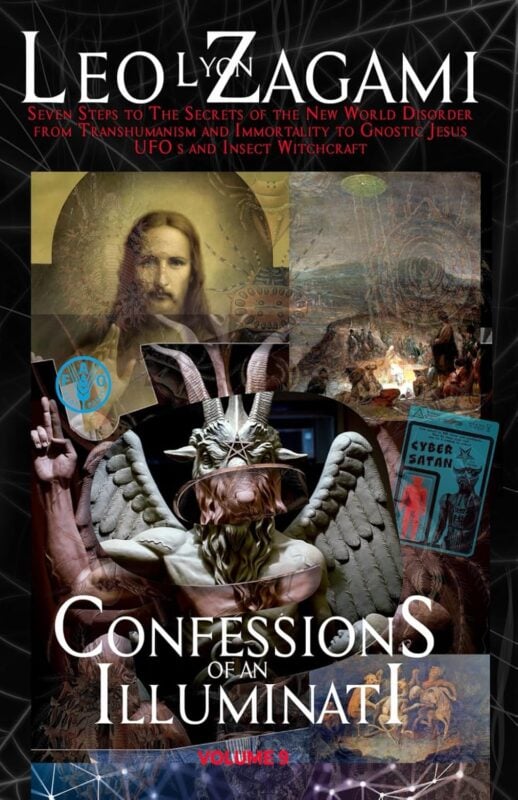
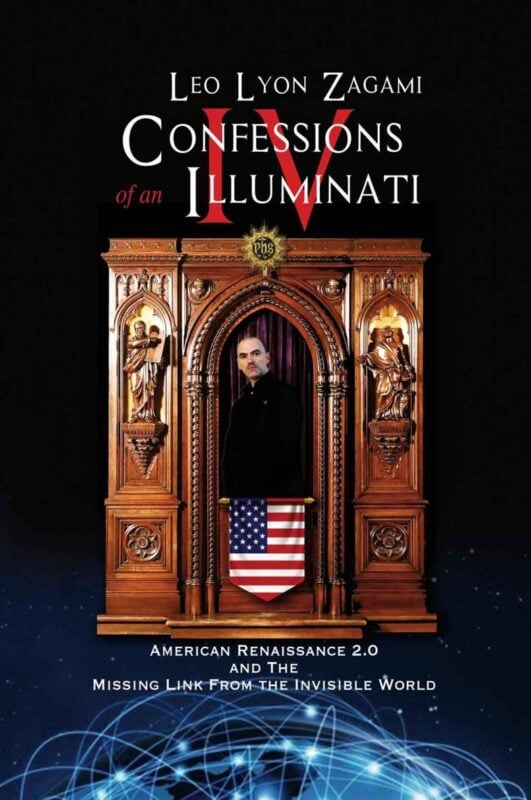
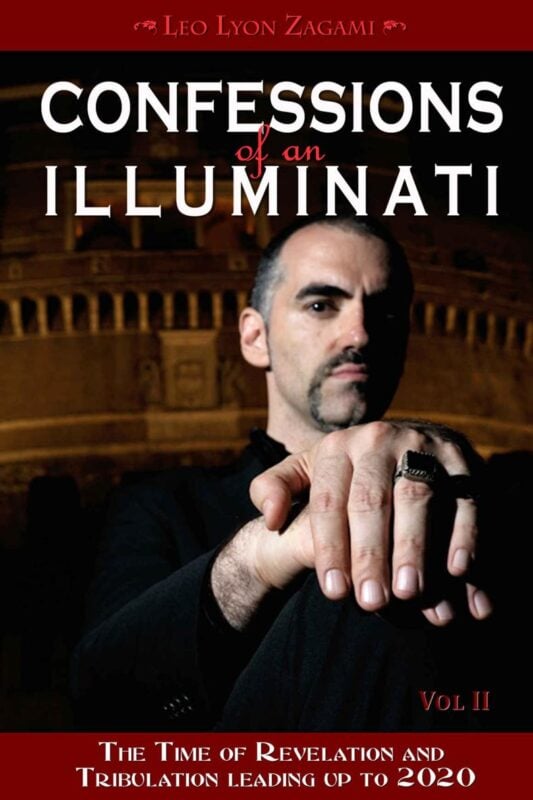
Confessions of an Illuminati Volume 5: The Decline of the West and the Rise of Satanism in our Society
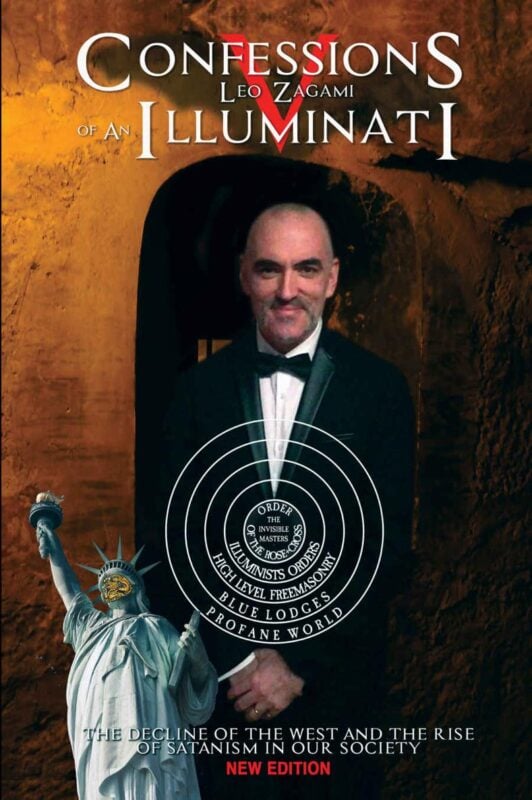
Confessions of an Illuminati Volume 5: The Decline of the West and the Rise of Satanism in our Society by Leo Zagami plunges directly into the esoteric heart of modern civilization’s crisis, exposing the intricate web of secret societies, occult traditions, and their infiltration into the political, religious, and cultural bloodstream of the West. Zagami asserts the existence of a concealed network, built over centuries, that now orchestrates much of the societal transformation that many perceive as moral and spiritual decline.
Origins of the Western Initiatic System
Western civilization did not arise in isolation; instead, it coalesced from ancient streams of philosophical, religious, and initiatory traditions. The Greeks synthesized the mysteries of Eleusis, Samothrace, Orpheus, and Dionysus. Roman and Egyptian influences, especially the Hermetic and Isiac mysteries, converged with Sumerian currents, forging what became the Western Initiatic System. Zagami traces this genealogy through Alexandria in the Ptolemaic era, identifying a fusion of Greek rationalism with esoteric ritual practice. From this amalgam emerged the Hermetic Theurgic tradition, which formed the backbone of later secret societies, including Freemasonry and the Illuminati.
Transformation Through Secret Societies
Freemasonry operates through a visible fraternity and an invisible, inner brotherhood devoted to the pursuit of a mysterious Arcanum Arcanorum. This dual structure allows secret transmission of knowledge and influence, shaping both individual members and collective events. Zagami foregrounds the continuity between the Western Initiatic System and organizations such as the Rosicrucians, Golden Dawn, Ordo Templi Orientis (O.T.O.), and various esoteric rites. These groups claim ancient lineage, some referencing the Temple of Solomon, Sufi mystics, or the Knights Templar, though Zagami identifies a deeper, more elusive ancestry.
Occult Theocracy and the Power Behind the Veil
Occult theocracy denotes the covert exercise of authority by a priestly hierarchy or adept network. Zagami sees this as the real government operating above conventional state structures. He details the relationship between Freemasonry, Rosicrucianism, and other societies, noting how key figures such as Kenneth Mackenzie, William Wynn Westcott, John Yarker, and Papus bridged British, French, and German traditions. These interlinked networks fostered the creation of the Golden Dawn and O.T.O., whose doctrines and rituals continue to influence Western elites.
Timeline of Darkness and Influence
The chronology of magical and occult movements reveals accelerating influence over the last two centuries. From Francis Barrett’s The Magus in 1801, through the rise of the Golden Dawn in 1888, the appearance of Aleister Crowley in 1898, and the birth of Ordo Templi Orientis in the early 20th century, Zagami identifies a sequence of institutional expansions. The repeal of the British Witchcraft Act in 1951, the establishment of the Church of Satan by Anton LaVey in 1966, and the emergence of groups like the Temple of Set, Temple of the Vampire, and the Order of Nine Angles (ONA) display an observable progression. Each new formation introduces further doctrinal shifts, ritual developments, and public normalization of what Zagami identifies as Satanic or anti-Christian influence.
Metaphysics of Evil
Evil functions as a parasite, drawing vitality from its parent source—good—without possessing independent existence. Zagami adopts a metaphysical framework in which evil arises from misuse of human will and ignorance of spiritual law. Rather than abstract condemnation, he grounds this analysis in a meta-scientific approach, suggesting that progress, spiritual or material, results from the direct application of will aligned with universal law. Misapplication breeds disharmony, manifesting as societal decay, spiritual confusion, and the proliferation of Satanic currents.
The Brotherhood of Satan’s Minions
The Brotherhood of Satan, once publicly visible through its now-defunct online presence, exemplifies the convergence of secret society networks and open advocacy of Satanism. The author recounts their explicit statements of Freemasonic and law enforcement infiltration, describing leaders such as David Daniel De Paul (Druwydion Pendragon) and Keith Shaffer (Lord Gwydion) as emblematic of this crossover. Citing testimony from former Satanic priest William Schnoebelen, Zagami connects the activities of these groups to ritual practices and criminal acts, underlining the necessity of legal and societal vigilance.
Rise of the Order of Nine Angles
The Order of Nine Angles (ONA) represents a new threshold in public Satanic and left-hand path activity. Established in the UK in the 1960s, ONA has developed a global presence. ONA’s doctrines combine Hermeticism, neo-paganism, and traditional Satanism. The group’s writings endorse human sacrifice, referred to as opfers, as a pathway to personal power and transformation. Their structure includes public and secret components, reinforcing the broader pattern of duality observed in secret societies.
Modern Occultism and the Political Arena
Occult organizations do not confine their ambitions to spiritual or philosophical realms. Zagami documents the influence of these groups within the spheres of political power, particularly in the United States and Europe. He draws attention to the alliances and ideological intersections between Democratic and Communist parties in the U.S., tracing them to earlier socialist and labor Zionist movements. The increasing normalization of occult practices among politicians and media figures—citing Sally Quinn’s confessions and Hillary Clinton’s references to voodoo—serves as evidence for Zagami’s claim of an escalating cultural shift.
The Vatican and the Masonic Agenda
Within the Vatican, Zagami identifies a pattern of infiltration by Masonic and Satanic elements, resulting in doctrinal shifts, political interference, and the advancement of a New World Order agenda. He highlights historical developments such as the support for the Republic by the Grand Orient of France and the abolition of the requirement to believe in God or the immortality of the soul. The Vatican’s openness to non-Christian ideologies, coupled with the rise of a Jesuit pope, forms a key pillar in the book’s argument for a coordinated transformation of global religious authority.
Erosion of Christian Ethics
Zagami asserts that Christianity faces a deliberate and organized assault. Secret societies and their political allies erode traditional values, destabilize social structures, and promote materialism and atheism as normative. He claims that the rise of Satanism and occultism coincides with the decline of personal responsibility, spiritual knowledge, and authentic ethical practice. The proliferation of rituals, symbols, and public performances further weakens the cultural and psychological foundations of Christian civilization.
Dharma, Karma, and the Law of Use
Drawing from Hindu and Buddhist concepts, Zagami incorporates the principles of Dharma and Karma to frame his call to action. Dharma represents the cosmic law and duty that guides existence; karma embodies the ritual actions through which one fulfills that duty. The Law of Use dictates that knowledge must serve action and transformation, rather than remaining inert. He urges readers to awaken others, utilize knowledge constructively, and resist the forces that undermine spiritual and social order.
Conversations with the Illuminati
Direct dialogues with prominent esoteric figures such as Mark Stavish and David Griffin provide firsthand perspectives on the aims, strategies, and internal debates within contemporary occult circles. These conversations illuminate the diversity and tension among initiates, reinforcing the book’s broader claim of a complex, evolving struggle for the soul of Western society.
Actionable Awareness
Zagami rejects superficial engagement with conspiracy or esoterica. He insists on informed vigilance, discernment, and a proactive stance. Readers must scrutinize the origins, affiliations, and doctrines of organizations before participating or endorsing them. Understanding the nature and tactics of secret societies equips individuals and communities to counteract their influence.
Historical Roots and the Path Forward
The Western Initiatic System, born of ancient synthesis, generated traditions of enlightenment and power. As secret societies appropriated and transformed these systems, they redirected the stream of history. Zagami sees the current epoch as a crucible, demanding a return to authentic spiritual practice, the revival of Christian ethics, and resistance to the tides of occult materialism.
The Call for Restoration
Zagami closes with an imperative for collective and individual transformation. The struggle for the West’s spiritual integrity requires conscious action, application of ancient wisdom, and refusal to cede ground to forces that degrade or corrupt. He positions the battle as existential, extending from the innermost structures of society to the soul of humanity. The opportunity for restoration remains within reach for those willing to reclaim the power and responsibility at the heart of the initiatic path.
Confessions of an Illuminati Volume 5: The Decline of the West and the Rise of Satanism in our Society delivers a controversial, detailed map of esoteric history and modern crisis, equipping seekers and skeptics alike with the arguments, references, and frameworks to navigate a landscape dense with symbolism, secrecy, and transformative potential.

About the Book