Princes of the Yen: Japan’s Central Bankers and the Transformation of the Economy
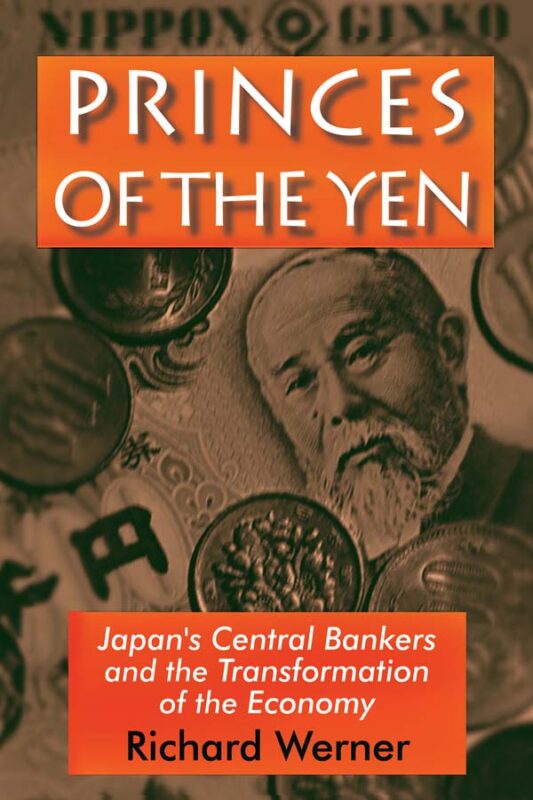
Princes of the Yen by Richard Werner dissects the forces that shaped Japan’s postwar economic landscape, tracing the hidden influence of central bankers who orchestrated cycles of boom, bust, and reform. Werner locates the true axis of Japanese economic power inside the Bank of Japan, where a small cadre of elite policymakers—called “princes”—directed credit, manipulated money, and set the stage for Japan’s extraordinary rise and wrenching stagnation.
The Machinery of Control: Central Banking and Credit Creation
Economic expansion arises from a system that decides who receives credit, how much circulates, and when it flows. In Japan, the Bank of Japan’s credit guidance mechanism wielded that authority, guiding commercial banks to allocate loans according to central priorities. Through “window guidance,” the BoJ instructed banks on which sectors to fund, the size of expansion, and the targets for credit growth. This administrative architecture enabled the central bank to calibrate growth, fine-tune inflation, and, when necessary, withhold stimulus to produce contraction. The princes at the BoJ shaped the arc of postwar Japanese development not through public proclamations but via directives known only to a select group.
The War Economy as Blueprint
Japan’s postwar growth system did not emerge from a vacuum. Bureaucratic planners forged its blueprint during the total mobilization of World War II, when the imperative to maximize output and allocate resources created a command-driven apparatus. After 1945, American occupation officials retained the personnel and structures of the wartime economy, allowing the existing elite to adapt those controls for peace. Ministries managed industry, orchestrated exports, and promoted investment, while the BoJ oversaw credit creation, fueling industrial expansion. The controlled environment fostered rapid recovery, technological advancement, and surging exports. The system’s strength derived from its organization: bureaucrats established the incentives, banks funneled money, and companies pursued growth as a national mandate.
Window Guidance: The Secret Lever
BoJ officials deployed window guidance as an extralegal instrument to regulate the volume and direction of bank lending. Through regular meetings, the central bank set loan quotas for commercial banks, assigning targets for sectoral growth or contraction. Compliance was enforced by close monitoring and reputational incentives. When the BoJ wished to stoke growth, it expanded quotas and instructed banks to lend aggressively; when it aimed to restrain excess, it tightened the spigot. This mechanism shaped the allocation of resources, favored targeted industries, and suppressed unwanted speculation—at least until the 1980s, when a shift in priorities sowed the seeds of instability.
Bubble Engineering and Bust: The 1980s-1990s
During the late 1980s, the BoJ’s leadership authorized a surge in credit, channeling funds into real estate and equities. Asset prices soared. Japanese investors bought properties worldwide, and the Nikkei index reached historic highs. Credit creation outpaced GDP growth, fueling a speculative frenzy. As Werner documents, this monetary expansion exceeded productive requirements, generating a vast bubble in land and stocks. When the BoJ reversed course, restricting credit and raising the cost of borrowing, asset prices collapsed. The bubble burst triggered a cascade of bankruptcies, a banking crisis, and the onset of the “Lost Decade.” Bad loans paralyzed the financial system, unemployment rose, and economic stagnation persisted.
Structural Reform and the Prolonged Recession
Rather than counteracting the crisis with aggressive stimulus, the BoJ withheld monetary expansion throughout the 1990s. Bankers argued that Japan’s recession arose from structural inefficiencies, excess capacity, and rigid institutions. They asserted that only deep reform could revitalize the economy. Werner presents a different logic: the BoJ deliberately prolonged the downturn to force acceptance of U.S.-style capitalism—deregulation, privatization, and market liberalization. By keeping credit tight, the princes engineered conditions that made radical reform inevitable. Political resistance to change weakened as the recession wore on, empowering technocrats to restructure corporate governance, labor markets, and financial regulation.
The Ascendancy of Central Bank Independence
Amid public frustration with recession, policymakers enacted a new Bank of Japan Law in 1997. The statute established legal independence for the BoJ, removing government oversight from monetary policy. Supporters argued that autonomy would foster stability and credibility. The reform codified the ascendancy of central bankers, placing them beyond direct democratic accountability. Under the new regime, the central bank’s decisions on money supply, credit growth, and interest rates became insulated from elected officials. Werner interrogates the wisdom of this design, raising questions about the legitimacy and risks of technocratic power unconstrained by public input.
The Cycle of Crisis and Transformation
Werner’s narrative details a recurring pattern: crisis precipitates transformation. The Meiji Restoration, triggered by external threat, restructured society. World War II catalyzed the mobilized economy. The postwar miracle arose from the command architecture adapted from wartime experience. The 1990s recession, intentionally sustained by the BoJ, forced Japan to abandon the war economy model for an Anglo-American system. The central bank, wielding both policy levers and institutional continuity, orchestrated these shifts through control of credit and the timing of monetary intervention.
Asia’s Parallels: The Regional Impact of Central Bank Policy
Japan’s central banking model reverberated across East Asia. During the 1980s and 1990s, Korean, Thai, and Indonesian central banks implemented their own versions of window guidance and credit-driven growth. Asset bubbles followed, fueled by directed lending, capital inflows, and fixed exchange rates. When these banks withdrew support, the resulting crises devastated their economies. Werner traces the intellectual and institutional links from Japan to its neighbors, establishing a regional pattern in which central bankers, through credit policy, generated cycles of boom and collapse. The repeatability of this pattern underscores the pivotal role of central bank actions in shaping economic outcomes.
Democratic Accountability and the Role of Debate
The princes of the Bank of Japan operated in secrecy, shielded by the technical obscurity of monetary policy and the belief in their neutrality. Werner contends that the absence of transparency and public debate allowed central bankers to pursue objectives misaligned with the broader interests of society. He asserts that stability and prosperity depend on the presence of democratic checks, clear policy mandates, and public scrutiny of central banking. Only through open debate can societies determine the proper aims and limits of monetary authorities.
The Legacy of the Postwar Economic System
Japan’s war economy model fostered extraordinary growth, but it also imposed costs: rigid corporate structures, limited consumer choice, and social stratification between large and small firms. The incentives created by bureaucratic design delivered output at the expense of personal consumption and quality of life. By directing investment and orchestrating competition within cartels, planners maximized national objectives. Yet as demographic and technological constraints emerged, the model lost momentum. The deliberate shift toward a market-driven system, triggered by crisis, marked a new era in which growth would arise from different incentives and structures.
The Princes: Biography and Influence
Werner identifies a lineage of central bankers—“princes”—who defined monetary policy for decades. These individuals advanced through the Bank of Japan, inherited institutional knowledge, and guarded the tools of credit guidance. Their influence persisted across political regimes, shaping both headline decisions and subtle changes in policy. The system allowed for a form of continuity unique to the central bank, where a small cohort set the agenda for the nation’s financial system. Their tenure coincided with pivotal moments: the emergence of the high-growth era, the asset bubble, the prolonged recession, and the shift to independence.
Window Guidance in Detail: Process and Effects
Window guidance functioned through detailed negotiations. Central bank officials met privately with bank executives, issued explicit targets for lending, and monitored compliance through frequent reporting. Banks adjusted their balance sheets to meet BoJ expectations, allocating credit to priority sectors such as manufacturing, export industries, or real estate as directed. The BoJ’s guidance shaped not only the aggregate volume of money but also its distribution within the economy, enabling rapid shifts in industrial strategy or economic focus. During expansionary phases, bank lending surged, amplifying growth. During periods of contraction, withheld credit triggered retrenchment.
Public Consequences: Unemployment, Debt, and Social Strain
When the BoJ restricted credit in the 1990s, firms—especially small and medium-sized enterprises—lost access to funding. The credit crunch led to business failures, rising unemployment, and a wave of bankruptcies. Households experienced declining purchasing power, falling asset values, and prolonged insecurity. The government responded with fiscal stimulus, but the impact remained limited without corresponding monetary support. Public debt soared as policymakers attempted to compensate for private sector retrenchment. Social consequences followed: the highest postwar suicide rates, growing inequality, and diminished confidence in institutions.
Global Implications: Lessons for Central Banking
Werner’s analysis extends beyond Japan, urging policymakers and observers to scrutinize the concentration of power within central banks. He warns that unchecked independence, combined with obscure policy mechanisms, poses risks to economic stability and democratic legitimacy. The case of Japan illustrates how control of credit can determine the fate of nations—fueling prosperity, creating bubbles, or inducing stagnation—depending on the intentions and actions of a small group. Transparency, accountability, and policy clarity emerge as vital safeguards in the design of monetary institutions.
The Search for Balance: Stability, Growth, and Oversight
Central banks require flexibility to respond to shocks, but their authority must derive from well-defined mandates and oversight. The experience of Japan’s transformation highlights the need for clear policy objectives, mechanisms for public input, and tools for evaluating performance. Economic stability rests on the alignment of central bank actions with societal priorities—a process made possible only by vigilance, informed debate, and institutional design that balances autonomy with accountability.
Coda: The Future of Monetary Governance
Princes of the Yen stands as a testament to the capacity of central bankers to shape history through the management of credit and money. The lessons of Japan’s postwar era, its engineered miracles and recessions, and its evolution toward market capitalism resonate with contemporary debates on central banking. Who governs money governs the trajectory of economies. Societies that understand and debate the true nature of central bank power position themselves to claim their future. Werner’s narrative calls for vigilance, engagement, and structural clarity in the governance of monetary systems.

About the Book
Full Feature Film: