Money Grows on the Tree of Knowledge

Money Grows on the Tree of Knowledge by Tracy R. Twyman investigates the deep metaphysical origins of money through the lens of alchemy, mythology, and Hermetic philosophy. The book traces financial systems to sacred rituals, symbolic emblems, and philosophical doctrines that reframe economic structures as ritualized processes of belief and transformation. Twyman outlines how money, far from being a neutral tool of trade, operates as a magical agent shaped by ancient wisdom and modern illusion.
The Hidden Glyph: Origins of the Dollar Sign
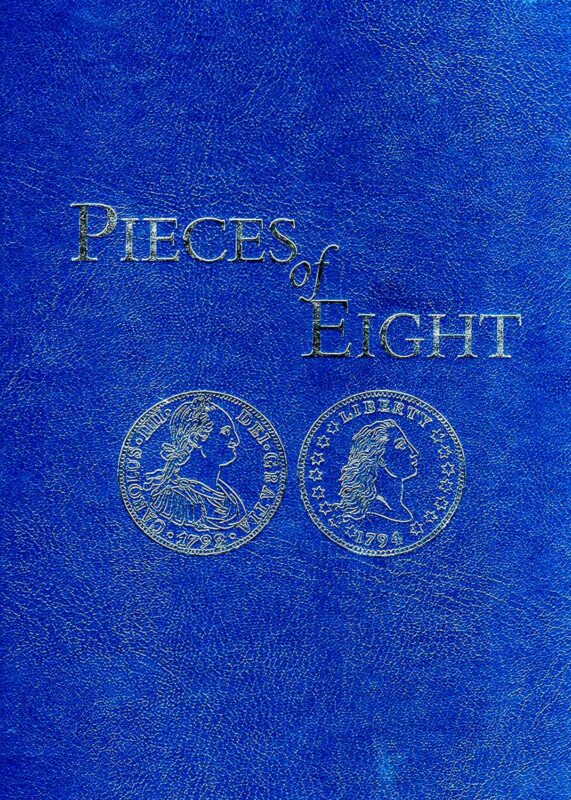
The dollar sign condenses layers of esoteric meaning. Twyman traces its origin to the Spanish "pillar dollar," which displayed the Pillars of Hercules wrapped in the "Plus Ultra" banner. This iconography promised infinite wealth and divine sanction. She further connects the symbol to ancient Tyrian coins depicting serpents entwined around sacred trees and Roman caduceuses that represented Hermes and alchemical transmutation. These figures encode not merely commercial promise but sacred authority over transformation itself.
Ancient Coins and Sacred Prostitutes
Twyman locates the genesis of coinage within temple economies. In Mesopotamia, money emerged not as secular convenience but as sacramental proof of divine exchange. Worshippers donated wheat at the temples of Ishtar, receiving in return a shekel—literally a "bushel"—used to engage with priestesses of the goddess. This monetary exchange encoded fertility, divine approval, and agricultural abundance. Ancient Greek and Roman systems continued this legacy by embedding coin production within temples, notably the Temple of Juno Moneta, from which the term “money” derives.
Templars and the Invention of Modern Banking
The Knights Templar redefined financial infrastructure by creating a secure, international banking system through paper chits. Pilgrims deposited valuables at Templar preceptories and traveled with ciphered notes exchangeable across their route. These notes functioned as promissory instruments, detaching money from metal and embedding it in ritual trust. The Templars deployed coded ledgers and encrypted communications, pioneering early cryptographic systems that undergirded faith-based transactions across continents.
Alchemy and the Sacred Fraud
Twyman shows how fractional reserve lending parallels alchemical processes. Goldsmiths discovered that only a fraction of depositors demanded their metal holdings at a time. They issued more promissory notes than reserves allowed, catalyzing a process of wealth creation from promise alone. This act resembled the alchemist’s aim: to multiply gold from invisible forces. Banks turned belief into capital through controlled deception. Fiat currency finalized the shift—paper issued on declaration alone, backed only by consensus and sustained by economic ritual.
Baphomet, Gnostic Wisdom, and Forbidden Transformation
At the heart of Twyman’s thesis stands Baphomet, the mysterious figure allegedly venerated by the Templars. Described in inquisitorial records as a severed head, an androgynous idol, or a prophetic relic, Baphomet symbolized the union of opposites—male and female, divine and demonic, organic and metallic. Eliphas Levi redefined Baphomet as a figure of cosmic synthesis. The goat-headed hermaphrodite bore alchemical symbols like the torch of illumination and the caduceus, encoding the power of transformation without external permission.
This image recurred in artifacts found at Templar properties, often depicting androgynous beings crowned with towers, controlling sun and moon forces with chains, and floating above occult geometries. Twyman argues that these images reflect Ophite Gnosticism, in which the serpent of Genesis is celebrated as the bringer of divine knowledge. Baphomet becomes the embodiment of sacred gnosis and economic alchemy—a gateway to power, fertility, and control through forbidden wisdom.
Hermes, Mercury, and the Art of Creative Illusion
Twyman elevates Hermes (and his Roman counterpart Mercury) as central figures in the alchemical lineage of money. Hermes, the god of commerce, travel, and trickery, also governed magic and transformation. He invented writing and served as a divine intermediary. His symbol, the caduceus—two serpents entwined around a winged staff—represented healing and metamorphosis. This glyph reappears in financial iconography, from Federal Reserve facades to banking seals.
Mercury also denotes the volatile element used by alchemists to separate and fuse metals. In both myth and chemistry, Mercury initiates transformation through speed, ambiguity, and power over boundaries. Twyman emphasizes that the dollar functions precisely through Mercury’s attributes: it acts swiftly, crosses borders, adapts form, and manipulates belief.
The Philosopher’s Stone and the Multiplication Principle
Alchemists sought the Philosopher’s Stone as a means to convert base materials into gold. Twyman aligns this quest with the logic of modern banking, which multiplies paper into purchasing power through managed belief and interest-bearing loans. She highlights the metaphysical principle of “metallic seed”—a small unit used to replicate vast stores of value. In modern finance, central banks inject "high-powered money" into circulation, which expands through fractional lending, like the multiplication of red sulphur in alchemical processes.
Keynesianism as Ritual Alchemy
Twyman situates John Maynard Keynes within the esoteric tradition. Keynes, who acquired Isaac Newton’s alchemical papers, believed that state-managed money supply could engineer economic outcomes. Fiat issuance paired with massive public spending became his modern magic. By investing in labor, infrastructure, and warfare, governments activated latent money, converting it from potential to active. The economic system transmuted paper into value through action and faith.
Roosevelt institutionalized this logic with labor reforms that tethered money to time. The 40-hour workweek and minimum wage established a numerical standard for value, making time itself the new gold. Bureaucratic enforcement of these figures ensured ritual consistency. Every paycheck confirmed belief. Every transaction reinforced the currency’s legitimacy.
Work, Time, and the Engine of Economic Ritual
Labor becomes the engine of modern alchemy. Through regulated effort, society turns fiat into bread. This process depends not only on productivity but also on faith in the system’s structure. Twyman describes this arrangement as a magical sacrifice—youth and time consumed to stabilize economic illusion. She highlights how symbolic tools like the hammer, wheel, and hourglass evoke both industrial labor and esoteric transformation.
In this view, unemployment destabilizes not only economic security but ritual balance. Work justifies wealth. Without visible effort, the illusion frays. Public schools, corporate systems, and welfare programs enforce the sanctity of structured labor, preparing bodies to serve as cogs in the time-money continuum.
The Economic Wheel and the Fire of Belief
Twyman draws from Fulcanelli to interpret the wheel as the emblem of economic transformation. Alchemists stoked a consistent fire under the vessel to process materials through stages. The fire’s duration and intensity determined the outcome. In modern terms, monetary policy operates the same way. The Federal Reserve adjusts interest rates to heat or cool the economy. Central banks manage the flow of currency through cycles of belief, contraction, and expansion.
The key agent remains symbolic fire—the conviction that value exists. Modern work rituals mimic magical ceremonies. The magician believes before the effect appears. So does the worker. Wages emerge not from material substance, but from shared hallucination enforced by institutions, contracts, and hierarchies.
Sacrifice, Surplus, and the Ghost in the Machine
Automation and technological progress displace human labor. Fewer people produce more. Twyman shows how this forces economic planners to invent jobs or penalize idleness. Surplus labor becomes a threat to ritual coherence. Governments respond with mandatory activity, surveillance, and engineered incentives to simulate effort. Bureaucracies enforce participation not to maximize output but to uphold belief. If effort ceases, the spell breaks.
This sacred fraud requires constant maintenance. Fractional banking collapses without compliance. Paper loses power if no one works for it. Twyman implies that our economic system survives only through widespread acceptance of its mythos—a faith equal in intensity to that of any religion.
Alchemy Realized
Money Grows on the Tree of Knowledge reveals that modern finance is the culmination of alchemical ambition. The ancient dream to create wealth from nothing finds its realization in digital ledgers, fiat notes, and employment contracts. Twyman’s thesis frames the global economy as an operating ritual—an ongoing invocation that requires labor, repetition, and imagination.
The book does not propose a return to gold or a rejection of fiat. Instead, it compels readers to see through the spell, to recognize the symbols they enact, and to understand the metaphysical foundations of daily transactions. Twyman elevates economics to its original register: theurgy. Through this lens, every dollar carries a legacy of serpent wisdom, temple rites, and cosmic transformation.