Shaping the Future of the Fourth Industrial Revolution
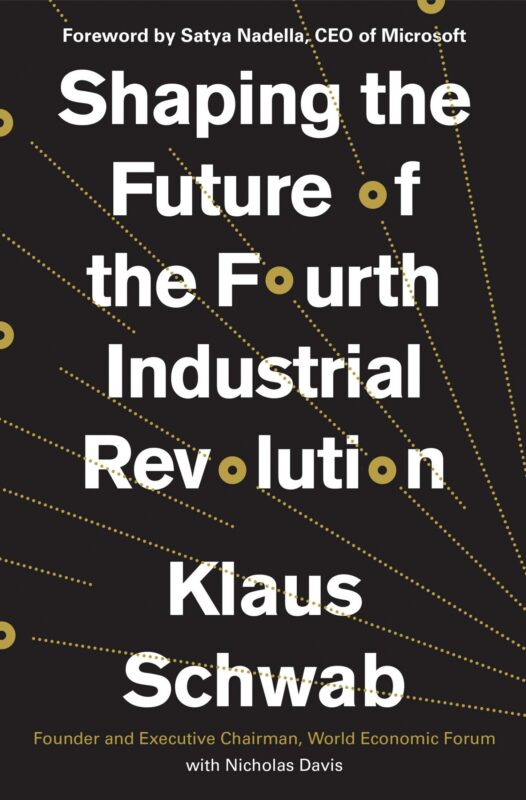
Shaping the Future of the Fourth Industrial Revolution by Klaus Schwab initiates a comprehensive inquiry into the technological, ethical, and societal stakes of the current era of innovation. Schwab, as founder and executive chairman of the World Economic Forum, organizes the book into a blueprint for understanding how digital, biological, and physical technologies converge, why this convergence drives structural transformation, and which values and decisions determine global outcomes.
The New Technological Age: Defining the Fourth Industrial Revolution
The Fourth Industrial Revolution signals a phase in which artificial intelligence, robotics, blockchain, advanced materials, and biotechnologies intersect to reshape human systems. Schwab traces the technological lineage from the textile and steam-driven transformation of the first industrial revolution, through the electricity-powered advances of the second, and into the information revolution driven by computers and the internet. He defines the Fourth Industrial Revolution as a unique threshold where digital systems embed themselves in physical environments and biological processes, accelerating change across production, communication, governance, and identity.
Systems Over Silos: How Technologies Interact
Technologies operate within systems rather than as discrete tools. Schwab describes how artificial intelligence, quantum computing, and distributed ledgers operate combinatorially, each amplifying the capabilities of the others. This systemic perspective reveals why developments in data storage increase the power of machine learning, how advances in materials science multiply the impact of energy technologies, and why the spread of the Internet of Things transforms the very infrastructure of daily life. The exponential diffusion of technologies depends on interoperable digital networks, causing innovations to reach millions of users within months. These processes reorganize labor markets, alter global value chains, and present fresh governance dilemmas.
Value Creation and Human Development
Schwab affirms that technology, when steered responsibly, propels human development. Rising life expectancy, greater access to education, and dramatic improvements in living standards have all accompanied previous industrial advances. The current wave holds the capacity to extend these gains: quantum computing promises breakthroughs in drug discovery and logistics; blockchain offers transparent, secure transactions; new materials and battery technologies expand access to energy and mobility. These developments create value when aligned with institutional reform, updated regulatory standards, and ethical stewardship.
Distribution, Risk, and Inclusion
Schwab contends that structural challenges threaten to concentrate the benefits of innovation. Without deliberate mechanisms for distribution, technological value flows toward privileged groups, increasing wealth and opportunity gaps within nations. Inequality, once measured by disparities between developed and emerging economies, now grows most acutely within national borders. Median incomes stagnate, and precarious employment replaces stable work in many sectors. He locates the risks in both economic and social domains: algorithmic bias, automation-induced job loss, surveillance, and the erosion of privacy all follow from poorly governed technology.
Managing Externalities: New Models of Governance
The pace and scale of technological disruption produce externalities that traditional regulatory systems struggle to address. Schwab calls for agile, adaptive governance models capable of evolving alongside innovation. Regulatory inertia causes misalignments—obsolete laws delay the deployment of drones, hamper medical research, and create loopholes for social platforms. Schwab insists that government, industry, and civil society must collaborate in drafting new standards, sharing best practices, and building trust through transparency and accountability. Agility in governance requires open dialogue, rapid policy iteration, and international cooperation.
Embedding Values: Human-Centered Design
Technologies shape, and are shaped by, embedded values. Schwab asserts that every technology encodes social priorities, whether developers recognize this fact or not. He rejects the notion that technology is neutral or deterministic. Instead, he advances the principle that ethics, equity, and human dignity must inform both the design and implementation of new tools. He draws from the World Economic Forum’s New Social Covenant, which enshrines the dignity of the person, the primacy of the common good, and stewardship for future generations as core principles. These values find practical expression in design thinking, regulatory frameworks such as the European Union’s General Data Protection Regulation, and sector-specific codes of ethics.
Leadership and Stakeholder Empowerment
Institutional transformation demands new forms of leadership. Schwab calls for multi-stakeholder approaches that include developing economies, youth, marginalized communities, and the natural environment in decision-making. He outlines a framework of four principles for navigating the Fourth Industrial Revolution: systems thinking, empowerment over determination, intentional design, and values as intrinsic features. Leaders cultivate adaptability by integrating diverse perspectives, aligning technological trajectories with societal priorities, and fostering public participation in the governance of innovation.
Education and Skills: Preparing for Disruption
The dynamism of the Fourth Industrial Revolution reshapes labor markets. Schwab identifies the imperative to reform education, promote lifelong learning, and develop digital literacy as essential. As automation and artificial intelligence redefine job categories, workers require reskilling and upskilling. Governments, businesses, and educational institutions bear responsibility for preparing citizens to thrive amid uncertainty. Schwab links workforce adaptability to the resilience of social protections, advocating for flexible safety nets and proactive employment services.
Global Dialogue and Collective Action
Stakeholder engagement rises to prominence as a condition for inclusive progress. Schwab maintains that global challenges—from climate change to cybersecurity, from health equity to data rights—transcend national boundaries and sectoral silos. He proposes structured platforms for dialogue, such as the World Economic Forum’s gatherings, as mechanisms for aligning technological governance with shared human values. The co-evolution of technologies and societies requires forums where voices from every sector, generation, and geography shape agendas and solutions.
The Ethics of Innovation: Accountability and Purpose
Schwab delves into the ethical dilemmas intrinsic to emerging technologies. Artificial intelligence, biotechnology, and neurotechnology introduce new categories of moral risk: autonomy, privacy, manipulation, and the integrity of human agency. By advocating for explicit codes of conduct, transparent audit trails, and a culture of responsibility among technologists and policymakers, Schwab delineates a path for embedding ethics within technical systems. He asserts that only by foregrounding ethical reflection can societies anticipate and mitigate the unintended consequences of innovation.
Democratizing Access and Agency
Technological diffusion produces democratizing potential. Decentralized platforms like blockchain lower barriers to market entry; additive manufacturing enables local production and innovation; open-source communities spread knowledge globally. Schwab acknowledges that genuine democratization requires not only access to tools but also participation in decisions about how those tools operate and whose interests they serve. He suggests that transparency, civic engagement, and participatory governance ensure technology amplifies collective agency rather than concentrating power.
Resilience, Trust, and Future Readiness
Trust forms the backbone of digital societies. Schwab identifies revitalized regulatory environments, robust cybersecurity, and data stewardship as prerequisites for resilient systems. Rapid innovation tests institutional capacity; only those systems grounded in transparency, responsiveness, and accountability can sustain legitimacy. Schwab encourages ongoing public-private collaboration, arguing that trust must be engineered at the infrastructure, policy, and cultural levels.
Converging Technologies and Systemic Transformation
Convergence drives the narrative tension in Schwab’s analysis. The interplay between artificial intelligence and genomics transforms healthcare delivery; smart energy grids integrate environmental priorities with consumer behavior; virtual and augmented realities redefine social experience and cultural production. Systemic transformation proceeds as these technologies interact, forming feedback loops that accelerate progress, multiply risks, and challenge inherited structures. Schwab invites readers to witness this convergence as a source of both promise and responsibility.
A Call to Shape the Future
The arc of Schwab’s argument directs responsibility to every stakeholder. He claims the future of the Fourth Industrial Revolution remains open, subject to conscious design, governance, and collective action. By connecting the dots between technical capability, institutional adaptation, and value-driven leadership, societies retain agency over their destinies. The window for shaping outcomes demands immediate action. Schwab closes by charging leaders, citizens, and innovators to shape technology with intention, guided by a commitment to equity, dignity, and sustainable prosperity. The choices made in the present decade, he argues, set the trajectory for generations to come.