The True Believer: Thoughts on the Nature of Mass Movements
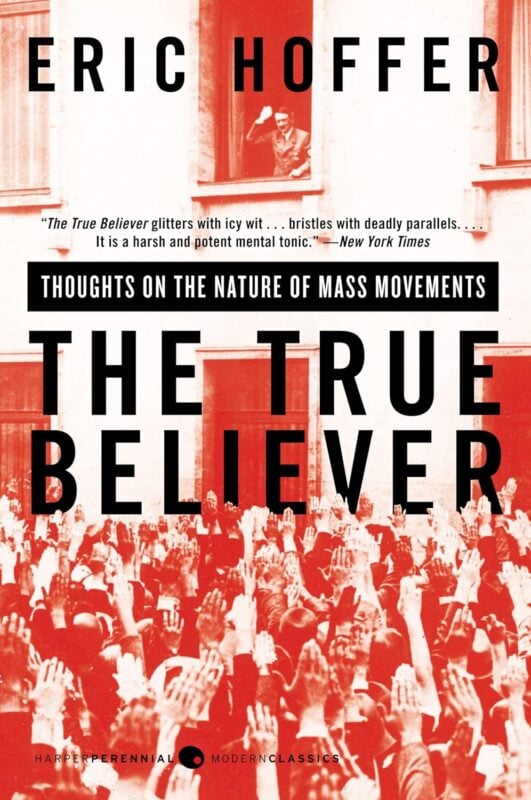
The True Believer: Thoughts on the Nature of Mass Movements by Eric Hoffer examines the psychological forces that drive individuals to join mass movements. He identifies shared traits among disparate ideological groups and traces the genesis of fanaticism to personal frustration, loss of identity, and the desire to dissolve into a collective cause. Hoffer constructs a framework where mass movements function as instruments of radical transformation by offering substitutes for failed individual purpose.
Mass Movements as Instruments of Enthusiasm
Mass movements harness collective enthusiasm to enact dramatic change. Religious revivals, nationalist crusades, and revolutionary upheavals generate similar emotional intensity. The desire for sudden change arises not from clear goals but from emotional readiness. Discontented individuals align themselves with abstract causes that promise rebirth and transformation. The appeal intensifies where hope burns brighter than conditions warrant. People act not because of desperation alone but because of a belief that the future contains immense possibilities.
Religious and nationalist currents historically performed this catalytic role. Islam reorganized societies across vast territories. Christianity civilized barbarian Europe. The Crusades reoriented European purpose toward holy war and conquest. Nationalism modernized feudal economies and inspired collective sacrifice. The Bolshevik revolution reshaped Russian society because it awakened enthusiasm rather than imposed reform through administrative fiat. Peter the Great failed where Lenin succeeded because he lacked a doctrine that stirred mass emotional identification.
The Psychology of the Frustrated
Mass movements begin with the frustrated. These individuals cannot reconcile self-perception with life circumstances. Their motivation stems less from hardship than from the sense that opportunity eludes them. The poor who remember affluence rage harder than those long resigned. The successful fear disruption because they recognize how fragile fortune can be. The unsuccessful yearn for upheaval because it might erase the record of personal failure.
Frustration generates external attribution. The world becomes the enemy. Revolutionary energy emerges when individuals believe that circumstances, not flaws, define their condition. Discontent must couple with belief in personal or collective power to create movement. The successful cling to systems that validate their triumph. The disaffected seek systems that invalidate the current order and affirm a promised transformation.
Substitute Selves and Collective Identity
The true believer does not seek to express a confident self but to escape an intolerable one. He trades personal identity for submission to a cause. Mass movements succeed not because they offer opportunity for advancement but because they promise annihilation of the flawed self and rebirth through belonging. Self-renunciation replaces self-expression. Participants surrender volition in exchange for clarity.
Mass movements present themselves as moral sanctuaries. The believer transfers all virtue to the cause. Guilt, shame, and inferiority dissolve within identification with a collective whole. This dissolution delivers relief. Intense loyalty results not from belief in the movement’s rational claims but from the emotional transformation it enables.
When movements attract people focused on individual careers or rewards, they enter decline. The presence of self-interest signals that the movement has become institutional. Revolutionary passion cannot coexist with careerism. Vital movements require followers who believe that nothing inside them can be salvaged except through union with the movement.
The Fluid Interchangeability of Movements
Mass movements draw from the same psychological pool. Converts migrate between ideologies that appear opposed but satisfy the same emotional cravings. The fervent nationalist can become a communist; the religious zealot, a political fanatic. What unites movements is not doctrine but structure. Each offers collective identity, simplified purpose, and moral certainty. The cause is interchangeable because the need is constant.
Successful mass movements often carry hybrid identities. Religious crusades ignite nationalist sentiment. Political revolutions adopt spiritual language and rituals. The French Revolution sanctified liberty and equality. The Bolsheviks constructed a secular religion. Nazi ceremonies mimicked ecclesiastical rites. The interchange of forms confirms that structure governs content in mass movement psychology.
The Structure of Self-Sacrifice
Effective mass movements demand self-sacrifice. They cultivate disdain for the present and elevate a vision of the future that justifies personal loss. Leaders link sacrifice to holiness. The devotee comes to believe that dying for the cause redeems a meaningless life. Martyrdom provides a final proof that one has fully left the self behind.
Movements promote self-sacrifice through unifying mechanisms: hatred, imitation, coercion, and suspicion. Hatred energizes commitment. Imitation dissolves autonomy. Coercion reinforces group control. Suspicion ensures conformity. Together these tactics replace personal judgment with collective reflex. Followers act not because they understand the goal but because they feel bound to the group.
The Life Cycle of a Movement
Movements evolve. Intellectuals create them, fanatics drive them, and practical men institutionalize them. The founder raises questions. The true believer answers them with certainty. The administrator consolidates the gains. Each stage alters the movement’s character. The fanatic sacrifices reason. The organizer sacrifices idealism. The cause survives by transforming into an institution.
When a movement succeeds, it often loses the qualities that fueled its rise. The initial enthusiasm fades. Doctrine stabilizes. The ranks fill with opportunists. Stability replaces vision. At this stage, movements often seek external enemies to rekindle purpose. Where hostility cannot be manufactured, stagnation sets in. The cycle may end in sterility or in collapse.
Migration as a Release Valve
Migration functions as an alternative to mass movements. It offers the disaffected a new beginning without ideological transformation. Historical migrations often channeled the same restless energies that produce revolutions. The availability of unoccupied territory can relieve social pressure. The closing of the American frontier coincided with a rise in ideological extremism. Where mass migration ceases, mass movement intensifies.
Migrations can also create conditions for movements. Displacement weakens traditional bonds and leaves individuals open to collective identity. A people in motion often discovers purpose not in destination but in unifying struggle. Movements that combine migration with ideology—Zionism, the Crusades, the Puritan exodus—draw strength from both.
Demographic Foundations of Conversion
Mass movements recruit from predictable populations: the new poor, the misfits, the bored, the sinners, and the ambitious. The newly impoverished remember a better past and cannot accept decline. Misfits struggle to find place or purpose. Bored individuals seek stimulation. Sinners pursue redemption through sacrifice. The ambitious chase unattainable greatness.
These groups lack satisfaction in the present. They seek meaning beyond themselves. The strength of the movement derives from its capacity to fuse these energies into one stream. A successful movement unifies the alienated and converts diverse grievances into shared mission.
The Breakdown of Existing Structures
Movements flourish where traditional social bonds decay. When the family weakens, the tribe dissolves, or the nation falters, individuals lose protective identity. The movement becomes a substitute for the disintegrating group. It offers a renewed sense of cohesion and belonging. Christianity expanded in cities where communal structures collapsed. Nationalism grew where the old religious order receded.
Leaders of rising movements understand that existing loyalties must be broken. They attack the family, the church, and the tribe to create space for new allegiance. When a movement reinforces traditional structures, it signals that its revolutionary phase has passed.
Freedom and Responsibility
Freedom burdens the frustrated. The liberated individual becomes the sole author of failure. In societies that prize freedom but offer limited opportunity, disillusionment spreads. Mass movements promise escape from responsibility. The individual submits to collective will and abandons choice.
Movements that claim to fight for freedom rarely deliver it. They suppress autonomy to enforce unity. The adherent experiences liberation not through rights but through disappearance of the self. Order, clarity, and direction replace ambiguity and doubt. The more total the submission, the more powerful the sense of release.
The Corporate Mechanism of Conversion
The architecture of the movement determines its success. A rigid collective framework attracts converts by offering immediate belonging. The Bolsheviks triumphed over other Marxists through tighter organization. The early Christian Church expanded through superior communal integration. The true believer seeks structure over logic, immersion over analysis.
A new movement succeeds when it absorbs frustration through collective form. Its doctrine matters less than its machinery for integration. Where ideologies compete, the one that organizes fastest wins. The hunger to belong outpaces the need to understand. Emotional resonance, not intellectual persuasion, propels growth.
Social Conditions and Historical Catalysts
Movements surge during periods of structural decay. The weakening of the Roman Empire opened space for Christianity. Industrial dislocation fueled socialism. War, urbanization, and mobility generate dislocation. The man separated from traditional anchors becomes the ideal convert. The greater the disintegration, the stronger the pull toward unified identity.
Postwar Germany, post-imperial Russia, and colonized Asia provide the terrain for mass movement ascendancy. When corporate identity collapses, ideology floods the vacuum. The movement that arrives with structure, clarity, and purpose takes possession of the future. Social disruption does not merely permit revolution—it demands it.