Rage for Fame: The Ascent of Clare Boothe Luce
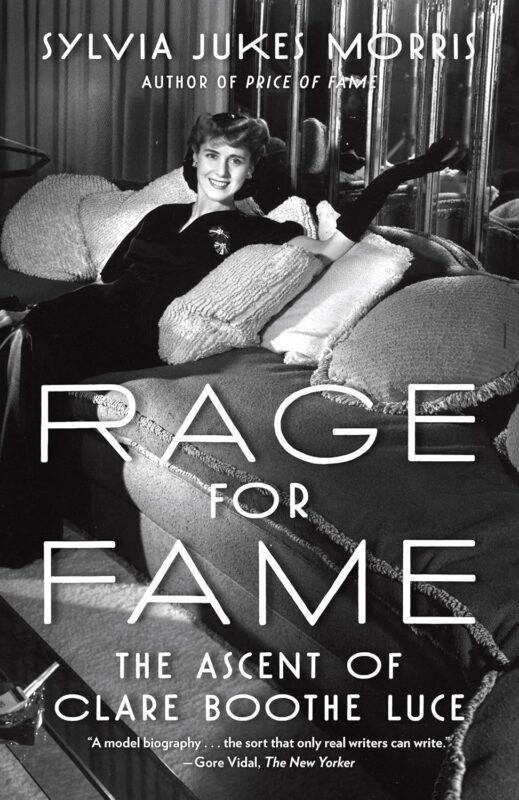
Rage for Fame by Sylvia Jukes Morris explores the ascent of Clare Boothe Luce, tracing her journey from an unstable childhood to the center of twentieth-century American power and celebrity. Morris draws from primary sources, personal letters, unpublished manuscripts, and deep historical context to reveal how Luce’s relentless ambition, familial complexities, and early traumas forged her indomitable character.
Origins: The Shaping of Identity
Clare Boothe’s birth in 1903 in an all-white, middle-class neighborhood of New York occurred amid concealed scandals. Her mother, Anna Clara Schneider, concealed her own past and projected grand ambitions onto her daughter. As a child, Clare learned to mask the truth about her parentage, birthdate, and even her given name. Family deceptions created an atmosphere in which performance and manipulation became core survival strategies. William Franklin Boothe, Clare’s father, lived with an extravagant mix of musical genius and erratic career choices. His relationship with Clare’s mother began in the fervor of turn-of-the-century New York nightlife. The Boothe household, governed by alternating bouts of affection and discord, exposed Clare to the demands of constant reinvention. The home environment cultivated both her emotional acuity and her skepticism, as well as a capacity for strategic dissemblance.
Trauma and the Formation of Will
Childhood proved a crucible. Morris records a traumatic episode in Clare’s early years involving attempted molestation and violence—a moment she later recounted through autobiographical fiction. This formative experience, layered atop recurrent financial upheaval and social instability, instilled a drive for security and self-mastery. Family moves—to Memphis, Nashville, and Chicago—punctuated by name changes and fluctuating fortunes, deepened Clare’s exposure to different social environments and heightened her adaptability. Each relocation demanded Clare quickly decode new systems of status and belonging, accelerating her precocious social and emotional intelligence. Clare’s parents, absorbed in their own dramas, often left her to navigate complex adult realities. Anna Clara’s aspirations for upward mobility found outlets in meticulous grooming and calculated self-presentation. William’s infatuation with music and occasional absences shaped a daughter who could oscillate between compliance and rebellion as the situation demanded.
Emergence of Talent and Early Ambition
Education offered Clare a stage. Enrolling in schools across the South and Midwest, she demonstrated intellectual sharpness and artistic flair. She absorbed classical literature, excelled in memory, and showed facility with both language and visual arts. Yet, Clare’s family life continued to intrude. Her father’s failed ventures and her mother’s romantic idealism imposed new constraints and new lessons. The Boothe family’s financial circumstances, alternating between moments of relative prosperity and dire need, taught Clare the volatility of status and the urgency of self-reliance. Clare developed a competitive dynamic with her brother, David, which honed her resilience and sharpened her awareness of the social meanings of gender. The narrative details a crucial period at Ward Seminary in Nashville, where Clare learned to leverage charm and wit to navigate the strictures of Southern society. Exposure to elite institutions offered her both aspiration and alienation, as her family’s means often fell short of the expectations of her peers.
Breakthrough in Journalism and Society
Morris traces Clare’s early adulthood through a rapid succession of jobs and marriages. Her first marriage, at age twenty, to George Tuttle Brokaw, introduced her to both wealth and disappointment. The union, marred by Brokaw’s alcoholism and personal struggles, became fodder for later creative work and sharpened Clare’s sense of narrative. After divorce, Clare entered the world of New York journalism, quickly ascending from caption writer at Vogue to managing editor of Vanity Fair. Her progress in the magazine world reflected both a keen intellect and a capacity for social maneuvering. Clare’s career in journalism brought her into contact with influential cultural and political figures. She cultivated connections with artists, writers, and socialites, learning to observe and dissect the rituals of high society. Her syndicated news column expanded her reach, enabling her to shape public discourse and further her reputation as a shrewd commentator on contemporary mores.
The Ascent to Broadway
Clare’s ambitions soon turned to the stage. The writing and production of her play The Women marked a turning point. Morris documents how exclusion from her husband Henry Luce’s burgeoning media empire galvanized Clare’s creative energies. Facing resistance from Time Inc.’s male editors, Clare retreated to West Virginia, channeling her observations of Manhattan socialites and shopgirls into biting satire. The play’s success—after the failure of her earlier work Abide With Me—confirmed Clare’s place among Broadway’s most original voices. The Women, built from the gossip and power games of elite salons, offered audiences a mirror to their own ambitions and anxieties. The play’s all-female cast and unflinching dialogue about marriage, infidelity, and rivalry challenged contemporary norms, provoking both acclaim and controversy. The book reconstructs the opening night in rich detail, from the tension in the theater to the technical complexity of the production and the anxious solitude of its playwright atop the Empire State Building. The response from critics and audiences mixed admiration for Clare’s wit and boldness with unease at the play’s cynicism and candor.
Marriage to Henry Luce and Social Power
Clare’s marriage to Henry Luce, publisher of Time, brought her into the heart of American power. The union merged two powerful ambitions—Clare’s creative force and Henry’s journalistic vision. Yet, professional barriers persisted. Time Inc. refused Clare an executive role, despite her central role in shaping Life magazine’s concept and name. Clare responded by redirecting her energies into literature and theater, asserting her independence and building a public profile distinct from her husband’s. The couple’s social life placed them at the intersection of media, politics, and high society. Clare honed her skills as a hostess, connector, and commentator. Morris emphasizes how these years developed Clare’s political acumen and public persona, setting the stage for her eventual move into diplomacy and elected office. Clare’s writing from this period—columns, speeches, plays—demonstrates a growing command of rhetoric and a willingness to engage contentious issues of gender, power, and American identity.
Psychological Portrait and Emotional Tension
Throughout Rage for Fame, Morris probes the psychological undercurrents driving Clare’s relentless pursuit of recognition. The biography uncovers patterns of longing, insecurity, and defiance. Clare’s childhood experiences of betrayal and instability inform both her hunger for applause and her emotional volatility. The book highlights the complex interplay between Clare’s desire for social acceptance and her disdain for conventionality. Her mother’s teachings—to conceal depth, to manipulate male attention—surface in Clare’s relationships and public image. Simultaneously, Clare’s private writings and fictionalized accounts suggest an ongoing struggle with loss, mortality, and the burdens of ambition. Clare’s internal contradictions—her oscillation between vulnerability and bravado, intimacy and performance—emerge in her creative work and public statements. The biography traces the cyclical nature of Clare’s emotional life, marked by moments of triumph followed by episodes of anxiety and self-doubt.
Public Legacy and Cultural Impact
As Clare Boothe Luce moved further into the public eye, her trajectory signaled the emergence of a new model of female influence in American society. Morris situates Clare’s achievements within the broader context of twentieth-century shifts in gender roles, media power, and political engagement. Clare’s subsequent career—her entry into Congress, diplomatic appointments, and continued literary output—flowed from the foundation established in the years covered by Rage for Fame. Her public persona—combining intellect, style, and strategic self-fashioning—inspired both admiration and controversy. The biography shows how Clare’s impact extended across journalism, theater, politics, and philanthropy, shaping debates about women’s roles in leadership and the boundaries of ambition. Clare’s example raised fundamental questions about the costs and rewards of fame. How does one reconcile personal longing with public accomplishment? What does it mean to pursue greatness in a world structured by gender and class hierarchies?
Enduring Relevance
Rage for Fame by Sylvia Jukes Morris stands as a comprehensive account of personal transformation, social mobility, and the creation of celebrity in modern America. The book’s tightly woven narrative draws together intimate family history, the dynamism of twentieth-century urban life, and the high stakes of artistic and political ambition. Readers encounter the forces—familial, psychological, cultural—that shaped Clare Boothe Luce’s journey from obscurity to prominence. Morris’s biography affirms the power of resilience, the complexity of identity, and the ongoing resonance of one woman’s struggle to define herself against the shifting backdrop of American society. Clare’s ascent, with its triumphs and perils, models both the possibilities and challenges of self-invention. The patterns of her life—early deceptions, tested resolve, creative breakthroughs, public controversy—continue to invite inquiry and reflection on the nature of success, the construction of narrative, and the meaning of influence in public life.