The Structure of Magic Volume I: A Book About Language
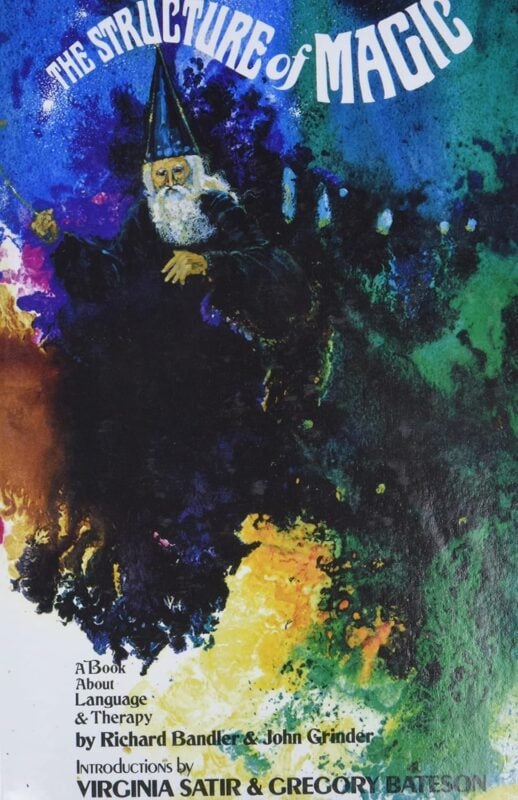
Richard Bandler and John Grinder’s The Structure of Magic: A Book About Language and Therapy stands as a foundational exploration of the mechanics that govern human change, language, and therapeutic transformation. This landmark work does not only trace the observable actions of effective therapists; it systematically decodes the underlying rules and patterns that distinguish exceptional therapeutic encounters. Bandler and Grinder reveal how human beings build internal models of experience and how these models both guide behavior and restrict growth, offering readers a practical guide to the structure of change through language.
The Language of Transformation
Human interaction rests upon the construction and use of models—maps that people create to navigate reality. The Structure of Magic asserts that these models arise from three sources: neurological filters, social learning, and individual history. Neurological filters establish the basic parameters of what people can perceive, such as the frequencies of sound or wavelengths of light detectable by the senses. Social learning adds the lens of culture, language, and collective understanding, shaping which distinctions become meaningful in a given society. Individual history further differentiates personal models through unique experiences, memories, and interpretations.
Bandler and Grinder establish that people do not act on reality itself, but rather on their internal representations of reality. These representations—formed through language and experience—determine which options a person can perceive, which choices appear available, and which behaviors emerge in response to life’s challenges. The therapist’s power arises from the capacity to enrich, expand, and reorganize these internal maps, opening new pathways for action and perception.
Modeling Human Experience
The authors introduce the principle of modeling as the foundation of their approach. Modeling involves observing experts in action, identifying consistent patterns in their language and behavior, and formulating explicit rules that can be taught and replicated. Through modeling, Bandler and Grinder extracted the “magic” of master therapists like Virginia Satir and Fritz Perls, revealing the linguistic and behavioral structures that enable rapid, profound change.
The Structure of Magic provides the conceptual tools necessary to model any process of human change. The book emphasizes that modeling must account for how people generalize, delete, and distort information in their language and perception. Generalization allows people to draw rules from experience and apply them to new situations, enabling learning and adaptation. Deletion permits focus by filtering out elements deemed irrelevant, yet it can also lead to blindness to available options. Distortion grants the ability to imagine, fantasize, or transform experience, fueling both creativity and self-imposed limitation.
The Meta-Model: Precision in Language
At the heart of The Structure of Magic lies the Meta-Model—a detailed framework for identifying and challenging the distortions, deletions, and generalizations embedded in a client’s language. The Meta-Model comprises a set of precise linguistic questions and interventions that enable the therapist to recover lost information, clarify ambiguities, and uncover the structure behind a client’s statements.
Bandler and Grinder delineate how the Meta-Model operates as a map for therapeutic inquiry. When clients use vague or incomplete language to describe their problems, the therapist applies Meta-Model questions to reveal the underlying assumptions and constraints. These interventions target specific linguistic structures, such as nominalizations (turning processes into things), unspecified verbs, missing referential indices, or universal quantifiers. By systematically restoring specificity and uncovering presuppositions, the therapist brings hidden options and resources into conscious awareness.
Deep Structure and Surface Structure
Drawing from transformational grammar, Bandler and Grinder distinguish between deep structure—the full, richly detailed representation of experience—and surface structure, which is the condensed, often impoverished linguistic expression offered in communication. Human beings habitually compress, abstract, and distort their deep experience when translating it into language. The Meta-Model equips the therapist to reverse this process, unpacking the surface structure to access the richer, more flexible deep structure beneath.
This linguistic precision offers both diagnostic and transformative leverage. As therapists help clients reconnect with forgotten or deleted aspects of their experience, new behavioral choices and emotional responses become possible. The language patterns that once maintained limitation and pain can now become openings for change and resourcefulness.
Incantations for Growth and Potential
The Structure of Magic methodically catalogs the ways in which people use language to restrict or enable their own development. Bandler and Grinder explore common forms of deletion (such as unspecified nouns, verbs, and referents), distortion (including cause-effect and mind-reading statements), and generalization (involving universal quantifiers and modal operators). Each pattern receives practical exercises and interventions designed to build therapeutic skill and precision.
The text guides the reader through a sequence of training drills to master the application of Meta-Model questions. By practicing with live examples and transcript analysis, readers learn to hear the structure behind client communications and to intervene decisively. The practical orientation of the book empowers therapists to move beyond theory into skillful action.
Therapeutic Dialogue in Practice
The authors present extended transcripts of therapeutic sessions to demonstrate the Meta-Model in action. These transcripts offer detailed commentary on the therapist’s linguistic choices, strategic direction, and moment-to-moment adjustments. Through this granular analysis, readers witness the recursive, interactive process by which therapists use language to evoke change, challenge limitation, and generate options for the client.
Bandler and Grinder analyze the rhythm of therapeutic dialogue, illustrating how each intervention either opens new territory for exploration or closes off possibilities. The structure of effective therapy emerges as a dynamic process of tracking language, identifying the logic of the client’s model, and leveraging language to break rigid patterns.
Integrating Verbal and Nonverbal Techniques
The Structure of Magic situates the Meta-Model within a broader field of therapeutic technique. The authors address the integration of verbal precision with nonverbal interventions, such as guided fantasy, enactment, and therapeutic double binds. They assert that the therapist’s ability to recognize when to shift modalities and how to use nonverbal cues amplifies the effectiveness of Meta-Model work.
Bandler and Grinder describe how nonverbal techniques can be diagnosed and cued by the patterns revealed in a client’s language. They provide guidance for therapists who seek to blend explicit questioning with experiential interventions, offering a model for holistic therapeutic practice.
The Structure of Therapeutic Mastery
Bandler and Grinder articulate a vision of therapeutic mastery grounded in structural understanding and intentional skill-building. They define the master therapist as one who recognizes the rules and patterns governing human behavior and language and who leverages this knowledge to systematically evoke change. Mastery arises from ongoing modeling, rigorous practice, and a willingness to innovate within structural constraints.
The Structure of Magic does not offer a singular, prescriptive theory of therapy; instead, it presents a meta-framework—a set of tools and principles that enhance any therapeutic approach. The book insists on adaptability and integration, inviting therapists to use the Meta-Model as both a lens and a lever for personalizing their work with clients.
The Roots of Change: Context, Choice, and Enrichment
The authors frame human suffering as a function of restricted maps—models that impoverish the range of available choices. Change occurs when the therapist helps the client enrich and reorganize these maps, enabling the discovery of new resources, options, and responses. The therapist operates as a facilitator of learning, providing the questions and challenges that lead clients to expand their vision of what is possible.
This enrichment does not take place through advice-giving or persuasion; it arises from structural interventions that clarify, specify, and open experience. The Structure of Magic demonstrates that real change follows the restoration of context and the release of rigid generalizations, deletions, and distortions. The process of discovery unfolds as clients reclaim lost aspects of experience and integrate them into new patterns of action.
The Transformational Power of Language
Language acts as both the carrier and creator of internal models. Bandler and Grinder show that language can trap individuals within old patterns or liberate them into fresh possibilities. The Meta-Model turns language into a precise tool for transformation, making the invisible architecture of thought and feeling accessible and changeable.
The Structure of Magic highlights how shifts in language produce shifts in perception and action. The book traces the consequences of even small changes in phrasing, word choice, and sentence structure, underscoring the therapist’s responsibility for both attention and precision. This awareness extends to self-talk, the internal dialogue through which people maintain or update their models.
Legacy and Impact
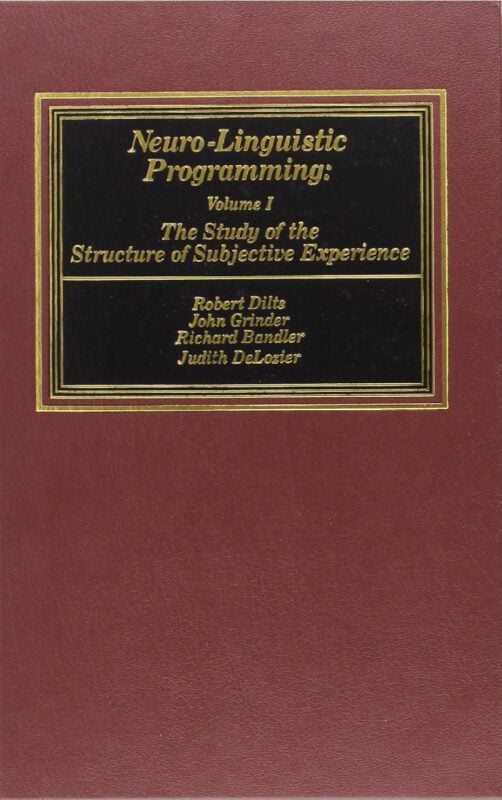
The Structure of Magic by Richard Bandler and John Grinder catalyzed the development of Neuro-Linguistic Programming (NLP) and continues to influence practitioners across fields. The clarity, specificity, and structural insight embedded in the Meta-Model have shaped contemporary approaches to coaching, counseling, leadership, and personal development.
Therapists who study and apply the principles in this book gain a toolkit for reading between the lines, hearing the logic beneath surface expressions, and intervening at the level where change truly happens. The Structure of Magic exemplifies the convergence of linguistics, psychology, and practical know-how, offering a bridge from theory to powerful action.
Conclusion
Bandler and Grinder’s The Structure of Magic: A Book About Language and Therapy redefines the landscape of therapeutic work by bringing language, modeling, and structural awareness to the forefront of change. The authors equip readers with a deep understanding of how people create and maintain internal models, and how skillful linguistic intervention can unlock growth and healing. The book stands as a testament to the transformative power of language, the importance of precision, and the enduring possibility of learning to “do magic” in the service of human flourishing.