The Culture Industry
Theodor W. Adorno’s The Culture Industry dissects how mass-produced culture shapes consciousness, maintains social order, and enforces conformity within advanced capitalist societies. Adorno places his analysis at the heart of twentieth-century thought, framing the culture industry as an essential mechanism that conditions human experience, channels desire, and administers the rhythms of daily life. Across essays written from the 1930s through the 1960s, Adorno articulates a theory in which entertainment, art, and leisure become tools for integration rather than emancipation. What results is an account of modern culture’s pivotal role in reproducing the logic of capital and ensuring the persistence of its values.
The Genesis of the Culture Industry
Adorno develops the concept of the culture industry amid the collapse of traditional art’s social function and the rise of mass media. He locates the origins in the increasing mechanization and commodification of cultural goods—music, film, radio, and magazines—produced for mass consumption and distributed according to the dictates of exchange value. In this system, the commodity form organizes every aspect of cultural production, subordinating aesthetic qualities and intrinsic meanings to the requirements of reproducibility and market appeal. Cultural products circulate according to the rhythms of capitalist production, and their content bears the stamp of economic rationality. As the forces of production expand, culture transforms from a domain of reflective, critical engagement into a network for the transmission of standardized messages. This shift has deep roots in the rise of instrumental reason—the deployment of rationality as a means for control and manipulation rather than the pursuit of understanding or liberation.
Instrumental Reason and the Administration of Culture
Adorno frames instrumental reason as the conceptual engine of the culture industry. Rationality, once a force for emancipation and enlightenment, reorients itself toward efficiency, predictability, and domination. The division between means and ends erodes, as the imperatives of market logic permeate thought and practice. Capitalist rationality, focused on calculability and profit, molds culture according to the same standards it applies to commodities. Music, television, and film are no longer expressions of sensuous particularity or sites of critical reflection; they become products optimized for mass consumption. Their value derives from their ability to capture attention, generate revenue, and reinforce prevailing patterns of behavior. Under this regime, cultural experiences lose the capacity to surprise, provoke, or unsettle. Instead, they encourage passive consumption, diverting attention from the contradictions and suffering embedded in social reality.
High Art, Low Art, and the Logic of Reification
The distinction between high art and low art, foundational for centuries, acquires new meaning under the culture industry. High art, characterized by autonomy and resistance to immediate utility, becomes marginalized, while mass-produced art proliferates. Both forms, however, undergo commodification. High art is sequestered from daily life, available to a select few, and stripped of its capacity to challenge the status quo. Mass art, tailored to the broadest possible audience, standardizes experience and delivers immediate gratification. Adorno traces the transformation of both spheres: the “quintessence of division” manifests in the parallel evolution of artistic forms and social structures. The culture industry blurs the boundaries, absorbing elements from each to create hybrid forms that neither subvert nor transcend the existing order. The result is a “false universality”—a world in which the promise of happiness and freedom is displaced by manufactured amusement.
Pleasure, Amusement, and the Disciplining of Desire
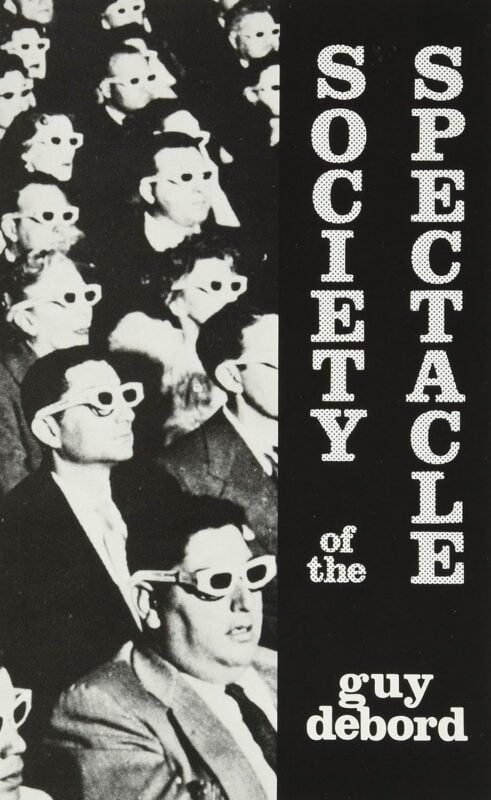
The culture industry administers pleasure, translating the need for happiness into controlled experiences of amusement. Entertainment becomes an extension of labor: leisure exists to restore the capacity for work, not to create space for critical reflection or authentic fulfillment. Amusement supplies temporary relief from the demands of daily life, yet this relief bears the mark of the system that necessitates it. The desire for happiness finds satisfaction only in simulation. The spectacle replaces real fulfillment with the constant circulation of images, sounds, and narratives, all orchestrated to prevent critical engagement. Adorno identifies the paradox at the core of mass culture: pleasure means not thinking, forgetting suffering, suspending the impulse to resist. This structure renders cultural products both seductive and sterile, promising satisfaction but never delivering it.
The Structure of Mass Culture: Standardization and Pseudo-Individuality
Standardization pervades the culture industry’s products. Adorno demonstrates how musical forms, cinematic tropes, and narrative devices repeat established patterns. The system offers the illusion of choice—different genres, styles, and performers—yet each selection fulfills the same structural function. Pseudo-individuality emerges: consumers believe they exercise preference, but the framework ensures all options conform to the underlying logic of mass production. The detail, which once defined artistic works as unique, now serves formulaic ends. In painting, music, and film, distinctive features dissolve into effects that support the whole, with “special effects” substituting for genuine innovation. Even dissonance and transgression become stylized, safely contained within commercial formats.
Critical Thought, Reflection, and the Problem of Resistance
Adorno argues that the culture industry does not demand belief in its illusions; it suffices that consumers participate. The dynamic of “seeing through and obeying” defines modern consciousness. Individuals recognize manipulation, yet continue to consume and conform, compelled by habits and the structure of daily life. Astrology columns, as Adorno explores, illustrate this principle. Readers oscillate between skepticism and adherence, accepting guidance while doubting its foundation. The effect is a suspension of critical faculties—a “disoriented agnosticism” that mirrors the broader cultural condition. This strategy extends beyond entertainment: the integration of critical awareness into the logic of consumption neutralizes the possibility of meaningful resistance.
Dialectical Critique and the Tensions of Cultural Criticism
Adorno’s theory advances a dialectical form of criticism, which insists on the necessity of engaging with culture both as participant and as observer. Cultural criticism, as he describes it, occupies an uneasy position: to criticize culture is to risk reinforcing its status, but to ignore its entanglement with social suffering is to abdicate responsibility. Adorno insists that authentic critique must neither retreat into abstraction nor dissolve into affirmation. The task is to reveal the contradiction between culture’s promises—freedom, happiness, individuality—and the reality of commodified existence. The critic confronts the complicity of culture in domination, recognizing that culture exists “because freedom does not.” This stance creates a space for negative dialectics, in which the inadequacy of present forms points toward the possibility of transformation.
The Evolution of the Culture Industry: Postmodernism and the False Reconciliation
The later essays in The Culture Industry explore the convergence of high and low art in the context of postmodernism. Adorno observes that new forms of art and entertainment integrate styles, genres, and historical references, creating a hybrid cultural space. This synthesis produces neither emancipation nor renewal, but extends the reach of commodification. The “false reconciliation” between artistic autonomy and mass appeal results in a culture where distinction and critique lose force. Newness becomes a marketing device; difference functions as a strategy for expanding consumption. The expansion of lifestyle options and the proliferation of images and experiences signal the closure of the gap between cultural production and everyday life. Commodities acquire aesthetic dimensions; art becomes indistinguishable from spectacle. Under these conditions, the search for authentic individuality or critical distance encounters new obstacles.
The Role of Art in the Era of the Culture Industry
Adorno defends the residual potential of art to disrupt, challenge, and expose the logic of domination. He defines autonomous art as the site where sensuous particularity and rational ends converge, even as the culture industry encroaches. The work of art, in its form and structure, can express contradictions irreducible to commercial logic. Adorno points to the capacity of dissonance, fragmentation, and negation to reveal what society conceals. Yet the culture industry constantly seeks to absorb these elements, transforming them into marketable features. The avant-garde’s innovations, once antagonistic, become stylized options within the mass marketplace. This incorporation of negativity serves the dual purpose of stimulating desire and managing its expression. The culture industry thus operates as both a factory of images and a laboratory of social control, adjusting its techniques in response to shifting tastes and expectations.
The Culture Industry’s Legacy and the Crisis of Meaning
Adorno’s analysis anticipates the contemporary saturation of daily life by commodified images, narratives, and sounds. The logic of the culture industry, as he describes it, unfolds with increasing intensity. Media technologies accelerate the circulation of cultural goods, blur distinctions between producer and consumer, and create unprecedented conditions for surveillance, influence, and persuasion. As aesthetic experience becomes indistinguishable from commodity consumption, the question of meaning gains new urgency. Where do individuals find orientation, purpose, or the resources for critical thought in a world saturated with simulacra? Adorno offers no facile solutions. He insists on the importance of preserving spaces for reflection, negation, and refusal within the flux of commodified life. The culture industry’s power lies in its capacity to shape not only preferences and opinions but also the very conditions for experience and judgment.
The Persistence of Structural Tension
The Culture Industry does not resolve the dilemmas it identifies. Instead, Adorno’s essays cultivate a structural tension, illuminating the contradictions embedded in culture, consciousness, and social life. The logic of commodification, the administration of desire, the discipline of thought, and the spectacle of pleasure converge in patterns that resist straightforward critique or opposition. Adorno does not seek to redeem culture by defending high art, nor does he embrace the proliferation of choice and hybridity as signs of progress. His work insists on attending to the fractures, ambiguities, and unfulfilled promises that animate the history of culture under capitalism. The prospect of emancipation—freedom, happiness, and individuality—remains bound to the task of critique: revealing the forces that shape experience and the possibilities that persist, however tenuously, within and against the culture industry’s domain.
The Culture Industry by Theodor W. Adorno is a foundational text for understanding Adorno and his Frankfurt School cohort, which sees how mass-produced culture orchestrates the conditions of contemporary life, organizing pleasure, thought, and social relations according to the imperatives of capital. Through his dialectical method, Adorno urges the reader to recognize the persistence of contradiction, the violence of standardization, and the enduring promise of genuine art as a site for critique and transformation.