Better Think Twice Before Agreeing: Mere Agreement: a Similarity-based Persuasion Mechanism
🗣️ Persuasion Through Agreement: How Politicians and Newscasters Shape Minds
Politicians and newscasters have a knack for making their ideas sound not only compelling but also inevitable. One of their secret weapons? A subtle psychological strategy called the “mere agreement effect.” By starting with statements that most people agree with, they build a subconscious connection with their audience, making their subsequent arguments feel more acceptable and trustworthy.
This technique is rooted in human psychology and supported by research outlined in the paper “Better Think Twice Before Agreeing - Mere Agreement - A Similarity-Based Persuasion Mechanism”. The authors demonstrate how eliciting agreement on unrelated, non-controversial statements creates a sense of similarity between the speaker and the audience, leading to greater compliance with later requests or ideas.
🌱 Planting Seeds of Agreement
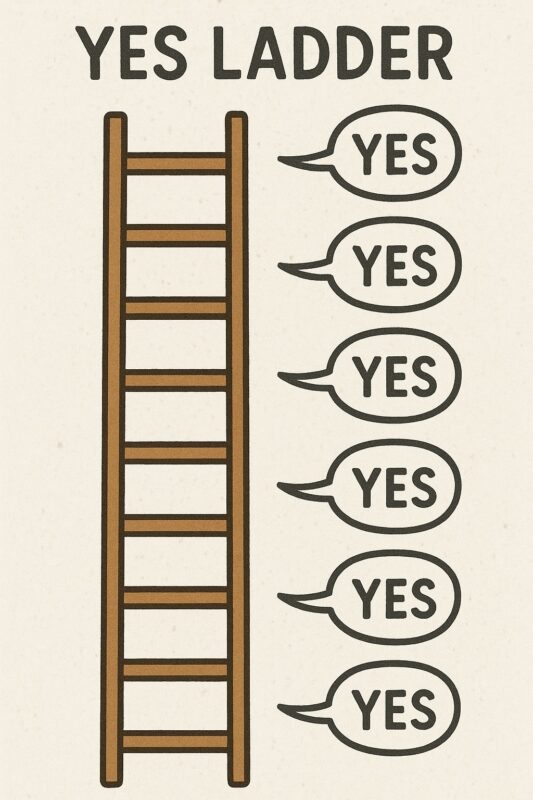
Imagine a politician’s speech. It begins with statements like, “We all want safer streets for our children” or “Hard work should be rewarded with fair pay.” These are not groundbreaking revelations, but that’s the point—they’re universally agreeable. The mere act of agreeing with these statements creates a subtle psychological link between the audience and the speaker.
According to the study, this phenomenon occurs in two steps:
Agreement fosters perceived similarity—the audience feels the speaker understands their values.
This similarity increases compliance with the speaker’s subsequent requests or ideas, even if they are less agreeable or more polarizing.
For instance, Study 1 from the research found that participants who agreed with a series of neutral statements were significantly more likely to comply with an unrelated request from the same person afterward. The agreement builds rapport, setting the stage for influence.
📰 Framing the News: A Trusted Narrator
Newscasters use a similar approach. Before presenting contentious topics, they often lead with unifying statements: “At the heart of this debate is our shared desire for a stable and prosperous future.” This framing is no accident—it’s a deliberate attempt to establish trust and alignment.
Study 3 from the paper reveals that this strategy works because of its person-specific nature. The audience feels a connection to the individual who elicited the agreement (the newscaster), not just the content. This is why television hosts or anchors with a history of agreeable commentary often have a loyal following—audiences perceive them as “on their side.”
The mere agreement effect even functions without direct interaction. In the study, participants who agreed with written statements in a lab were later more likely to help the author of those statements, despite never meeting them face-to-face. For media personalities, this underscores the power of a well-crafted script to subtly win over viewers.
🎯 Shaping Policies with Similarity
For politicians, the mere agreement effect is an invaluable tool for rallying support. It’s not uncommon for a speech to begin with anecdotes or general truths designed to elicit nods from across the aisle. Once agreement is established, they segue into more specific, potentially divisive policies.
In Study 2, researchers found that agreement is effective because people assume others share their values when they agree on statements. This assumption of shared understanding builds a sense of community, which is critical for persuasion. A politician might start with, “We all know the value of education in building a stronger society,” before proposing a complex education reform. The audience, already aligned with the sentiment, is more likely to consider the policy favorably.
💡 Why It Works: The Psychology of Similarity
At its core, the mere agreement effect is about similarity. The study highlights that when people feel aligned with someone, they’re more likely to trust and comply with them. This principle has been validated in numerous contexts:
Study 4 showed that the effect is diminished when people are prompted to reflect critically, emphasizing its subconscious nature.
Study 5 demonstrated its power in real-world applications, such as telephonic surveys, where agreement increased compliance by 18%.
Politicians and newscasters leverage this principle by carefully constructing their messages to resonate universally at the start, allowing their main points to ride on the wave of established trust.
🛑 Limitations of Agreement
While effective, the technique is not without its challenges. The paper points out that overuse or obvious attempts to elicit agreement can backfire. Study 4 found that when participants were made aware of their agreement responses, the effect faded. For politicians, this highlights the importance of subtlety—too much agreement-seeking may appear disingenuous.
Additionally, audiences are more likely to question similarity when other cues, such as body language or tone, don’t align. In face-to-face settings, excessive attempts to create agreement can lead to skepticism, limiting the method’s effectiveness.
📣 The Takeaway
The “mere agreement effect” offers a masterclass in persuasion, particularly for those in positions of influence. Politicians and newscasters use this subtle psychological tool to align themselves with their audiences, building trust through shared agreement before presenting their core message.
It’s a reminder that the most persuasive arguments often begin with the simplest truths: shared values, common struggles, and universal aspirations. Whether it’s a politician rallying support for a contentious policy or a news anchor framing a divisive issue, their first goal is the same—find agreement, build trust, and then sell the idea. The next time you hear a speech or watch the news, pay close attention to those opening statements. They’re not just setting the tone—they’re setting you up to say “yes.”