Deconstructing Wikileaks
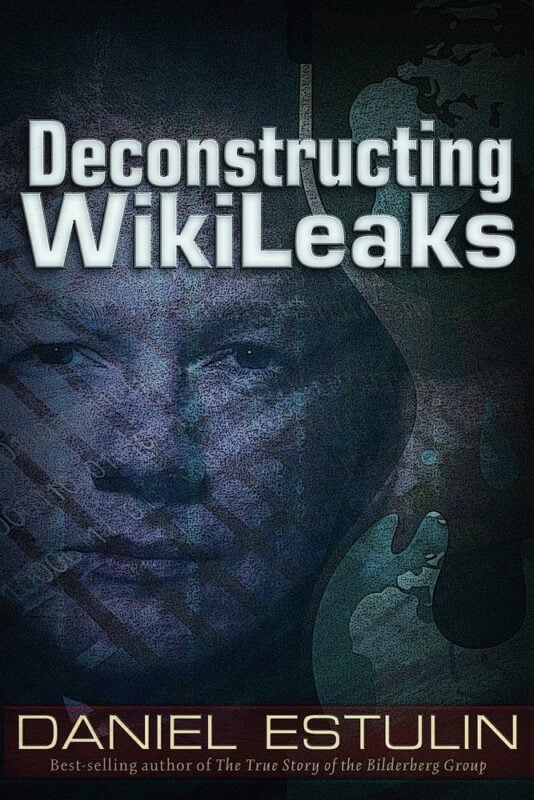
Deconstructing Wikileaks by Daniel Estulin opens with a direct challenge to the official narratives that frame WikiLeaks as a paragon of transparency and digital rebellion. The book contends that WikiLeaks and its founder, Julian Assange, operate within a dense lattice of intelligence agencies, elite philanthropic foundations, and media conglomerates. Estulin defines WikiLeaks as an instrument of influence within the global contest for information supremacy, asserting that its activities cannot be isolated from the architectures of power that both sustain and amplify its impact.
Origins and the Genesis of Influence
WikiLeaks emerged onto the global stage with an avalanche of classified documents, quickly drawing the eyes of governments, corporations, and a worldwide audience hungry for unfiltered information. Estulin traces the genesis of WikiLeaks to a confluence of technologists, political dissidents, and intelligence-linked figures whose backgrounds extend into US, European, Australian, and Asian spheres. The initial advisory board featured individuals from the Chinese and Tibetan exile communities, as well as former intelligence analysts and cryptographers. Estulin reveals that the organization sought funding and strategic guidance from an array of sources, including Western NGOs and think tanks such as Freedom House and the National Endowment for Democracy.
Embedded Philanthropy and Network Funding
Assange has described the Wau Holland Foundation in Germany as a key financial artery for WikiLeaks. Estulin follows the flow of donations, demonstrating that contributions come from both grassroots supporters and well-connected elites. The book asserts that WikiLeaks approached major philanthropic entities, including those linked to George Soros, the Rockefeller family, and the Open Society Foundations. Estulin establishes that Freedom House, the NED, and affiliated organizations have played pivotal roles in financing and guiding opposition movements across the globe. These same entities appear in the early networks supporting WikiLeaks, generating structural overlap between whistleblowing, regime-change operations, and strategic information campaigns.
NGOs, Media Conglomerates, and Agenda Formation
Media conglomerates act as gatekeepers, shaping the boundaries of public discourse through editorial control and coordinated coverage. Estulin catalogs how the world's largest media organizations—including The Guardian, The New York Times, Der Spiegel, and The Economist—entered into formal agreements with WikiLeaks to redact, contextualize, and amplify the release of sensitive documents. He notes that the ownership structures of these publications trace back to the same networks—Council on Foreign Relations, Bilderberg Group, and elite Western financial dynasties—that exercise power over Western political and economic systems. The book links these corporate media alliances to recurring patterns of perception management and “reality engineering,” situating WikiLeaks within a broader apparatus of mass opinion formation.
Advisory Structures and Intelligence Overlap
Estulin meticulously details the composition of the WikiLeaks advisory board during its formative years. He identifies individuals with ties to the US State Department, the CIA, Radio Free Asia, and the National Endowment for Democracy. Among them are exiled Chinese dissidents, leaders of the Tiananmen Square protests, and figures associated with color revolutions in Eastern Europe and Central Asia. The book asserts that the presence of such figures aligns WikiLeaks’ operational agenda with US foreign policy interests, especially regarding countries targeted for political destabilization. Estulin highlights the removal of the advisory board list from the WikiLeaks website as an indicator of the organization's sensitivity to scrutiny regarding its internal power dynamics.
Financial Veils and Strategic Resource Flows
Estulin examines the mechanisms by which WikiLeaks secured resources, negotiated with donors, and protected the identities of its supporters. He uncovers correspondence in which WikiLeaks explores covert funding streams from intelligence agencies and private donors with “millions to spare.” By linking funding channels to both activist communities and establishment sources, Estulin illustrates the hybrid nature of WikiLeaks’ financial base. He tracks the involvement of figures from the Open Rights Group (funded by Soros and the Rowntree Trust) and the role of individuals with direct connections to Google, which itself maintains partnerships with US intelligence entities such as In-Q-Tel and the National Security Agency.
Patterns of Disclosure and Geopolitical Alignment
WikiLeaks’ document dumps consistently target regimes and actors defined as adversaries in Western foreign policy frameworks—Russia, China, Iran, the Middle East, and the former Soviet bloc. Estulin notes that the releases rarely, if ever, focus on major internal controversies within the power centers of the West or on Western allies whose actions might undermine the prevailing narrative of liberal democracy. He argues that the geographic and thematic selectivity of WikiLeaks’ leaks reinforces the policy objectives of the United States and its allies, contributing to campaigns of destabilization, delegitimization, and “color revolution.”
Case Study: Russian State and Media Narratives
In a detailed case study, Estulin analyzes the launch of RuLeaks, a Russian version of WikiLeaks. He links its emergence to strategic shifts in Russian foreign policy—specifically, Moscow’s recognition of Palestinian statehood and strengthening ties with Iran. The leak of alleged evidence of corruption by Russian officials coincides with intensified Western media efforts to portray Russia as a “mafia state.” Estulin interprets these disclosures as tactical interventions in geopolitical contests, where information warfare and psychological operations carry as much weight as economic or military measures.
The Corporate Media and the Illusion of Independence
Estulin draws a direct line from the consolidation of media ownership to the capacity of elites to direct the flow of information and frame global events. He documents the process by which major news organizations formed a “cartel” structure, historically guided by financial interests linked to the J.P. Morgan banking empire and perpetuated by the Council on Foreign Relations and affiliated institutions. He shows how “Operation Mockingbird,” a Cold War-era CIA initiative, embedded journalists within major US newspapers and broadcast networks, shaping coverage in line with government priorities. The alignment between WikiLeaks and these same media conglomerates, Estulin argues, undermines claims of radical independence.
Role of Perception Management and Reality Engineering
Spin control, perception management, and psychological operations define the informational battlefield on which WikiLeaks operates. Estulin details the evolution of these strategies from “Operation Mockingbird” through to present-day collaborations between whistleblower platforms and mainstream media. He examines how narratives around “openness,” “transparency,” and “whistleblowing” become tools for legitimizing specific interventions, regime changes, or foreign policy goals. The book tracks the use of orchestrated media campaigns to escalate public pressure for intervention, as seen in cases like Sudan, Kosovo, and the Gulf War, and traces the same architecture in the WikiLeaks phenomenon.
The Nexus of Think Tanks, Foundations, and Strategic Influence
Philanthropic foundations and think tanks—Rockefeller Foundation, Ford Foundation, Open Society, MacArthur Foundation, Earth Institute, and the Aspen Institute—anchor a global network of influence. Estulin establishes that these organizations support environmentalist, humanitarian, and “democracy-promotion” projects, which also intersect with covert operations, intelligence funding, and strategic “soft power.” He recounts the histories of these groups, linking them to population control programs, de-industrialization schemes, and financial interventions in post-Soviet and developing countries. He locates WikiLeaks within this nexus, documenting its overtures to the same donors and its reception of accolades from the very institutions that orchestrate global narratives.
Assange as Symbol and Enigma
Julian Assange occupies a central role as both the face of WikiLeaks and an enigmatic operator within its structures. Estulin explores Assange’s rapid ascension to international celebrity, his acceptance of awards from establishment media outlets, and his public endorsements by mainstream institutions. The book interrogates the construction of the “heroic whistleblower” archetype, revealing how media, NGOs, and political actors cultivate icons who embody the aspirations—and sometimes the strategic needs—of larger power systems. Assange’s portrayal as a maverick challenger obscures the complex affiliations and dependencies that underpin his actions.
Transnational Strategies and the Orchestration of Information
Estulin interprets the strategic deployment of WikiLeaks as an evolution of Cold War information warfare—transposed onto a global, digital stage. He demonstrates how the symbiotic relationship between intelligence agencies, foundations, media, and activists produces a continuum of influence, blurring distinctions between government action and private intervention. The orchestration of leaks, the timing of disclosures, and the narrative framing all serve to advance objectives that often align with broader Western strategies of regime change and global governance.
Information Control and the Limits of Public Perception
The book advances the claim that true sovereignty and informed judgment reside in the creative capacity of the individual mind, rather than in the managed consensus of mass media. Estulin calls for a critical approach to information, encouraging skepticism toward the seamless integration of leaks, media amplification, and political campaigns. He cautions that the illusion of transparency and dissent can reinforce rather than challenge the structural powers that shape global reality.
Consequences and Unfolding Patterns
Estulin concludes that WikiLeaks functions as a vector within a much larger system of global control—one in which governments, media, NGOs, and financial elites collaborate to manage dissent, manufacture consent, and direct the flow of information. The convergence of intelligence operations, philanthropic funding, and media partnership produces a reality in which “leaks” serve as both revelation and instrument, guiding populations toward pre-determined outcomes. The book invites readers to map these convergences, question the origins and motives behind information flows, and recognize the extent to which the architecture of modern transparency itself reflects the priorities of those who hold power.