Judaism’s Strange Gods
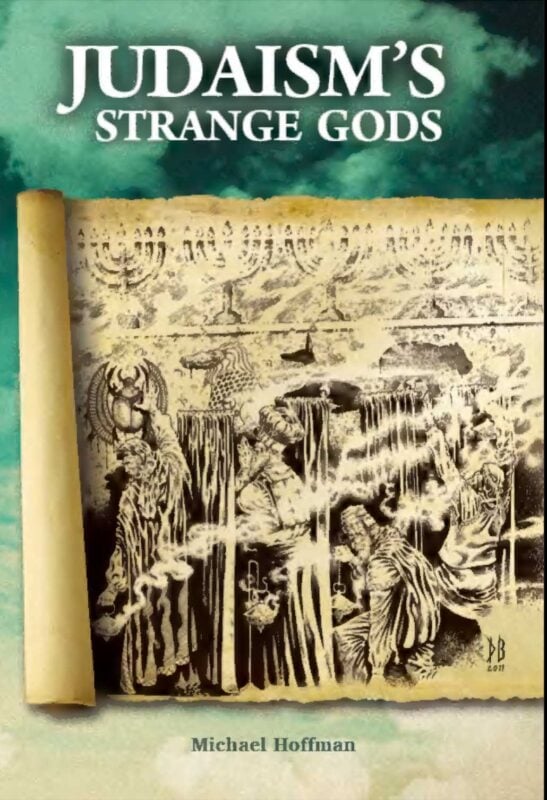
Michael A. Hoffman II challenges the foundations of Rabbinic tradition in his book Judaism’s Strange Gods, positing that contemporary Orthodox Judaism diverges fundamentally from the ethical and theological legacy of the Hebrew Bible. He identifies a transformation that elevates the Talmud above the Torah, asserting that this redirection reconfigures moral priorities, legal structures, and divine representation.
The Supremacy of the Talmud
Rabbinic authority reposes in the Talmud, a compilation of laws, stories, and commentaries attributed to sages over centuries. Hoffman argues that this textual corpus governs Orthodox Jewish life more thoroughly than the Pentateuch, shaping decisions about daily conduct, social interaction, and legal rulings. He traces the reverence granted to the Talmud to specific passages where its interpretations supersede or nullify biblical mandates. This elevation, he claims, does not merely supplement biblical law but replaces it with a distinct religious worldview. The shift redefines righteousness as submission to rabbinic decree rather than divine ordinance.
Oral Tradition as Divine Code
The Pharisaic tradition posits that alongside the written Torah, Moses received an oral law, transmitted secretly across generations and codified in the Mishnah and Gemara. This oral law forms the backbone of the Talmud. Hoffman presents this claim as a historical assertion with theological implications. If divine law depends on secret transmission, access to divine truth becomes a function of clerical hierarchy. The spiritual elite interpret, apply, and even innovate divine mandates. This dynamic, according to Hoffman, undermines the prophetic model where divine instruction speaks clearly to the entire nation.
Reconceptualizing Sin and Guilt
The juridical framework of the Talmud repositions sin within a legalistic system. Hoffman examines how intent, precedent, and ritual observance override internal repentance. Through case studies and citations, he illustrates instances where deceit or exploitation is rendered permissible within rabbinic categories, provided formal criteria are satisfied. He argues that such legal parsing deconstructs conscience. When technical compliance replaces moral substance, the community’s ethical cohesion erodes. In this system, guilt becomes a liability to be mitigated through legal means, not a transformative encounter with divine justice.
Ethnic Supremacy and Gentile Inferiority
A central theme in Hoffman’s critique concerns how the Talmud addresses non-Jews. He documents texts that describe gentiles as ontologically inferior, incapable of moral equivalence, and excluded from spiritual covenant. Laws governing commerce, contracts, and testimony differ based on whether the subject is a Jew or a gentile. Hoffman asserts that this legal asymmetry fosters communal segregation and moral dualism. It institutionalizes a worldview in which justice becomes conditional upon bloodline. The implications of this system extend beyond legal codes into cultural psychology and geopolitical orientation.
The Role of Deception in Halachic Ethics
Certain rabbinic rulings permit forms of deception under specific conditions. Hoffman cites examples where lying to non-Jews, charging interest, or concealing intentions gains legal legitimacy when aligned with communal interests. He contends that this allowance does not represent isolated rulings but follows a pattern. The structure of halachic ethics prioritizes group preservation and legal advantage. The divine command, refracted through rabbinic dialectic, yields outcomes at variance with universal moral standards. This divergence, he claims, invites strategic compartmentalization rather than integral obedience.
Textual Sanctification of Violence
In analyzing discussions of retributive justice, Hoffman points to Talmudic texts that delineate scenarios in which violence against non-Jews becomes religiously sanctioned. These rulings range from hypothetical case law to concrete permissions. He examines how these teachings have been transmitted through responsa literature, institutional customs, and contemporary rabbinic discourse. Violence, once framed as covenantal defense, becomes embedded in ritual and legal practice. The sacred canopy thus extends over actions that, in another moral context, would demand condemnation.
Rabbinic Identity as Esoteric Power
Hoffman explores the sociological implications of a priesthood that wields divine law through opaque reasoning. The rabbi, as interpreter of oral law, assumes a sacerdotal role whose legitimacy arises not from lineage but from mastery of complex dialectic. This esotericism constructs a closed epistemology. Outsiders cannot engage with the content directly because meaning depends on contextual layering, historical referent, and legal precedent invisible to the untrained. Authority, therefore, becomes indistinguishable from secrecy. This structure invites veneration and shields scrutiny.
Historical Repression of Dissent
Movements that challenged Talmudic supremacy—such as the Karaites—faced sustained marginalization. Hoffman recounts historical episodes where internal Jewish critics were exiled, silenced, or anathematized. He interprets this suppression as evidence of a system intolerant of prophetic rupture. The guardians of the Talmud defend their corpus not merely as tradition but as ontology. To question it is to destabilize the universe they mediate. Consequently, internal dissent becomes existential treason. This protective posture, according to Hoffman, mirrors totalitarian models of knowledge control.
Symbolic Inversion and Ritual Authority
The book tracks ritual behaviors that, while appearing pious, invert biblical symbolism. Examples include ceremonial handwashing with ritual intent distinct from biblical purity codes, or the reinterpretation of Sabbatical laws in commercial transactions. Hoffman contends that these inversions create a parallel religious system, outwardly aligned with Mosaic precedent but functionally autonomous. The reinterpretation does not merely extend tradition; it reorganizes the symbolic universe. Ritual becomes an assertion of rabbinic sovereignty over divine mandate, enacted through embodied performance.
Consequence for Christian-Jewish Relations
Hoffman concludes by examining how Christian understanding of Judaism often fails to distinguish between Old Testament theology and Talmudic orthodoxy. He argues that this conflation distorts interfaith dialogue and misrepresents historical tensions. When Christian institutions engage contemporary Jewish authorities as Old Testament interlocutors, they inadvertently legitimize a post-biblical tradition. The ethical and theological divergences between Jesus’ confrontation with Pharisaic legalism and modern Jewish theology recede behind a facade of shared heritage. Hoffman urges Christians to reclaim prophetic clarity by disentangling covenantal truth from rabbinic innovation.
Unfolding of Theological Trajectory
The narrative arc Hoffman constructs traces a movement from prophetic encounter to juridical construct. The Torah reveals a God who speaks, commands, and redeems. Rabbinic Judaism constructs a system where divine speech becomes procedural logic. Revelation becomes jurisprudence. Morality becomes compliance. In that transformation, Hoffman locates a theological rupture with consequences for spiritual authenticity and communal integrity. He does not call for antagonism. He demands recognition—recognition that theology governs anthropology, that law encodes metaphysics, and that tradition requires discernment.
The Legacy of the Critique
Judaism’s Strange Gods positions itself within a tradition of religious critique that insists on fidelity to original revelation. Hoffman calls his readers not to hostility but to clarity. His argument advances not by appeal to sentiment but by systematic exposure of sources, patterns, and outcomes. He writes as a polemicist, but his polemic rests on documented claims and historical analysis. The book remains a provocation because it exposes a structure that few dare to name. That structure, once seen, demands a response. The response cannot be dismissal. It must be theological. It must be moral. It must be personal.