KL: A History of the Nazi Concentration Camps
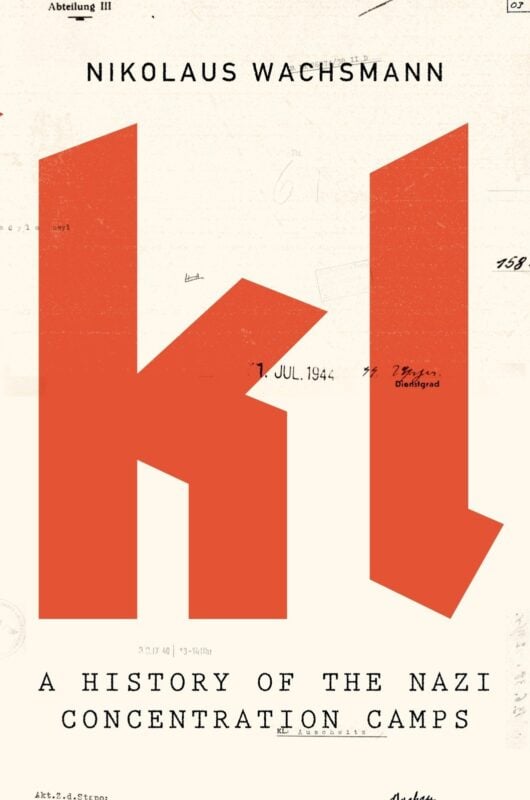
KL: A History of the Nazi Concentration Camps by Nikolaus Wachsmann delivers a systematic exploration of one of the most structurally significant institutions within the Third Reich. The book reconstructs the creation, expansion, and ultimate collapse of the SS-run concentration camp system. Wachsmann reveals the internal logic of terror, showing how policy, ideology, and bureaucratic control fused to generate a system capable of mass extermination. This account dissects the institutional forces and personal decisions that shaped camp operations and the lives of those held within them.
The Genesis of Nazi Terror
The concentration camp system began with Dachau in 1933, following Hitler’s appointment as Chancellor. Wachsmann tracks the transformation from a hastily improvised detention center to a purpose-built instrument of political repression. Early prisoners included political enemies—chiefly Communists and Social Democrats—held under the pretense of “protective custody.” The SS systematized control through evolving administrative structures and the establishment of clear internal hierarchies. Guards enforced discipline through ritualized violence. The camps functioned as both punishment and deterrence, reinforcing the new order’s ideological priorities.
Expansion and Integration
From 1936 onward, camps transitioned from chaotic cruelty to organized repression. The establishment of the Inspectorate of Concentration Camps created unified procedures. Camps multiplied in number and purpose. By 1939, the KL system expanded beyond political enemies to include so-called social outsiders: Roma, homosexuals, Jehovah’s Witnesses, and those labeled as asocial. Each category received a distinctive badge, turning classification into an act of ideological enforcement. Simultaneously, the SS refined the infrastructure. Wachsmann details how spatial reorganization, barracks construction, and bureaucratic layering enabled long-term detention and systematic abuse.
War and Transformation
The outbreak of war in 1939 shifted the function of the camps. Forced labor replaced political punishment as the primary objective. SS administrators integrated KL prisoners into armaments production. The camps became nodes in a national economy premised on coercion. With the conquest of Poland and the Soviet Union, the geographical reach of the KL network grew. The SS established dozens of satellite camps. Prisoners died in staggering numbers from starvation, overwork, disease, and execution. Wachsmann traces how war exigencies and ideological hardening produced an administrative appetite for death.
Auschwitz and Industrialized Murder
Auschwitz emerged as the culmination of SS camp evolution. Wachsmann reconstructs its hybrid role as both labor camp and death center. Starting in 1942, Auschwitz served as the epicenter of the Final Solution. Transports of Jews arrived from across occupied Europe. Selections on the ramp separated the living from the doomed. Those spared immediate execution entered a brutal labor regime. Those deemed unfit went directly to the gas chambers. The camp’s architecture encoded this bifurcated logic: crematoria, barracks, workshops, and the SS command coexisted in operational interdependence.
Power, Function, and Behavior
Wachsmann embeds the KL system within the broader Nazi state. He uncovers the mutual reinforcement between ideology, administrative ambition, and personal initiative. Guards were not aberrant monsters. They were ordinary men operating within a structure that rewarded brutality. Promotions followed demonstrated ruthlessness. Initiative produced recognition. Within this framework, individual agency reinforced systemic goals. Prisoners responded with complex strategies—compliance, sabotage, collaboration, or despair. The book avoids generalizations, instead showing how position, category, camp, and time shaped behavior.
The Machinery of Mass Death
By 1944, the KL system held hundreds of thousands. Death rates soared. Satellite camps operated in close proximity to industrial plants. Evacuation orders as Allied troops advanced turned retreat into carnage. Prisoners marched in brutal winter conditions. Guards shot the weak and lagging. Survivors reached camps like Bergen-Belsen or were overtaken by Allied forces. Liberators found mountains of corpses and the skeletal remains of the dying. These images shaped postwar memory. Wachsmann stresses the contingent and cumulative nature of these outcomes. The system escalated by degree, choice, and opportunity.
Postwar Memory and Historical Recovery
Wachsmann also confronts how the KL became fixed in global memory. Early testimonies by survivors shaped initial impressions. Media coverage of liberation scenes entrenched certain visual narratives. Auschwitz came to stand for the entirety of Nazi atrocity. This identification obscured the diversity of camp experiences and victims. Wachsmann shows how postwar politics, trials, and Cold War realignments further channeled historical discourse. He brings attention to neglected sites and victims—criminals, asocials, non-Jewish foreigners—whose experiences did not conform to dominant narratives.
Documentation, Testimony, and Evidence
The book anchors its authority in a massive range of sources. Wachsmann incorporates SS records, survivor accounts, trial testimonies, and clandestine prisoner writings. He evaluates inconsistencies and identifies patterns. Many prisoners never testified. Many camps left few documents. Yet the surviving record supports a reconstruction of internal life, administrative change, and ideological drift. Testimony reveals as much about the conditions of survival as about structures of oppression. Wachsmann treats sources as voices, not artifacts. They speak from and to history.
The Concentration Camp as Institution
Wachsmann positions the KL as central to the Nazi project. It was neither a sideshow nor a deviation. The camps institutionalized the regime’s obsessions—racial purity, social conformity, national rebirth through violence. They fused ideology with practice. They recruited participation through rewards, honors, and power. The KL system fulfilled functional needs—labor supply, repression, extermination—but always within an ideological scaffold. Wachsmann demonstrates how the camps became both instruments and symbols. Their existence shaped expectations, behavior, and belief across German society.
Final Convergence
As the war ended, KL operations entered a final phase of acceleration and collapse. Bureaucracies fragmented. Orders became contradictory. Camp staff fled or concealed identities. Survivors were liberated, evacuated, or murdered. Testimonies emerged. The postwar world confronted the evidence of what had occurred behind the wire. Wachsmann closes with the insight that the KL was not a static creation. It evolved. Each phase grew from decisions, conditions, and designs. Its final form was neither inevitable nor accidental. It was built, sustained, and destroyed by identifiable forces and agents.
KL: A History of the Nazi Concentration Camps is a monumental study of an institution that defined the Nazi regime’s structure and purpose. Wachsmann exposes how the camps operated, expanded, and functioned as instruments of governance and genocide. He frames the KL as the embodiment of the regime’s vision and terror, grounded in action, decision, and systematized belief.


About the Book