The Oklahoma City Bombing and the Politics of Terror
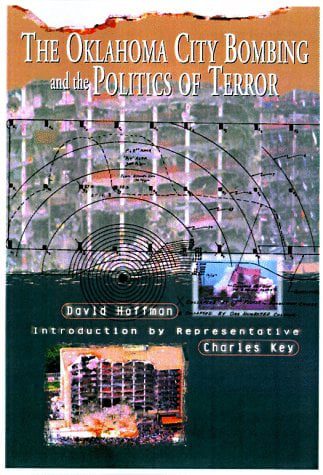
The Oklahoma City Bombing and the Politics of Terror by David Hoffman penetrates the surface of America’s most devastating domestic terrorist act, advancing through layers of official accounts, media representations, and forensic science. Hoffman asserts that on April 19, 1995, the bombing of the Alfred P. Murrah Federal Building signaled more than a lone act of violence. The book contends that a complex network of actors, governmental maneuvers, and suppressed truths converged, driving the event beyond a singular narrative. This approach provokes a critical reassessment of the event’s causes, the investigation’s trajectory, and the governmental structures implicated by the crime’s aftermath.
The Immediate Aftermath and the Official Response
Explosions ripped through downtown Oklahoma City, transforming a federal building into a scene of devastation. Rescue workers moved through tangled steel and shattered concrete as sirens punctuated the chaos. Federal agents raced to identify causes and culprits. Within hours, authorities pointed to a rented Ryder truck packed with ammonium nitrate and fuel oil as the source of the blast. Investigators traced rental records and followed leads across multiple states. Timothy McVeigh and Terry Nichols emerged as primary suspects, apprehended and charged with orchestrating the attack. The government constructed a narrative: two men, radicalized by anti-government sentiment, executed a meticulously planned bombing as a reprisal for federal actions in Waco, Texas.
Scientific Analysis and Explosive Realities
Hoffman interrogates the official story through the lens of explosives engineering and military science. Brigadier General Benton Partin, a leading authority on non-nuclear ordnance, challenged the plausibility of the explosion’s mechanics. He argued that the visible damage pattern—reinforced concrete columns shattered at specific points, the building’s façade sheared at a distance from the truck—demands the presence of internal demolition charges. Samuel Cohen, inventor of the neutron bomb and veteran of the Manhattan Project, reinforced this skepticism. He asserted that an external truck bomb, regardless of size, cannot compromise such a structure in the manner observed.
Chemical engineers and demolition professionals provide further analysis. The detonation velocity of ANFO—ammonium nitrate mixed with fuel oil—ranks significantly below that of military-grade explosives such as RDX or C-4. To pulverize concrete supports and collapse a modern office tower, a bomb must deliver a shock wave with immense, concentrated force. The government’s claims about the bomb’s yield, size, and placement evolved over the course of the investigation, yet the physical evidence remains constant. Hoffman details tests and professional testimonies that demonstrate ANFO’s inadequacy in replicating the Oklahoma City blast.
Eyewitness Accounts and the Suppression of Testimony
As the rescue and recovery unfolded, witnesses emerged with accounts that complicated the lone bomber theory. Dozens reported seeing McVeigh in the company of unidentified men in the days preceding the bombing. Composite sketches of “John Doe” suspects circulated, then faded as the investigation narrowed its focus. Grand jury procedures, usually designed to exhaust the field of available evidence, omitted critical eyewitnesses who described multiple suspects or unusual activities near the Murrah building.
Hoffman spotlights the procedural maneuvers that kept these voices from influencing the trial. Federal prosecutors withheld the testimony of witnesses who observed suspicious vehicles and unfamiliar individuals near the blast site. Sketch artists who worked with these witnesses found themselves sidelined. The narrative streamlined toward a singular culpability, excluding complexity that could implicate broader networks or alternative motivations.
Political Resistance and the Quest for an Independent Grand Jury
Local activists and state representatives refused to accept the limitations imposed by the federal inquiry. Charles Key, an Oklahoma legislator, spearheaded a grassroots petition to empanel an independent county grand jury. Oklahoma law, uniquely among American states, empowers citizens to demand such a body through public petition. Key and fellow campaigners, including victims’ families, circulated documents and gathered signatures despite institutional resistance.
Legal obstacles mounted as state and federal officials challenged the legitimacy of the petition. Judges blocked the effort at the district level, compelling appeals to higher courts. Editorial campaigns in local newspapers labeled Key and his supporters conspiracy theorists and obstructionists. Yet the courts eventually ruled in favor of the petitioners, allowing a local grand jury to investigate evidence outside the boundaries of the federal case. Hoffman describes this legal victory as a turning point in the public’s right to pursue answers independent of centralized authority.
Media Narratives and the Politics of Perception
The Oklahoma City Bombing and the Politics of Terror scrutinizes the media’s role in framing both the attack and its aftermath. National news outlets delivered a steady stream of coverage, often reinforcing the federal narrative. Media analysts and journalists who questioned official statements encountered professional and social sanctions. The book details how coverage shifted from documenting the complexity of witness accounts to reinforcing a simplified plot involving two perpetrators.
Hoffman identifies a broader media strategy: delegitimize alternative explanations through ridicule, repetition, and appeals to authority. Local figures—such as Key, Glenn Wilburn, and dissenting law enforcement officials—became targets for editorial attacks and personal vilification. Editorial boards advanced the notion that public inquiry into governmental actions constitutes paranoia or political extremism. This campaign, Hoffman contends, chilled open debate and marginalized those seeking a comprehensive investigation.
The Structure and Politics of Disinformation
Hoffman advances the argument that the investigation’s structure—its focus, exclusion criteria, and communication strategy—reflects a deliberate effort to contain the scope of culpability. Key pieces of physical evidence, including seismic records, blast residue analyses, and surveillance tapes, remained sequestered from public scrutiny. Experts who published critical assessments faced bureaucratic obstacles and, in some cases, career repercussions.
The book posits a model of “managed perception,” wherein institutional actors coordinate to establish an official version of events, then reinforce this narrative through legal, administrative, and media channels. Those who challenge this narrative risk professional and personal retaliation. The convergence of governmental, prosecutorial, and media interests produces an environment in which alternative hypotheses become objects of suspicion.
Unresolved Questions and the Search for Accountability
Hoffman’s account compels the reader to ask: Who benefits from limiting the investigation’s scope? What mechanisms enable authorities to suppress evidence and testimony that diverge from the established script? How do the decisions of prosecutors, judges, and media professionals interlock to produce a coherent, self-reinforcing story? The book traces these questions through the lived experiences of survivors, the legal efforts of local activists, and the technical analyses of independent experts.
The pursuit of an independent grand jury, the exclusion of critical witnesses, and the persistence of technical anomalies in the blast analysis converge. Hoffman presents this convergence as evidence of systemic resistance to transparency and accountability. The Oklahoma City Bombing and the Politics of Terror asks whether the failure to present the full range of evidence serves the interests of justice or the interests of those wielding power.
Structural Tensions and the Legacy of the Bombing
The narrative closes with a warning: governmental institutions, when unchecked by public scrutiny and insulated from independent investigation, tend toward opacity and self-preservation. The Oklahoma City bombing stands as a watershed, marking a transition in the relationship between the American public and its federal institutions. As victims’ families, investigative journalists, and concerned citizens press for answers, the architecture of official storytelling adapts to contain dissent.
Hoffman’s work situates the bombing within the broader currents of American political life. The attack and its investigation illuminate the capacity of the state to shape perception, manage information, and delimit inquiry. The book asserts that genuine accountability arises from the persistent demand for truth, not the uncritical acceptance of official conclusions. In the struggle for transparency, the obstacles encountered by Oklahoma activists mirror the structural dynamics that confront societies facing state-managed crises.
Search Engine Relevance and Enduring Controversy
Searchers looking for an authoritative, critical, and well-documented account of the Oklahoma City bombing will find David Hoffman’s book indispensable. The analysis bridges technical, legal, and social dimensions, providing essential insight for those seeking to understand the event’s origins, the motivations of its actors, and the political maneuvers that shaped its aftermath. The book’s synthesis of forensic science, eyewitness testimony, legal activism, and media critique offers a comprehensive resource for researchers, journalists, students, and anyone committed to unraveling the complex realities behind a pivotal episode in American history.
The Oklahoma City Bombing and the Politics of Terror stands at the intersection of historical record and investigative urgency, its content demanding continued vigilance and inquiry. The narrative, grounded in evidence and testimony, resists closure. Its questions persist in the historical consciousness, calling for renewed attention to the structures of power, the protocols of investigation, and the rights of citizens in the pursuit of truth.