The Warburgs: The Twentieth-Century Odyssey of a Remarkable Jewish Family
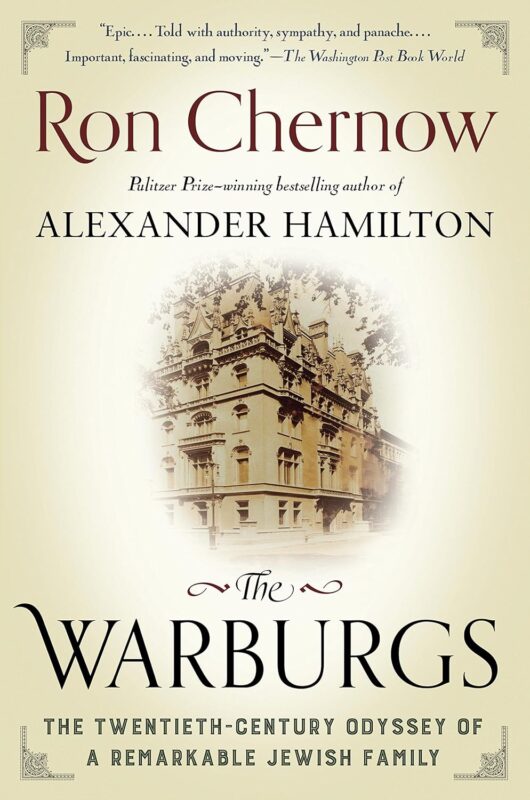
The Warburgs: The Twentieth-Century Odyssey of a Remarkable Jewish Family by Ron Chernow animates the long arc of one of the world’s most influential Jewish banking dynasties, tracing their rise from sixteenth-century money changers in Westphalia to global financial leaders. Chernow fuses biography, social history, and dramatic narrative to chronicle how the Warburgs shaped—and were shaped by—the seismic transformations of modern Europe and America.
Origins in the German Heartland
The Warburgs emerged from the North German town of Warburg in the mid-1500s, where Simon von Cassel secured a protective charter and entered the trade of money changing. Embedded in the shifting realities of post-medieval Germany, the family first prospered as “protected Jews”—Schutzjuden—under the patronage of local rulers who relied on Jewish expertise in finance and commerce to stimulate economic activity. The family’s transition from money changing to banking occurred in Hamburg, a thriving, cosmopolitan city whose mercantile spirit fueled Jewish enterprise. M. M. Warburg & Co. rapidly became a pivotal player in Hamburg’s burgeoning financial sector.
Patriarchy and Matriarchy in a Banking Dynasty
Central to the Warburg family saga stands the figure of Sara Warburg, who forged the family’s identity with discipline and vision. Her influence extended beyond the household, guiding business decisions and sustaining a sense of unity amid fierce sibling rivalries. By enforcing strict religious and ethical standards, Sara fused the values of Jewish tradition with the ambition of an emerging capitalist elite. The matriarch’s drive to secure strong marriages for her children strengthened the Warburgs’ social network and consolidated their capital base, anchoring the family’s rise.
Expansion and Cultural Integration
Siegmund and Moritz Warburg, Sara’s sons, represent the family’s successful transition from insular Jewish life to participation in the public, economic, and cultural realms of Hamburg. The Warburgs established a tradition of internationalism, conducting business in multiple languages and forging alliances with major banking houses across Europe. Through arranged marriages, the family linked itself to the Gunzburgs of St. Petersburg, the Oppenheims of Frankfurt, and the Schiffs and Loebs of New York. These connections created a vast financial and social network, setting the stage for a multinational presence that would endure even as circumstances forced the family into new geographies.
Jewish Emancipation and Opportunity
The nineteenth-century emancipation of German Jews unleashed a surge of Warburg ambition. Legal reforms allowed Jews to enter previously restricted professions, marry outside the ghetto, and acquire property. The Warburgs seized these opportunities, expanding their bank, sponsoring public works, and participating in civic life. They contributed to the economic modernization of Germany, underwriting major enterprises and influencing the political economy of Hamburg. Their success reflected the broader transformation of German Jewry, as new freedoms inspired creativity, enterprise, and philanthropy.
Banking, Philanthropy, and Cultural Patronage
The Warburgs’ ascent in banking ran parallel with their investment in the arts, scholarship, and public welfare. Members of the family supported music, literature, and Jewish communal institutions, becoming patrons of opera houses, museums, and hospitals. Aby Warburg, one of the most intellectually distinctive heirs, pioneered the field of art history and founded the Warburg Institute. The family’s fusion of financial power and cultural ambition produced a distinctive legacy: a commitment to both Jewish identity and cosmopolitan engagement, woven into the urban fabric of Hamburg and later New York.
Ambivalence and Identity
Chernow’s narrative dissects the complexities of assimilation and identity that haunted the Warburgs and German Jews more broadly. As beneficiaries of emancipation, the Warburgs invested deeply in German society, often internalizing its cultural norms and contributing to its advancement. Their pride in German citizenship fueled a sense of belonging, even as they retained rituals and loyalties rooted in Judaism. However, social acceptance always remained conditional. Laws changed more quickly than attitudes. The Warburgs occupied a liminal space, straddling two worlds, never fully secure in either.
The Impact of German Nationalism
The rise of German nationalism in the late nineteenth and early twentieth centuries generated new pressures. Economic modernization and the unification of Germany under Bismarck opened opportunities, but they also stirred up resentments and anxieties that frequently found expression in anti-Semitic agitation. The Warburgs experienced these shifts directly, encountering periodic surges of hostility that threatened their status and security. Economic downturns and political crises, such as the stock market crash of 1873, exacerbated these tensions, turning Jews and Jewish bankers into convenient scapegoats.
Family Rivalry and Internal Dynamics
Intense rivalries within the Warburg family catalyzed both innovation and conflict. The competition between the Alsterufer and Mittelweg branches became legendary, generating both creative energy and discord. These internal tensions mirrored the external pressures the family faced, amplifying the drama of their collective story. Strategic marriages, business alliances, and the interplay of temperament among siblings and cousins shaped the trajectory of the dynasty. Decisions about inheritance, succession, and business direction hinged on the personalities and ambitions of key figures.
World War I and the Struggle for Belonging
World War I marked a critical juncture for the Warburgs and German Jews. Many family members expressed ardent patriotism, serving in the German military and supporting national causes. The war, however, destabilized the social order and magnified questions of loyalty and identity. The postwar years saw the collapse of the German Empire, the rise of the Weimar Republic, and a wave of social and economic volatility. The Warburgs maneuvered through this turbulence, expanding their operations internationally and deepening their engagement with Jewish and civic philanthropy.
The Shadow of Nazism
The Nazi seizure of power shattered the tenuous accommodation between Jews and German society. The Warburgs, emblematic of Jewish achievement and integration, became targets of Nazi persecution. Chernow details the strategies the family adopted as they faced escalating restrictions: efforts to safeguard assets, negotiate with authorities, and secure emigration for family members. Exile became a necessity as property was confiscated and lives came under threat. The dispersal of the family to the United States, England, and other safe havens transformed the Warburgs from German grandees into stateless refugees. In New York, Paul Warburg emerged as a central architect of the U.S. Federal Reserve, exemplifying the family’s adaptability and continued influence.
Diaspora and Reinvention
Exile forced the Warburgs to reinvent themselves. In America, they drew on their international experience, financial acumen, and personal networks to build new institutions and shape public life. The family’s commitment to philanthropy, scholarship, and Jewish causes persisted, even as their relationship to German identity grew more distant. Their odyssey illustrates the resilience of displaced families who leverage heritage and skill to build new lives after catastrophe. The Warburgs’ American chapter featured innovation in banking, support for cultural institutions, and engagement with global Jewish relief efforts.
Legacy and Historical Meaning
The Warburgs’ story crystallizes the possibilities and perils of assimilation for minorities who achieve prominence within societies that later reject them. Their arc traces the convergence of cultural creativity, economic ambition, and ethical responsibility. The family’s experience in Hamburg reveals the heights that Jews reached in Germany during the age of emancipation and modernization. Their forced migration and adaptation abroad underscore the enduring capacity of families to recover and thrive in new contexts, even when confronted by profound trauma.
Structural Patterns and Historical Lessons
Ron Chernow’s portrait of the Warburgs compels readers to examine the interplay between identity and opportunity, the costs of ambition, and the fragility of social acceptance. What conditions generate flourishing and what forces precipitate destruction? Chernow illuminates the Warburgs’ determination to reconcile competing loyalties—Jewish and German, traditional and modern, private and public. Their pursuit of integration, creativity, and service shaped both their triumphs and their vulnerabilities. Through a meticulous synthesis of archival detail and psychological insight, Chernow exposes the deep structural tensions that defined twentieth-century Jewish experience.
The Warburgs and the Modern World
The Warburg family’s journey dramatizes the emergence of the Jewish people in the modern world. Their contributions to banking, art, science, and philanthropy reverberate across generations and continents. In telling their story, Chernow maps the evolution of modern finance, the intersection of private ambition and public service, and the capacity of individuals and families to shape history through vision and action. The Warburgs’ saga ultimately stands as a monument to resilience, complexity, and the unceasing drive for meaning and belonging in an unpredictable world.