Tower Of Basel
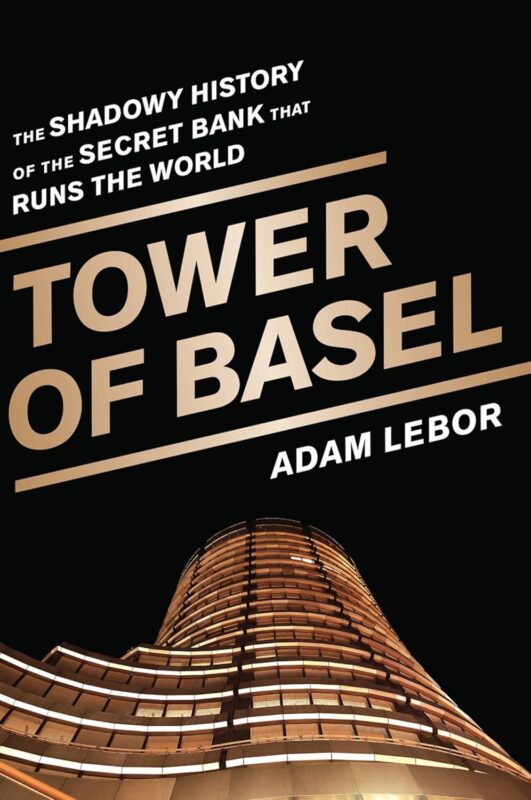
Tower of Basel: The Shadowy History of the Secret Bank That Runs the World by Adam LeBor opens in the Swiss city of Basel, where central bankers from the world’s most influential economies gather in secrecy at the Bank for International Settlements (BIS). LeBor asserts from the first page that the BIS, founded in 1930, orchestrates global financial stability and crisis response, wielding legal immunities and operational discretion unrivaled in world finance. The institution’s founders—Montagu Norman of the Bank of England and Hjalmar Schacht of Germany’s Reichsbank—engineered a mechanism for international monetary cooperation, setting the precedent for the club-like, confidential, and profoundly influential governance that still shapes international banking.
The Origins of a Secretive Power Center
In 1930, as Europe staggered under the aftermath of World War I, financial leaders established the BIS to administer German reparations under the Young Plan. Yet the bank’s statutes enabled a broader agenda: the BIS would promote cooperation among central banks and facilitate international financial transactions with unprecedented autonomy. Its founding document, the Hague Convention, conferred inviolable legal status, immunity from national jurisdictions, and freedom from taxation—rights that remain at the core of the BIS’s power. The central banks of Britain, France, Germany, Italy, and Belgium, along with Japanese banks and a consortium of American financial institutions, became the first stakeholders. Their representatives—governors of central banks—constituted the core decision-making body, with each director empowered to appoint a trusted peer from finance, industry, or commerce.
Legal Immunity and Exclusive Access
The BIS’s legal privileges shield it from national laws and taxation. Swiss authorities cannot enter its premises without permission, nor can they seize its assets or demand its records. Staff and visiting central bankers possess diplomatic status: their communications remain private, their personal effects immune from search, and their income exempt from local taxation. These protections apply during and after their tenure at the bank, granting lifelong immunity for acts performed in their official capacity. The structure fosters an environment where elite financial leaders exchange information, develop consensus on monetary policy, and coordinate responses to crises with no obligation to publicize proceedings or rationales.
Confidentiality as Institutional Culture
Meetings at the BIS remain closed to the press and the public. The Economic Consultative Committee, the institution’s core gathering, brings together the governors of leading central banks for confidential discussions on global economic trends, market risks, and banking supervision. No official records circulate beyond the participants. Discussions at the dining tables atop the circular tower in Basel carry the real weight of decision-making, as participants test ideas, share candid assessments, and negotiate the next steps for the world’s monetary system. Former attendees, such as Paul Volcker and Peter Akos Bod, describe the camaraderie and intensity of these exchanges. Central bankers, unburdened by the demands of their governments or the gaze of the media, find in Basel a forum for unfiltered dialogue.
Constructing Global Financial Architecture
From its earliest years, the BIS shaped the course of international monetary policy. During the tumultuous 1930s and the Second World War, the BIS operated as the clearinghouse for central banks—even those of nations at war. The bank accepted gold from the Reichsbank, maintained professional relations among belligerents, and shielded itself through its legal immunities. After the war, BIS directors helped integrate Germany’s financial elite back into European structures, nurturing economic stability and fostering the emergence of a new, technocratic ruling class. The postwar decades saw the BIS facilitate the Bretton Woods system, host the European Payments Union, and manage currency harmonization across the continent.
Centralization and Influence
The BIS’s influence extends beyond its client base of central banks. It hosts the Basel Committee on Banking Supervision, which issues guidelines for commercial bank capital requirements and liquidity standards. The Committee’s decisions carry moral authority so strong that national laws frequently adopt its standards. The BIS maintains linked trading rooms in Basel and Hong Kong, manages gold and foreign exchange reserves for its clients, and offers asset management and short-term credit facilities. The bank’s compact staff, drawn from more than fifty countries, oversees this global network with precision, hierarchal discipline, and a sense of mission that merges public service with a private club’s discretion.
Selection and Membership
Central bank governors judge prospective BIS members on their capacity for international monetary cooperation and governance standards. The bank admits new countries only when their institutions meet rigorous criteria. The United States did not initially accept shares in the BIS, preferring to maintain strict national sovereignty; instead, major American commercial banks stepped into the role. In 1996, the BIS expanded to include central banks from China, India, Russia, and Saudi Arabia, reflecting shifting balances in global economic power. Yet the BIS retains a pronounced Eurocentric orientation, with offices in Basel, Hong Kong, and Mexico City but decision-making firmly rooted in the traditions and priorities of European central banking.
The Technocratic Elite
LeBor details the emergence of a transnational class of technocrats who circulate between the BIS, the International Monetary Fund, national central banks, and commercial banks. Figures such as Per Jacobssen, the BIS’s economic adviser from 1931 to 1956 and later head of the IMF, set the tone for the institution’s policy orientation. Jacobssen championed economic liberalism, strict control of inflation, and minimal state intervention—principles that shaped European economic integration and remain visible in policy debates over austerity and growth. The technocratic mindset sees monetary stability and institutional continuity as paramount, even when political or social priorities demand change.
Crisis Response and Global Coordination
During major financial crises, the BIS emerges as the strategic coordination center for central bankers. The institution played a pivotal role during the 2008 financial crisis and subsequent Eurozone turmoil. In these periods, central bankers convene in Basel to devise policy responses, assess risks, and coordinate cross-border support mechanisms. The bank’s officials argue that these confidential exchanges produce more effective, timely decisions than public deliberation allows. The BIS’s influence in crafting responses to sovereign debt crises, banking collapses, and monetary instability has shaped the trajectory of economic recovery and the evolution of global financial governance.
The Basel Accords and Regulatory Framework
The Basel Committee’s work has yielded the Basel Accords, which define capital requirements for international commercial banks. These rules—such as the eight percent capital adequacy standard—have become foundational for national banking laws and global financial stability. Even without formal enforcement power, the BIS’s research and convening authority generate standards that banks and regulators treat as binding. The bank’s data collection, statistical analysis, and policy recommendations guide central bankers and finance ministries in managing risk and ensuring liquidity across the system.
Opacity, Accountability, and Democratic Tension
LeBor interrogates the implications of the BIS’s opacity for democratic accountability. The governors who meet in Basel control monetary policy, set interest rates, and manage national reserves—resources drawn from public wealth. Their decisions shape inflation, savings, investments, and the availability of credit for billions. Yet the rationale for policy shifts, the content of their deliberations, and the distribution of influence among participants remain concealed from the public. The BIS’s defenders claim that confidentiality is necessary for candid dialogue and effective action. Critics see the bank as a forum for elite consensus, shielded from scrutiny and insulated from democratic pressures.
Shaping the European Project
The BIS has served as midwife to European economic integration. The institution managed the technical and financial infrastructure for the European Payments Union in the 1950s, coordinated the Governors’ Committee of European Economic Community central bankers from 1964, and hosted the mechanisms—such as the “Snake” and the Delors Committee—that eventually produced the euro. Leaders like Alexandre Lamfalussy, known as the “Father of the euro,” spent formative years at the BIS, guiding monetary harmonization and fostering a culture of transnational cooperation that transcends political divides.
Institutional Resilience and Adaptation
Over nearly a century, the BIS has survived world wars, economic depressions, the collapse of the gold standard, the rise and fall of Bretton Woods, the emergence of new currencies, and the disintegration of old regimes. Institutional flexibility, small size, and independence from political interference have allowed the BIS to adapt to evolving circumstances and to maintain its centrality in world finance. The institution’s leaders treat these qualities as prerequisites for stability and continuity, reinforcing their commitment to discretion, hierarchy, and elite governance.
Global Gold and Reserve Holdings
The BIS ranks among the largest holders of gold reserves worldwide, surpassing many national central banks. Its custody and asset management functions extend to central banks and international organizations, making it a pivotal hub in the global movement of capital and safe-haven assets. The bank’s ability to facilitate discreet transfers, manage foreign exchange operations, and maintain stability in turbulent markets underscores its practical power.
The Media, Protest, and Public Awareness
Despite its significance, the BIS operates in near-anonymity. Its headquarters in Basel rarely attracts attention, protest, or media scrutiny. The Occupy Wall Street movement and other anti-globalization campaigns focus on commercial banks and multinational corporations, often overlooking the “bank for central banks.” Journalists receive little access during major meetings. The institution’s leadership and staff cultivate this low profile, allowing their decisions and discussions to shape world finance in the shadows.
The Persistent Challenge of Transparency
As the global economy enters cycles of crisis and recovery, the question of transparency in financial governance grows more acute. The BIS’s defenders highlight its openness to researchers—archival documents over thirty years old become available, and the bank publishes detailed annual reports and research. Yet the most consequential deliberations, transactions, and policy alignments remain internal, shielded by legal privileges and institutional culture. How does society hold such an institution accountable, when the very architecture of international finance depends on its discretion and the secrecy of its deliberations?
The Enduring Legacy of the Tower
Tower of Basel by Adam LeBor documents the evolution of the BIS from a solution to interwar reparations into the nerve center of global monetary policy. The book demonstrates the persistent power of elite networks, legal immunities, and confidential cooperation in shaping the financial architecture of the modern world. The BIS’s influence persists in the daily decisions of central banks, the structure of banking regulation, and the fate of the global economy. Its legacy raises essential questions about power, accountability, and the relationship between monetary authority and democratic society.