Quest For Love: Memoir of a Child Sex Slave
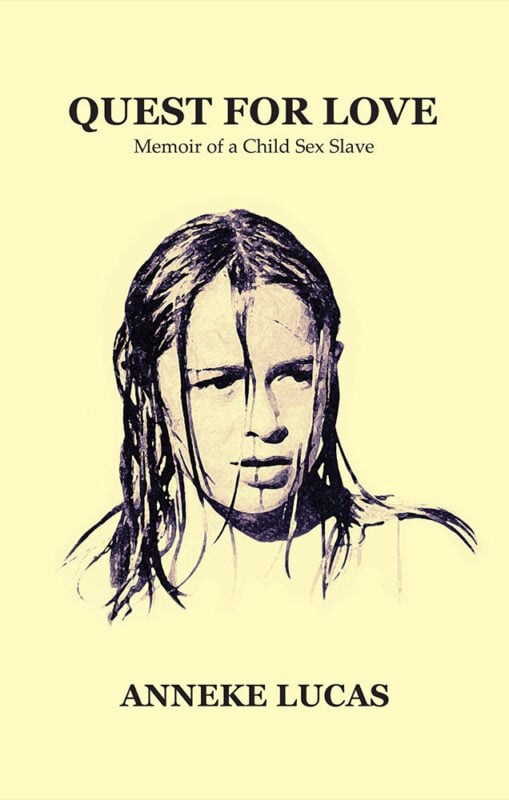
Quest for Love: Memoir of a Child Sex Slave by Anneke Lucas unveils a harrowing journey through the hidden world of elite pedophilia networks in 1970s Belgium. Lucas, a survivor of extreme childhood abuse, delivers a raw, unflinching narrative that exposes the mechanisms of power, trauma, and survival. Her memoir traces a path from the darkness of exploitation to the light of healing, offering readers a lens into the psychological and spiritual resilience required to reclaim a life shattered by systemic abuse.
A Childhood Stolen by a Secret Network
Lucas begins her story in 1973, at age ten, ensnared in a Belgian pedophilia network orchestrated by powerful figures. She describes her life in a seemingly ordinary middle-class family, masking the sinister reality of her mother’s complicity in delivering her to abusers. The narrative captures her routine of being driven to opulent venues—castles, villas, and manors—where she endured orchestrated abuse under the guise of elite gatherings. Lucas details encounters with figures like Paul Vanden Boeynants, a prominent Belgian politician, and Patrick Haemers, a young criminal entangled in the network’s web. Her vivid recounting of these events reveals a world where power distorts morality, and children become pawns in transactions of influence and depravity. How does a child navigate such a reality without losing herself entirely? Lucas answers through her ability to dissociate, a survival mechanism honed through brutal training that deadened her emotions to meet perpetrators’ desires.
The Game of Survival
The memoir introduces “The Game,” a ritual where Lucas, trained to anticipate and fulfill the desires of elite perpetrators, navigates their psychological and sexual demands. She recounts a chilling encounter in a Brussels castle, where she manipulates interactions with Italian visitors to secure her safety. Her ability to read energy and adapt her persona—shifting from shy to commanding—demonstrates the psychological acuity forced upon her. These moments, charged with tension, show a child wielding agency within a system designed to strip it away. Lucas’s interactions with Haemers, a complex figure who oscillates between abuser and protector, deepen this dynamic. Their relationship, marked by moments of tenderness amidst violence, raises a piercing question: Can love exist in a space defined by exploitation? Lucas’s longing for genuine connection, even within the network’s horrors, underscores her enduring humanity.
A Spiritual Awakening Amidst Horror
A pivotal moment arrives in 1974, when Lucas, battered and facing death, experiences a transcendent encounter with a divine figure she calls “The Teacher.” This vision, suffused with unconditional love, reorients her understanding of existence. Bathed in golden light, she receives insights into her purpose and the eternal nature of the soul. This spiritual awakening, occurring amidst the gruesome murder of another child, becomes a turning point. Lucas comforts the dying girl, guiding her toward the light, and in doing so, discovers a reservoir of compassion within herself. The Teacher’s guidance—that she must return to life to heal and understand—plants a seed of purpose. How does one carry such a vision back into a world of unrelenting darkness? Lucas’s narrative suggests that divine love becomes her anchor, guiding her through the guilt and shame that follow.
Escape and the Long Road to Healing
Lucas’s escape from the network in 1974, facilitated by Haemers, marks the beginning of a fraught journey toward recovery. She follows his instructions—fleeing Belgium, avoiding prostitution, and seeking a new life in New York—though these directives remain buried in her subconscious. Her mother’s continued abuse, including a sexual assault to reassert control, plunges Lucas into dissociation, erasing conscious memories of the network. The memoir traces her nomadic years through France, London, Paris, and New York, where she grapples with the lingering effects of trauma. Therapy in the late 1980s becomes a catalyst for confronting repressed memories, particularly of her father’s abuse. Each recollection, though painful, unlocks clarity, allowing Lucas to piece together her fragmented self. Her discovery of Paramahansa Yogananda’s teachings in 1994, through Autobiography of a Yogi, provides a spiritual framework that complements her therapeutic work, grounding her in a pursuit of divine love.
Exposing the Machinery of Power
Lucas’s memoir transcends personal narrative to indict the societal structures that enable elite abuse. She connects her experiences to the 1996 Dutroux case, where survivor Regina Louf’s testimony exposed a Belgian network protected by corrupt officials. Lucas reveals how figures like Vanden Boeynants, implicated in arms deals and fiscal fraud, wielded influence to silence investigations. The dismissal of Louf’s testimony, coupled with public denial, mirrors the gaslighting Lucas endured from her mother. This parallel underscores a broader truth: systemic abuse thrives on secrecy and disbelief. Why do societies shield the powerful from accountability? Lucas argues that psychopathic elites, driven by unresolved trauma, project their shame onto victims, manipulating narratives to maintain control. Her story challenges readers to confront this reality and recognize the courage required to speak truth against such forces.
The Transformative Power of Truth
Healing, for Lucas, demands confronting suppressed emotions and dismantling the lies imposed by her abusers. She describes the grueling process of therapy, where each memory surfaces with visceral grief but also brings lucidity. Meditation and connection with spiritual figures like Yogananda and Jesus Christ fortify her resilience, enabling her to reclaim her innate power. The memoir emphasizes that healing is not linear; it requires diving inward, against societal pressures to perform and conform. Lucas’s transformation—marked by increased empathy and self-esteem—illustrates how facing trauma fosters not only personal growth but also a clearer understanding of global deception. Her work in prisons, teaching yoga to inmates, reflects this evolution, channeling her pain into service. What does it mean to heal when the world denies your truth? Lucas’s journey suggests that authenticity, rooted in spiritual connection, becomes a radical act of defiance.
A Call to Collective Awakening
Quest for Love concludes with a call to recognize the shared humanity that elite abusers seek to obscure. Lucas asserts that hierarchical structures perpetuate power imbalances, enabling the psychopathic elite to exploit with impunity. She urges readers to reject blind trust in authority and cultivate personal truth through introspection and spiritual practice. The memoir’s final pages resonate with hope, framing healing as a communal necessity. By sharing her story, Lucas aims to pierce the veil of secrecy, inviting others to confront uncomfortable truths about power and abuse. Her narrative, grounded in the specifics of her experience, becomes a universal testament to resilience, urging readers to seek the light within themselves to dispel the darkness of systemic evil.
Why This Memoir Matters
Quest for Love stands as a testament to the strength of the human spirit in the face of unimaginable trauma. Anneke Lucas’s unflinching honesty and spiritual insight offer a roadmap for survivors and allies alike. The memoir challenges readers to question the narratives that shield abusers and to embrace the transformative power of truth. Through her journey from victim to healer, Lucas demonstrates that love—divine and human—can triumph over the darkest corners of human experience. Her story is not just a recounting of survival but a beacon for those seeking to understand the hidden mechanisms of power and the path to collective healing.