9/11 Synthetic Terror: Made in USA
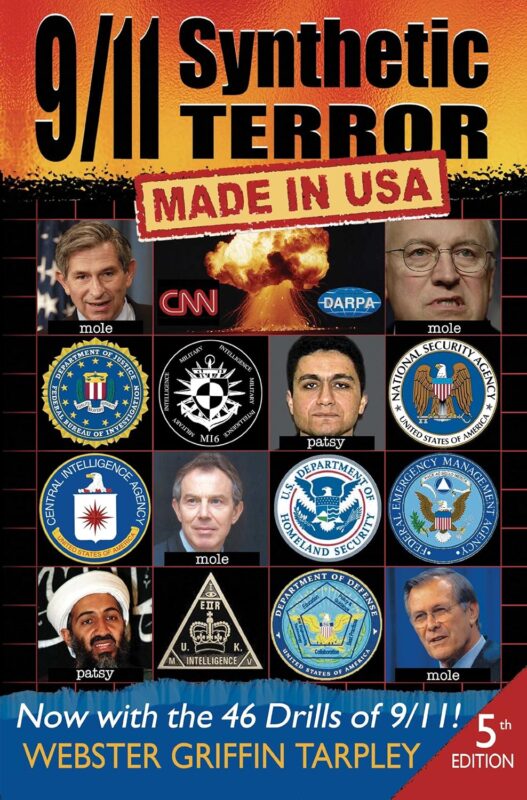
9/11 Synthetic Terrorism Made in the USA by Webster Griffin Tarpley asserts that the September 11 attacks were not a spontaneous act of foreign extremism but the outcome of a structured, internally orchestrated plan executed by a rogue network within the U.S. government and military apparatus. Tarpley advances the theory that what occurred on 9/11 reflects a sophisticated model of synthetic terrorism: a strategy shaped, managed, and executed through a system of state-sponsored deception with roots in Cold War intelligence operations.
The Framework of Synthetic Terrorism
Tarpley defines synthetic terrorism as a form of false-flag operation, constructed by intelligence agencies to manipulate public opinion and steer policy in premeditated directions. He anchors this theory in historical precedents like Operation Gladio, NATO’s clandestine operations in Europe during the Cold War, and projects it forward into the domestic architecture of modern U.S. intelligence. Through this lens, 9/11 represents not merely an attack but a controlled performance designed to justify global war, domestic repression, and expansive state power.
The mechanism depends on three structural elements: patsies, moles, and technicians. Patsies serve as public scapegoats, moles ensure internal compliance and obfuscation within governmental structures, and technicians orchestrate the event’s logistics. This triadic formula, according to Tarpley, enables high-level deception while shielding the real operatives from scrutiny.
Dissecting the Official Narrative
The book confronts the official account as codified by the Kean-Hamilton Commission. Tarpley evaluates the commission's failure to call hostile witnesses, its refusal to address core contradictions, and its unwillingness to pursue investigative leads involving military stand-downs and intelligence foreknowledge. He accuses the commission of functioning as a propaganda organ rather than an investigative body, preemptively framing al Qaeda as the perpetrator instead of considering broader scenarios involving U.S. strategic deception.
Tarpley identifies the foundational assertion—that 19 hijackers coordinated by Osama bin Laden executed the attacks—as a myth unsupported by verifiable evidence. He scrutinizes inconsistencies in the flight data, the questionable identities of the alleged hijackers, and the physical implausibility of the buildings’ collapse, especially World Trade Center 7. What explains the collapse of a 47-story steel-framed building that was not struck by a plane? What accounts for NORAD’s failure to intercept any of the flights during the most heavily monitored airspace breach in U.S. history?
Geopolitical Strategy and Economic Crisis
He ties the orchestration of 9/11 to a larger geopolitical strategy aimed at reasserting U.S. hegemony in the face of economic decline. Tarpley positions the attacks as a mechanism to redirect domestic instability outward by initiating a “Thirty Years’ War” against selected regions of the Global South, beginning with the Islamic world. This war, according to his argument, serves dual purposes: securing control over energy corridors and establishing a permanent wartime economy to prop up failing financial structures.
He traces the roots of this strategy through the political and economic turbulence of the 1990s, emphasizing the systemic collapse of neoliberal globalization. The failure of speculative financial models, rising social inequality, and growing strategic incoherence created a moment of institutional panic. 9/11 functioned as a decisive intervention—an engineered shock designed to reset the political and economic framework under the pretext of national security.
Networks of Influence and Command Centers
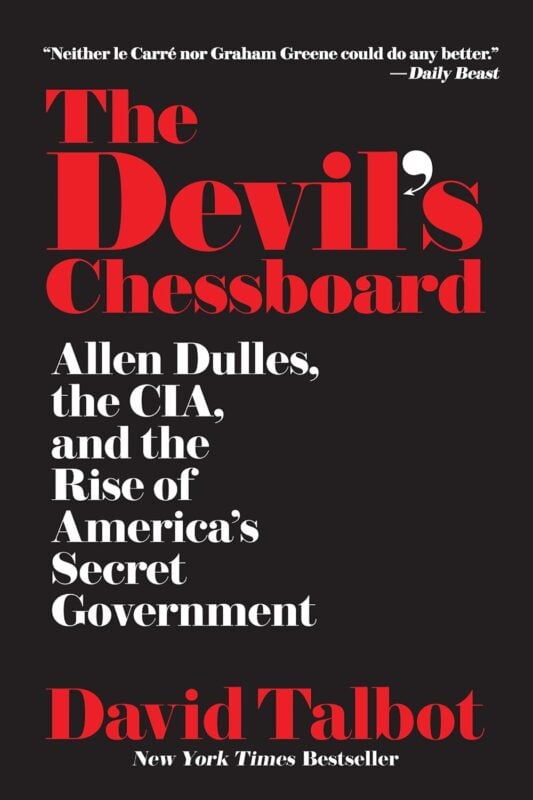
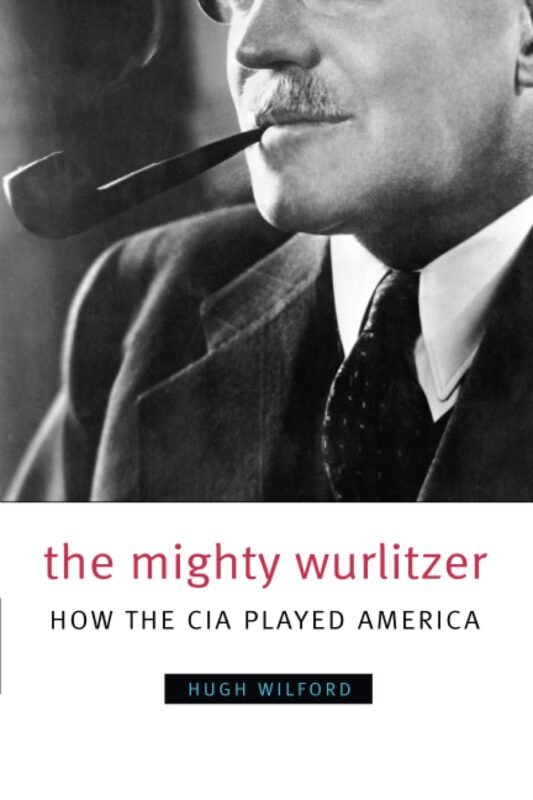
Tarpley identifies the operational base of the attacks not in foreign caves but in secure domestic environments: think tanks, defense contractors, private intelligence firms, and shadow government cells within the Pentagon and NSA. He sees continuity between the 9/11 perpetrators and historical figures like Allen Dulles, Edward Lansdale, and Lyman Lemnitzer—architects of past covert interventions.
This invisible government, as Tarpley calls it, possesses autonomous capacity. It mobilizes military and intelligence assets outside normal civilian oversight and operates according to a logic of imperial dominance. The book presents figures like Dick Cheney, Donald Rumsfeld, and George Tenet not as isolated actors but as embedded participants within this enduring structure.
Failures of the Political Class
He critiques the bipartisan embrace of the 9/11 myth, noting how both major U.S. political parties consolidated the official narrative to protect institutional credibility. Tarpley argues that Democratic leaders, far from challenging the story, internalized it, turning the hunt for Bin Laden into their own rallying point. This convergence, he asserts, forecloses real debate and locks in a trajectory of war, surveillance, and authoritarian governance.
What explains the near-universal acquiescence to an unverified story whose implications restructure the entire architecture of law, civil liberties, and foreign policy? He suggests that the myth’s potency lies in its emotional immediacy and its ritualistic reinforcement through media saturation, not in any evidentiary strength.
Media and the Manufacturing of Consent
Tarpley analyzes the role of corporate media in embedding the 9/11 myth through repetitive imagery, narrative scripting, and psychological manipulation. He notes the convergence of Hollywood tropes and state messaging, describing a media ecology designed to short-circuit rational analysis. By foregrounding visceral images and suppressing investigative counterpoints, the media functions as an auxiliary mechanism of state control.
He singles out the initial reporting window—those crucial hours and days before the official story consolidated—as a key moment when contradictory facts briefly surfaced. During this window, journalists reported explosions inside the towers, questioned the identities of the hijackers, and raised doubts about flight paths and passenger lists. These threads, he argues, were rapidly buried once the narrative machinery locked into place.
Intelligence Agencies and Strategic Deception
Tarpley explores the function of intelligence agencies in staging synthetic terrorism, examining how entities like the CIA, Mossad, MI-6, and BND operate transnationally through shared protocols. He shows how these agencies manipulate jihadist networks, infiltrate radical movements, and create false narratives to justify military interventions.
Al Qaeda, in his reading, is less a cohesive organization than an intelligence construct. The group serves as a theatrical proxy—useful for attribution, capable of plausible menace, and pliable for media deployment. The book traces the deep integration between Western intelligence agencies and Islamic fundamentalism, revealing long-term patterns of recruitment, financing, and strategic utility.
Historical Precedents and Structural Continuity
Tarpley grounds his argument in precedent. He revisits the case of Aldo Moro’s 1978 assassination, which he attributes to a NATO-connected false-flag operation designed to sabotage democratic inclusion of the Italian Communist Party. The Red Brigades served as the scapegoats, but the orchestration came from intelligence agencies acting to preserve Cold War alignments.
The same structural model, he argues, underpins 9/11. Terrorism here functions not as chaotic insurgency but as a managed form of policy execution. This historical continuity allows him to treat 9/11 not as an aberration but as the latest iteration of a recurring method.
Toward an Independent Inquiry
Tarpley calls for an Independent International Truth Commission modeled on the Russell-Sartre Tribunal. He envisions a forum where global experts, scholars, and citizens assess the evidence outside the constraints of official U.S. institutions. The aim is to reestablish a factual basis for international discourse and to disarm the fabricated narratives that sustain imperial aggression.
This call stems from his recognition that domestic mechanisms have failed. Congressional oversight, investigative journalism, and judicial independence, in his view, have been subordinated to the demands of wartime consolidation. A global forum, he argues, remains the only venue where truth can regain structural force.
The Stakes of Myth and Memory
Tarpley closes by identifying 9/11 as the central myth of twenty-first-century American life. This myth, he argues, reorganizes the national psyche around fear, militarism, and conformity. Its function is totalizing: it defines foreign policy, domestic policing, media discourse, and electoral rhetoric. Dismantling this myth, therefore, becomes a prerequisite for any serious democratic revival.
If the myth collapses, he suggests, institutional structures built upon it will fracture. Political realignments may follow. What political forces will shape the aftermath depends on the public’s capacity to confront uncomfortable truths and reclaim narrative authority. Tarpley offers this book as a framework for that confrontation.