The Assassination of Robert Maxwell : Israel’s Superspy
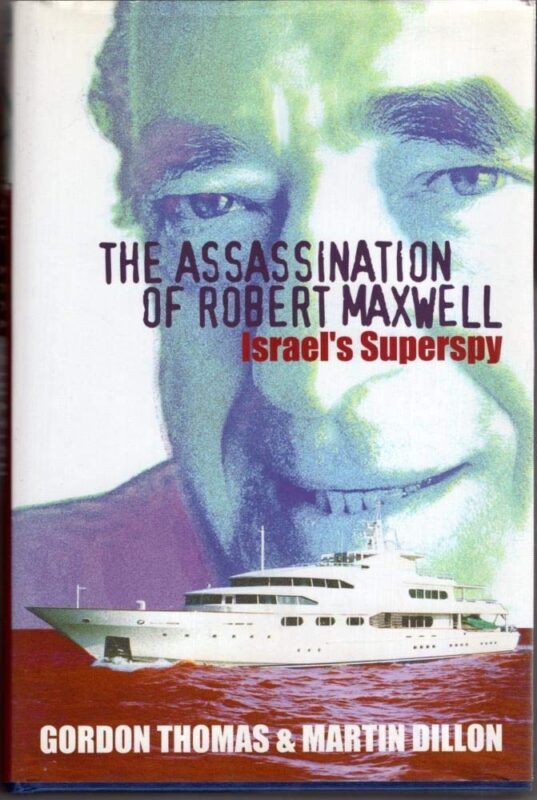
The Assassination of Robert Maxwell: Israel’s Superspy by Gordon Thomas and Martin Dillon opens the covert dossier on the man whose rise in global publishing masked a labyrinth of espionage, deception, and power politics. Robert Maxwell, born Jan Ludvik Hoch in a remote Carpathian village, transformed himself into a British media tycoon with unmatched access to world leaders. Behind his bombastic public persona, the authors reveal a deep entanglement with Israeli intelligence and the global criminal underworld, constructing a forensic account of his hidden operations and suspicious death.
Maxwell’s Recruitment by Mossad
In the late stages of the Cold War, Mossad needed assets who could traverse borders and access high offices. Maxwell, a dedicated Zionist with international credibility, fit their profile. He was approached not as a double agent but as a facilitator, a man capable of using media ownership, business influence, and political access to open doors normally sealed to traditional intelligence officers. The recruitment involved promises and demands, but also mutual interest. Mossad used Maxwell to gain entry into the Kremlin, the White House, and No. 10 Downing Street. He traded in secrets, not ideologies.
Maxwell’s access gave Mossad a strategic edge. He penetrated conversations among Soviet officials, NATO defense planners, and Western intelligence communities. His publications served as both cover and conduit, and his ability to shape opinion granted him leverage in geopolitical maneuvering.
A Power Broker Without Borders
Maxwell built a publishing empire spanning Europe and North America. He owned newspapers, book imprints, and information services, presenting himself as a globalist publisher devoted to truth and justice. His empire also enabled his intelligence value. He moved freely between capitals, met with prime ministers and presidents, and struck arms deals cloaked as commercial ventures. The authors detail how he used his flagship yacht, the Lady Ghislaine, as a mobile fortress for private negotiations.
Financially, Maxwell was overleveraged. His empire, inflated by acquisitions and funded by opaque loans, masked deep structural weaknesses. By 1991, he owed billions to a network of global banks. His personal insecurities, intensified by age and illness, pushed him to demand repayment for services rendered to the Israeli state. He wanted Mossad’s help in refinancing his debt. He asked for favors—direct loans from Israeli banks, access to black funds, and influence over sympathetic financiers.
The PROMIS Software Operation
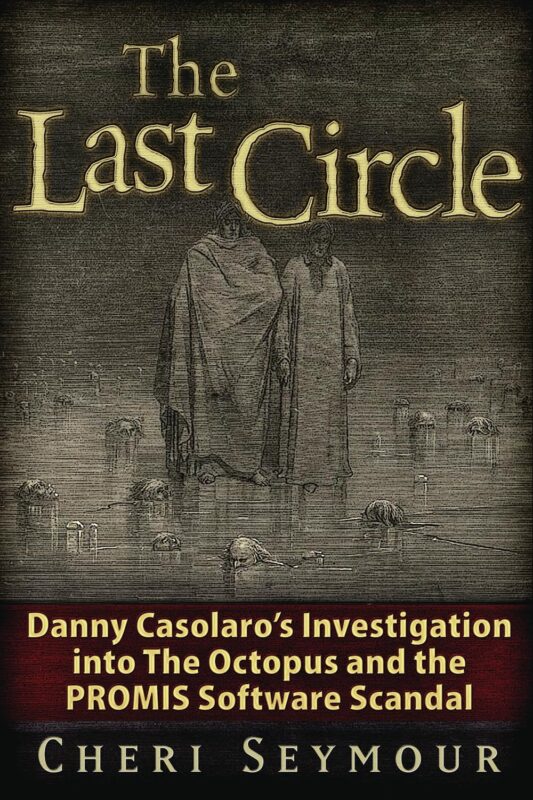
Central to Maxwell’s espionage portfolio was his role in distributing PROMIS, a surveillance software embedded with a secret trapdoor. The program, designed to manage criminal justice data, allowed intelligence agencies to monitor law enforcement networks globally. Maxwell marketed PROMIS under the guise of commercial partnerships, placing it in the hands of allies and adversaries alike. This operation expanded Israel’s surveillance capacity far beyond its borders, effectively making Maxwell a kingpin in a global intelligence architecture.
PROMIS sales served multiple interests. Israel gained remote access to sensitive databases. Maxwell profited financially and increased his strategic value to Mossad. Yet the software’s distribution also left trails, and American and European intelligence services began questioning how their data was being compromised.
The Descent and the Threat
As pressure from creditors mounted, Maxwell’s behavior shifted. He demanded payment for past services and threatened to expose Mossad operations if they refused. Intelligence agencies treat threats as risk factors; Mossad treats them as triggers. The authors argue that Maxwell’s leverage campaign backfired. He underestimated Mossad’s readiness to silence compromised assets. He overestimated his immunity. Maxwell’s threats, made in desperation, were recorded, reported, and relayed through secure channels to Israel’s intelligence command.
A meeting was convened in Tel Aviv. Mossad’s Directorate of Operations reviewed Maxwell’s full dossier—his contacts, debts, surveillance risk, and potential for exposure. Psychological profiles, medical records, and recent travel patterns were assessed. The conclusion: Maxwell had become a liability. The Kidon unit, Mossad’s assassination wing, prepared a strategy.
The Final Voyage
In November 1991, Maxwell disappeared from his yacht off the Canary Islands. His naked body was later found floating in the Atlantic. The official verdict was accidental death—drowning, possibly following a heart attack. The authors challenge this conclusion with forensic inconsistencies, missing records, and witness contradictions. They trace the involvement of local authorities, forensic pathologists, and embassy officials. Intelligence cables moved faster than the news. By the time public reports emerged, governments had already received briefings on the "incident."
Maxwell’s funeral in Jerusalem, attended by top Israeli officials and declared a state occasion, cemented his image as a national benefactor. Yet beneath the eulogies lay silence. The man who once roamed presidential palaces had vanished without answers. His family inherited scandal. His companies unraveled. His secrets, partially decoded by Thomas and Dillon, left a trail of surveillance, betrayal, and geopolitical manipulation.
The Ecosystem of Espionage and Corruption
The book establishes a nexus between state intelligence, organized crime, and multinational finance. Maxwell operated within a network that blurred lines between public service and private interest. The authors show how intelligence agencies used businessmen to carry out deniable missions—arms transfers, software installations, laundering operations. Maxwell’s story illustrates the risks of operating at this intersection. Success breeds access, but access without loyalty creates vulnerability.
Maxwell’s case is not isolated. The authors document how Mossad used commercial cover to run agents across Europe and the Middle East. They identify safe houses, signal protocols, and transport routes. They name former agents who corroborated the operational details, some of whom had remained silent for decades. These testimonies provide granular texture to Maxwell’s dual identity.
The Aftermath of Exposure
After Maxwell’s death, the exposure of his financial fraud—including the theft of hundreds of millions from employee pension funds—shattered his public image. What had been viewed as ambition was redefined as deception. What had seemed like confidence now read as coercion. The authors argue that his intelligence activities both enabled and complicated his criminal empire. They explore how the flow of covert money sustained corporate illusions and delayed accountability.
The book also examines the institutional reluctance to confront intelligence failures. British authorities, despite mounting evidence of fraud, hesitated to prosecute Maxwell during his lifetime. Intelligence officials discouraged scrutiny. After his death, legal and media inquiries revealed systematic failures but few consequences. Maxwell’s family absorbed the damage. Investigations yielded headlines but few convictions.
Convergence of Power and Silence
What happens when a man with state secrets becomes a risk to the state? What mechanisms do intelligence agencies use to control damage? Maxwell’s death activated an ecosystem of obfuscation. Forensic ambiguities. Diplomatic pressures. Media management. The authors dissect these elements with interviews, documents, and cross-referenced testimony. They show how the narrative of a tragic fall concealed a surgical removal.
The story extends beyond one man. It opens a window into how modern states manage unofficial assets. It raises questions about the cost of secrecy, the limits of power, and the ethics of intelligence partnerships. Maxwell’s trajectory—rising from a Carpathian village to global prominence, then plummeting into scandal and mystery—offers a case study in geopolitical utility and expendability.
Embedded Surveillance as Policy
Maxwell’s facilitation of PROMIS distribution illustrates how states weaponize information access. Surveillance, the authors argue, operates as both tool and currency. Agencies trade software like commodities, embedding control into governance systems. Maxwell, as intermediary, enabled this exchange. His fall disrupted the balance of concealment.
The software’s trapdoor encoded not just data access but a philosophy of power: observe to preempt, collect to dominate. By enabling this model, Maxwell contributed to a structural realignment of global intelligence practices.
Legacy of Risk and Revelation
The Assassination of Robert Maxwell: Israel’s Superspy constructs a precise narrative of convergence: media power, intelligence operations, financial manipulation, and political theater. The authors anchor their claims in interviews, official documents, and field intelligence. They offer no speculation without attribution. Their structure relies on causality, not conspiracy.
Maxwell’s story reflects a permanent tension in modern power structures: the demand for assets who can operate outside the law, and the imperative to silence them when they breach containment. His death remains a classified question disguised as a public tragedy. His life, reassembled here, functions as a map of covert influence in the late twentieth century.