Cold War Anthropology: The CIA, the Pentagon, and the Growth of Dual Use Anthropology
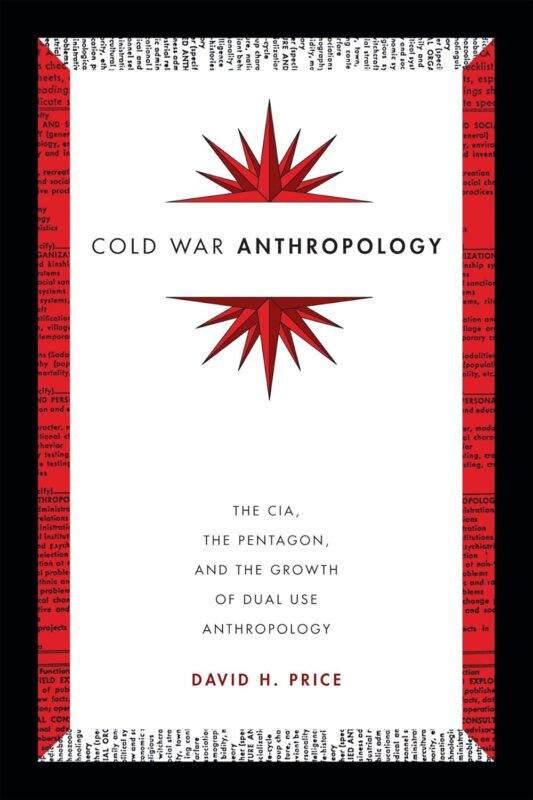
Cold War Anthropology: The CIA, The Pentagon, and the Growth of Dual Use Anthropology by David H. Price investigates the intricate, consequential relationships linking American anthropology, the national security state, and the machinery of U.S. power during the twentieth century. Price opens with a central question: How did the CIA and the Pentagon shape anthropology’s trajectory, and what legacies endure in today’s research, ethics, and political engagements? As World War II ended and the United States ascended to a superpower position, the discipline of anthropology found itself embedded in a dynamic where the boundaries between academic curiosity, state security, and imperial ambition blurred into a complex field of mutual influence.
Origins of Dual Use: The Cold War Knowledge Economy
The aftermath of World War II created unprecedented economic and military leverage for the United States, positioning it to redefine global hierarchies and influence intellectual production on an immense scale. The founding of the CIA through the National Security Act of 1947, the centralization of intelligence functions, and the rapid militarization of research institutions marked a pivotal shift in the governance of knowledge. Anthropologists who had contributed to the war effort returned to academia and discovered a landscape transformed by funding opportunities aligned with new strategic imperatives. Government agencies, recognizing the utility of cultural expertise for managing decolonization, counterinsurgency, and soft power, began systematically integrating anthropological knowledge into intelligence, development, and psychological operations.
The concept of “dual use” science originated in the physical sciences as researchers recognized that pure theoretical advances could yield military or commercial applications. Anthropology absorbed this dual logic as fieldwork, area studies, and ethnographic insights became vital resources for understanding insurgencies, administering foreign populations, and influencing political outcomes. Price defines “dual use anthropology” as the production of disciplinary knowledge serving both the self-articulated interests of scholars and the instrumental needs of state power. He documents how funding mechanisms—ranging from overt grants to covert CIA fronts like the Asia Foundation and Human Ecology Fund—channeled research toward regions and topics of strategic value, shaping the contours of inquiry and setting ethical dilemmas in motion.
Networks of Influence: Academia, Intelligence, and Recruitment
The formation of lasting ties between the CIA, the Pentagon, and the academy resulted from direct recruitment of scholars, the cultivation of academic “old boy” networks, and the establishment of institutional programs that linked research to state objectives. Elite universities became incubators for government talent and intellectual resources, sustaining flows of students and professors into intelligence service. The CIA’s University Associates Program, initiated in 1951, quietly enlisted professors across fifty campuses to spot, mentor, and recommend promising candidates for agency recruitment, deepening the entanglement of academic and security institutions.
Professional organizations, including the American Anthropological Association, sometimes facilitated government interests by providing membership lists, area expertise, or research contacts. The creation of think tanks, area studies centers, and federally funded research initiatives at places like MIT’s Center for International Studies enabled systematic knowledge production about the Global South, postcolonial states, and sites of Cold War conflict. These relationships generated epistemic hierarchies: the state determined which questions mattered, what kinds of knowledge merited support, and how fieldwork findings would be interpreted, disseminated, or withheld.
Ethics Under Pressure: Anthropology, Power, and Counterinsurgency
As anthropology’s methods and findings entered the apparatus of counterinsurgency, psychological operations, and foreign policy, questions of ethics, complicity, and disciplinary responsibility sharpened. Price details the emergence of government-funded projects whose objectives ranged from language acquisition and cultural liaison work to direct participation in covert or semi-covert operations. Some anthropologists received explicit commissions to collect data for military or intelligence purposes; others discovered after the fact that their research had informed strategic planning, surveillance, or operations. In several high-profile cases, fieldwork served as a cover for espionage, or intelligence officers posed as scholars to conduct missions.
The postwar period witnessed the development of large-scale, coordinated research programs, such as the Coordinated Investigation of Micronesian Anthropology (CIMA) funded by the U.S. Navy, and the Ford Foundation’s Modjokuto Project, which blended private and government support. These projects institutionalized practices of dual use, embedding anthropologists in state initiatives that blurred the distinction between pure and applied research.
Debate erupted within the discipline as revelations about CIA funding fronts, covert collaborations, and the militarization of anthropology became public. The American Anthropological Association responded by adopting its first formal ethics code, articulating principles of transparency, informed consent, and loyalty to research subjects. Price traces the rise of disciplinary self-critique as critical scholars, radical caucuses, and activist coalitions challenged the legitimacy of collaborations with the national security state and demanded accountability. The “Thai Affair,” involving counterinsurgency research in Southeast Asia, galvanized ethical opposition and catalyzed new standards for professional conduct.
Shaping the Field: The Political Economy of Research
Funding opportunities wielded decisive influence over the questions anthropologists pursued, the populations they studied, and the frameworks they adopted. Price demonstrates how the American government’s strategic priorities translated into patterns of area studies, language instruction, and fieldwork designed to maximize utility for U.S. interests abroad. Aid programs, technical assistance missions, and academic exchange initiatives functioned as instruments of soft power, aligning scholarly agendas with geopolitical imperatives.
The CIA’s confidential report, The Break-Up of the Colonial Empires and Its Implications for US Security, exemplifies the kind of analysis that drove the state’s interest in anthropological expertise. As nationalist movements and decolonization upended old imperial structures, the agency looked to anthropologists to map the dynamics of social change, identify threats, and inform the development of interventions. American foreign policy strategists like George Kennan and Walt Rostow conceived of knowledge as an instrument to maintain global disparity, manage the transition from colonialism to neocolonial influence, and secure access to resources, markets, and bases.
Mechanisms of Control: Surveillance, Secrecy, and Academic Freedom
Government agencies did not merely seek to influence research—they established systems to monitor, co-opt, and sometimes suppress dissenting voices within the academy. Price documents the use of Freedom of Information Act (FOIA) requests, FBI surveillance, and loyalty hearings to discipline scholars whose work or political views challenged state orthodoxy. The specter of McCarthyism and the persistence of national security vetting shaped the internal climate of universities, discouraging critical theory, activism, and forms of knowledge production perceived as threatening.
Institutions created bureaucratic and informal systems to curate intelligence, catalog research findings, and control access to sensitive information. The CIA’s efforts to build vast archives, such as the “Graphic Register” of global photographs, reveal the agency’s belief in the power of accumulated data to enable predictive control and operational advantage. Professional gatekeeping, peer networks, and the distribution of research funds reflected the priorities of the security state, filtering out projects seen as misaligned with American interests.
Legacies and Continuing Tension: The Post-9/11 Era and Beyond
The patterns established during the early Cold War endure as the state continues to seek out disciplinary knowledge for new security and intelligence objectives. Price draws connections between historical episodes and contemporary trends, observing how the emergence of the post-9/11 security state revitalized debates over the dual use of anthropological research. As military and intelligence agencies again turn to the academy for expertise in the context of new conflicts, occupations, and global counterinsurgency, questions of ethics, power, and disciplinary autonomy resurface with renewed urgency.
Price contends that the legacy of Cold War dual use anthropology persists in the ethical dilemmas, institutional structures, and political debates that animate the field today. He calls for explicit, ongoing reflection on the purposes of research, the consequences of collaboration, and the responsibilities of scholars in an era marked by new forms of surveillance, militarization, and state intervention. Anthropology, he argues, must confront the material realities and power relations that shape its practice, resisting the temptation to imagine itself as insulated from the systems it studies.
Trilogy of Power: Contextualizing Cold War Anthropology
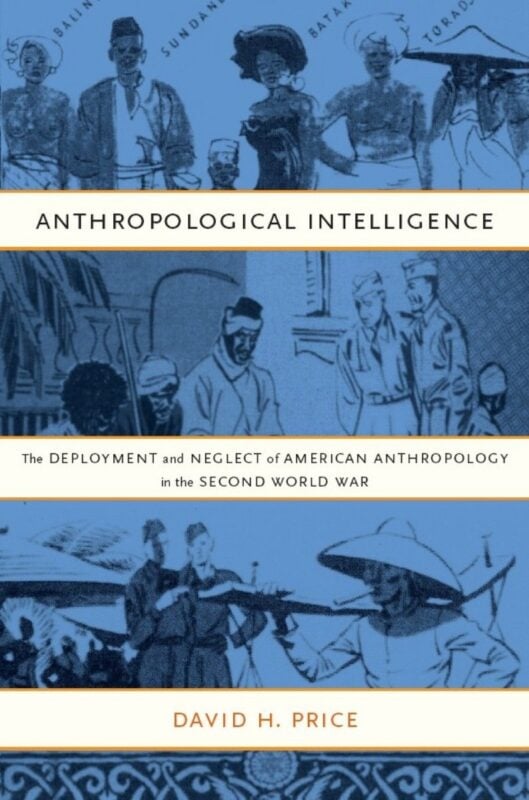
Cold War Anthropology completes a trilogy by Price tracing the interactions of American anthropologists with the national security state. The first volume, Anthropological Intelligence, examined contributions to World War II; the second, Threatening Anthropology, investigated McCarthy-era repression. This third book synthesizes insights from those earlier studies to reveal the complex arc from broad collaboration with militarized projects to the rise of resistance and ethical critique.
The narrative moves from the postwar embrace of government-funded research as a source of professional prestige and material support, through periods of internal division, public scandal, and ethical re-evaluation. Price explores the rise of radical critiques, the mobilization of disciplinary caucuses, and the development of alternative research models oriented toward justice, transparency, and solidarity with studied populations. He exposes the underlying dynamics by which anthropology’s theoretical and methodological innovations became resources for state power and offers strategies for reclaiming ethical agency.
A Discipline at the Crossroads: Knowledge, Ethics, and the National Security State
What role can anthropology play in a world where its insights into culture, power, and identity remain in demand by institutions committed to dominance, control, and intervention? Price’s work refuses easy resolutions or nostalgic retreats to academic purity. Instead, he asserts that anthropologists must acknowledge the historically produced dualities of their field—its capacity for both critical engagement and complicity, its vulnerability to appropriation, and its enduring potential for resistance.
He urges the discipline to maintain a commitment to transparency, data fidelity, and ethical responsibility, insisting that scholars recognize the moral and political consequences of their research choices. The field’s future depends on its willingness to engage the realities of power, funding, and institutional constraint while preserving the intellectual autonomy, reflexivity, and critical imagination necessary for genuine scholarly inquiry.
Cold War Anthropology by David H. Price establishes the centrality of state-academic entanglements in shaping the modern discipline. The book provides a foundational account of how knowledge, power, and ethics intersect, urging readers to see the stakes of scholarly practice as inseparable from the political structures that sustain and challenge it. The work compels anthropologists, policymakers, and engaged citizens to confront the legacies of the Cold War, reckon with their contemporary echoes, and imagine paths forward grounded in critical reflection and ethical clarity.