Spies in the Vatican: The Soviet Union’s Cold War Against the Catholic Church
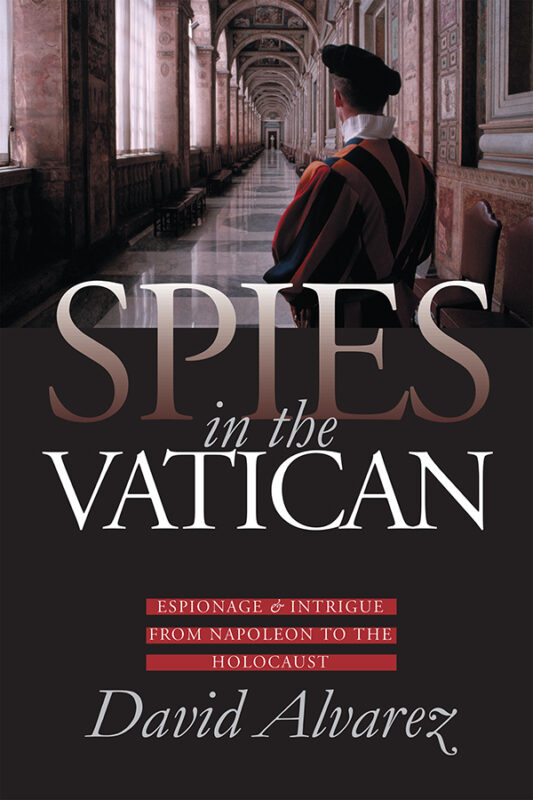
Spies in the Vatican: Espionage and Intrigue from Napoleon to the Holocaust by David Alvarez explores the evolution and impact of intelligence operations in the Vatican from the early nineteenth century through the Second World War, tracing the mechanisms, agents, and motivations behind papal espionage during pivotal epochs of European and global history.
The Vatican as Intelligence Actor
The Vatican, positioned at the intersection of faith and politics, deploys a global network of diplomats, clergy, and informants. Popes and their advisors cultivate and depend on this system to anticipate, interpret, and influence events that threaten their authority and the spiritual community they guide. When the Papal States faced revolutionary threats and foreign occupation, the Vatican mobilized its diplomats and police to collect intelligence on dissidents, rival powers, and the shifting allegiances of European courts. Bishops, nuncios, and local police served as the primary gatherers of actionable information, shaping the papal response to conspiracies, revolutions, and military interventions.
Napoleonic Upheaval and Vatican Survival
During the Napoleonic era, the Vatican confronted existential dangers. Napoleon’s armies invaded and occupied papal territory, demanding subservience from the Pope and his administration. Pius VII, confronted with imprisonment and territorial annexation, responded by coordinating secret channels of communication, encrypting correspondence, and relying on loyal agents to report developments in Italy and beyond. Papal police, directed by seasoned officials like Monsignor Tiberio Pacca, infiltrated revolutionary cells, recruited double agents, and orchestrated counterintelligence campaigns. The Papacy’s strategies during this period laid a foundation for later intelligence practices, as the necessity of defending both spiritual and temporal sovereignty compelled innovation and vigilance.
Restoration, Reform, and Reaction
Following the Congress of Vienna, the Papal States regained their territory, but political stability remained elusive. Secret societies such as the Carbonari and Young Italy agitated for national unification and the end of clerical rule. Papal authorities implemented reforms, separating civil from ecclesiastical law, reorganizing finances, and abolishing torture, yet entrenched reactionaries within the Vatican stifled meaningful change. As revolutionary pressures mounted, the papal administration intensified surveillance, censorship, and police actions, generating weekly bulletins and detailed reports for central authorities. Delegates in provincial capitals controlled networks of principal agents and informers who mapped the membership and plans of conspiratorial groups, monitored the circulation of subversive literature, and tracked the movements of revolutionaries.
The Vatican’s Diplomatic Intelligence Network
The Vatican’s diplomats, or nuncios, played a pivotal role in foreign intelligence. Stationed in key capitals, these emissaries reported on political, military, and social developments that affected the Church’s interests. The effectiveness of nuncios as intelligence agents depended on individual diligence and resourcefulness. Some, like the Abbé de Salamon in revolutionary France and Monsignor Francesco Capaccini in Holland, cultivated high-level contacts, developed clandestine channels, and supplied Rome with nuanced, sometimes secret information on government policies and popular sentiment. Others, focused on theological and ecclesiastical matters, neglected to gather political or military intelligence, limiting the Vatican’s situational awareness.
Limits of Communication and Security
Throughout the nineteenth century, the Vatican struggled with insecure communications. Major powers like France, Austria, Spain, and Piedmont routinely intercepted papal mail, reading dispatches between Rome and its diplomats. Nuncios adapted by encrypting sensitive messages, using couriers, or resorting to evasive language. These conditions imposed delays, miscommunication, and ambiguity, reducing the reliability of Vatican intelligence. The absence of secure, rapid channels forced the papal administration to weigh each word, speculate on enemy surveillance, and sometimes misinterpret critical developments. Intelligence on military movements, revolutionary activity, and diplomatic negotiations often arrived late or incomplete, shaping both policy and perception.
Clergy, Bishops, and Global Information Flow
Beyond diplomats and police, the Vatican’s worldwide clergy and religious orders represented a potential intelligence resource. Anticlerical critics in Europe imagined an international web of priests and confessors reporting political secrets to Rome. In reality, the flow of information from the Church’s global network focused overwhelmingly on internal ecclesiastical affairs. Letters from American bishops, for instance, discussed church construction, clergy assignments, and liturgical practice, rarely mentioning political crises, wars, or economic trends. When clergy did report on secular events, personal and regional biases colored their assessments, as seen in conflicting accounts sent during the American Civil War by bishops who supported either the Union or Confederacy. The Vatican, unable or unwilling to systematically direct this global network for political intelligence, found its insight into world affairs constrained by the limitations and loyalties of its correspondents.
Local Police and Counterintelligence Operations
Within the Papal States, the effectiveness of intelligence depended on the organization and activity of local police forces. Delegates in provincial centers commanded ten to twelve principal agents, each running their own network of informers, some with experience in multiple European police services. These agents operated listening posts, trailed suspects, and intercepted letters. Expense accounts detail payments for civilian disguises, travel across Italian states, and the recruitment of women as observers at city gates. Delegates reported on topics ranging from the health and plans of nationalist leaders like Garibaldi to the composition and deployment of enemy troops. Although the quality and accuracy of this intelligence varied, successful operations yielded decisive blows against revolutionary conspiracies and preserved papal authority through periods of turbulence.
Espionage Beyond Europe: Special Missions and the United States
Papal interest in international affairs sometimes led to special missions outside Europe. In 1853, Archbishop Gaetano Bedini traveled to the United States to observe the condition of the Catholic Church. While his reports touched briefly on political and economic conditions, they concentrated on ecclesiastical matters, reinforcing the Vatican’s tendency to privilege religious over secular intelligence. Consuls in American ports occasionally supplied updates on the progress of the Civil War, the federal blockade, and the emancipation of slaves, but such efforts remained the exception. The Vatican’s network outside Catholic Europe remained sparse and ad hoc, rarely producing systematic insight into non-European or non-Catholic political environments.
Interception, Encryption, and the Stakes of Information
The contest for secure communication defined much of the Vatican’s intelligence challenge. Foreign governments sought to read papal correspondence, extracting secrets and anticipating Vatican initiatives. Papal authorities responded by experimenting with ciphers, encrypting telegrams, and seeking alternative channels. In the absence of robust, reliable couriers, and with limited resources, these measures only partially succeeded. Nuncios, aware of constant surveillance, resorted to veiled language, often omitting sensitive details or relying on innuendo that could be deciphered by trusted officials in Rome. Such conditions sowed confusion, delayed responses, and sometimes led to strategic misjudgments.
The Emergence of Modern Espionage
As the nineteenth century yielded to the twentieth, global powers formalized their intelligence services, developing professional agencies, methods, and protocols. The Vatican, constrained by its small size and limited resources, navigated this evolving landscape as both observer and participant. During the First World War, papal diplomats and Vatican staff increasingly encountered espionage, surveillance, and counterespionage efforts by major belligerents. Popes and their advisors worked to secure communications, protect sensitive information, and understand the strategies of regimes that saw the Vatican as both ally and adversary. In the interwar period and during the rise of fascism and communism, the Vatican’s position as an independent, supranational authority drew intense interest from intelligence services across Europe and beyond.
World Wars, Dictatorships, and the Holocaust
During the two world wars, the Vatican became a critical node in international intelligence exchanges. Diplomats, clergy, and lay agents gathered and relayed information on military developments, diplomatic maneuvers, and the internal politics of Axis and Allied powers. The Vatican’s neutrality, unique access to occupied territories, and global reach made it a source of insight for both sides. German, Italian, British, and American intelligence services all targeted Vatican communications, attempting to intercept or plant agents within its networks. Papal officials navigated these pressures while working to protect church interests, mediate humanitarian efforts, and defend persecuted populations. The Holocaust forced the Vatican to weigh the risks and imperatives of intelligence in new, urgent ways, balancing secrecy, intervention, and moral witness in the face of unparalleled atrocity.
Legend, Reality, and the Best-Informed Pope
For centuries, popular imagination and the traditions of diplomacy have assigned the Vatican a place of preeminent secrecy and intrigue. Novels, films, and conspiracy theories construct the Papacy as the world’s best-informed institution, deploying invisible armies of spies and maintaining omniscient surveillance over global events. David Alvarez interrogates this narrative, testing its foundations against archival records, diplomatic correspondence, and firsthand testimony. The findings show a complex reality: the Vatican’s intelligence depended on networks built for religious, diplomatic, and security purposes, shaped by the personalities and politics of its agents, and circumscribed by external surveillance and internal limitations.
The Myth and Mechanics of Papal Intelligence
Vatican intelligence evolved in response to necessity, not by design. Revolutionary threats, foreign invasions, and political realignments compelled popes to gather information, recruit agents, and encrypt their plans. The secretariat of state and papal police developed methods suited to the challenges of their era, achieving notable successes but also encountering persistent obstacles. Nuncios, consuls, bishops, and lay Catholics supplied information according to their talents and interests, rarely constituting a systematic intelligence apparatus. Organizational fragmentation, inconsistent communication, and uneven diligence produced an intelligence system characterized by bursts of effectiveness and long stretches of routine reporting.
Historiography and Contemporary Interest
As the academic discipline of intelligence history matures, researchers turn to the Vatican as a case study in the interaction of secrecy, power, and faith. Declassification of state and church archives has enabled new insights into the Papacy’s role in the diplomacy and conflict of the nineteenth and twentieth centuries. Historians interrogate the stereotypes and legends that envelop Vatican intelligence, discerning the contours of real practice and influence. Spies in the Vatican by David Alvarez emerges as a foundational text in this field, providing the first comprehensive, evidence-based account of papal espionage during the critical period from Napoleon to the Holocaust.
The Convergence of Faith, Power, and Secrecy
The Vatican’s engagement with espionage demonstrates the convergence of faith, power, and secrecy in shaping modern history. Papal intelligence activities express the enduring imperative of the Holy See to protect its spiritual mission while navigating the risks and realities of international politics. Networks of nuncios, clergy, police, and lay agents enabled the Vatican to anticipate threats, mediate crises, and assert autonomy in an often hostile environment. The resulting history reveals both the potential and the limits of intelligence as an instrument of church and state, establishing the Vatican as a unique actor whose legacy in espionage invites continual reexamination.