The Perestroika Deception : Memoranda to the Central Intelligence Agency

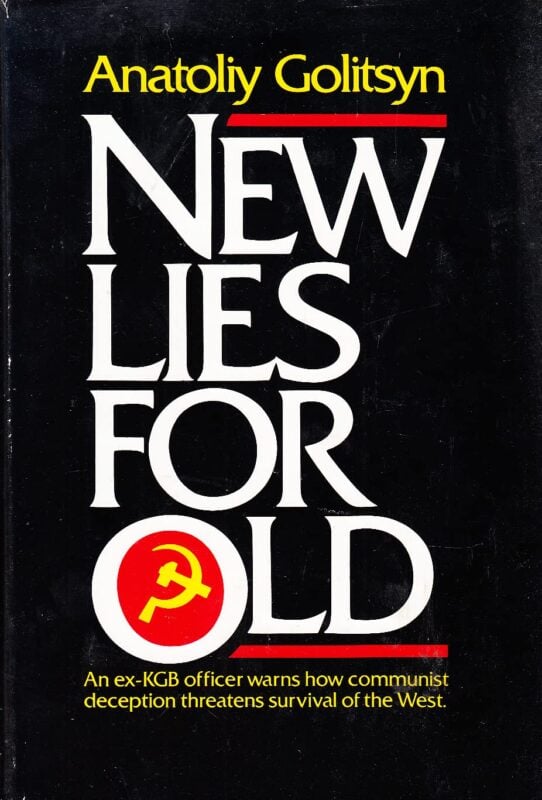
The Perestroika Deception by Anatoliy Golitsyn ignites debate about the true nature of the Soviet Union’s reforms, thrusting readers into a labyrinth of espionage, statecraft, and strategic misdirection. Golitsyn, a high-ranking KGB defector with a proven record of predictive analysis, advances a meticulously detailed thesis: the appearance of Soviet democratization and the collapse of Communism mask a long-range Leninist strategy to secure global dominance through deception, managed opposition, and dialectical adaptation.
Soviet Strategy: The Architecture of Deception
Golitsyn asserts that Soviet strategy follows a grand design shaped by dialectical logic, orchestrated over decades by a collective leadership rooted in Marxist-Leninist orthodoxy. This plan extends beyond military or economic rivalry, infiltrating Western consciousness and policy through deliberate, phased operations. Within this architecture, "perestroika" and "glasnost" function as tools—not endpoints—deployed to recalibrate the West’s perception of the Communist bloc. By engineering apparent reforms, Soviet leaders create strategic opportunities to engage Western elites, foster alliances, and extract concessions under the illusion of irreversible change.
Golitsyn’s memoranda, collected and published in this volume, chronicle the evolution of the strategy, revealing mechanisms for projecting power through calculated reforms and staged pluralism. Where the West perceives liberalization, Golitsyn identifies a methodical campaign: controlled opposition movements, managed democratization, and the tactical relaxation of authoritarian controls—all subject to reversibility, all serving the underlying objective of convergence on Soviet terms.
The Dialectical Method: Predictive Power in Political Forecasting
Golitsyn’s analytic framework emerges from the dialectical method, derived from the works of Lenin, Marx, and Hegel. This methodology emphasizes the interplay of opposing forces, guiding Communist leadership to devise multi-phase strategies, adapt flexibly to setbacks, and incorporate the lessons of historical precedent. Golitsyn applies this method in real time, issuing memoranda to Western intelligence that forecast key developments: the legalization of Solidarity in Poland, the fall of the Berlin Wall, and the rise of controlled multiparty systems across Eastern Europe.
Mark Riebling, in his analysis of Golitsyn’s predictions, quantifies their accuracy at nearly 94 percent, providing empirical weight to claims of strategic foresight. The dialectic, in Golitsyn’s telling, not only drives Soviet statecraft but enables analysts to anticipate the sequence of feints, maneuvers, and disinformation campaigns that shape world events.
Controlled Opposition: Managed Democratization and Strategic Illusion
Golitsyn describes the creation and management of political opposition within Communist states as a deliberate instrument of policy. Dissident movements, independent trade unions, and newly legalized parties often arise not from spontaneous social pressure but as artifacts of regime design. The Communist Party, retaining operational control, crafts these entities to satisfy Western expectations, provide channels for discontent, and set the stage for “liberalization” that remains fundamentally reversible.
This phenomenon extends outward, enveloping Western observers and policymakers. When Western governments and media celebrate the emergence of pluralism, Golitsyn contends that they accept a surface-level narrative. The underlying structures of power remain intact, the security apparatus retains its primacy, and the regime, far from ceding control, exploits the new political theater to disarm its adversaries.
The Grand Strategy of Convergence: The Road to a New World Order
Golitsyn situates the deception within a broader strategic objective—global convergence, structured through the gradual dissolution of nation-states into regional blocs and the eventual creation of a “New World Social Order.” This outcome proceeds not through direct conquest but through the erosion of sovereignty, the absorption of Western institutions, and the harmonization of legal and economic systems under an international socialist framework.
He documents efforts to engineer treaties, bilateral accords, and joint declarations between the Soviet bloc and Western powers. These agreements, reached under the auspices of reform and cooperation, systematically reshape the global order. Through convergence, Communist strategists aim to neutralize ideological resistance, manipulate the levers of international finance and governance, and construct a platform for the final triumph of their vision.
Western Vulnerability: Failures of Analysis and Policy
Golitsyn delivers a forceful critique of Western intelligence and policymaking. He attributes the widespread misreading of Soviet intent to methodological flaws, short-term thinking, and a cultural disposition toward optimism. Western analysts, according to Golitsyn, rely on retrospective evaluation, failing to engage in forward-looking, dialectically informed analysis.
He recounts episodes where celebrated Western experts and leaders—citing examples such as Zbigniew Brzezinski and S. Bialer—endorse the “irreversible” nature of Soviet reform without grasping its tactical dimension. Policymakers embrace engagement and aid initiatives, often with bipartisan enthusiasm, only to find themselves ensnared in negotiations that favor their adversaries. Media outlets amplify the euphoria, accelerating the West’s uncritical acceptance of Soviet narratives.
Disinformation as Statecraft: Penetration, Manipulation, and Influence
The engine of this strategic deception is a robust apparatus for disinformation and influence. Golitsyn details the Soviet Union’s investment in information warfare, from the orchestration of public campaigns to the cultivation of agents of influence across Western media, academia, and politics. This apparatus anticipates and manipulates Western responses, driving narratives that conceal the true continuity of Communist power.
Soviet and post-Soviet leaders deploy these tools to shape international opinion, demoralize adversaries, and fracture social cohesion. Golitsyn highlights the deployment of cultural initiatives, active measures targeting religion and family, and the subtle erosion of institutional trust. As the West accepts the legitimacy of new democratic regimes, Golitsyn contends, it opens itself to systematic subversion—accepting managed opposition as authentic, dismantling defenses, and pursuing policies that strengthen the position of its adversaries.
Continuity of Power: The Facade of Reform
Throughout the book, Golitsyn maps the retention of real power by Communist and security elites, even as formal structures undergo transformation. He identifies the reorganization of the KGB, the emergence of new political parties led by figures with deep roots in the security apparatus, and the tactical surrender of monopoly power as maneuvers to solidify, rather than relinquish, control. The pageantry of democratization, in this analysis, conceals the seamless persistence of Leninist objectives and the operational unity of party, state, and intelligence.
Golitsyn demonstrates how the leadership manages transitions, orchestrates the rise and fall of individual actors, and recasts the public image of the state while holding the levers of authority. This process intensifies the challenge for external observers, whose focus on personalities and elections obscures the persistent centralization of strategic direction.
The Need for Reassessment: Awakening from Strategic Blindness
Golitsyn calls for a wholesale reassessment of Western assumptions regarding post-Cold War realities. He demands that policymakers, scholars, and citizens interrogate the dialectical underpinnings of global events, retrace the logic of strategic deception, and scrutinize the operational continuity of Communist objectives. This awakening, in Golitsyn’s view, must precede the development of an effective counter-strategy—one that restores analytic rigor, fortifies institutions, and disrupts the machinery of influence and manipulation.
He argues that the fate of Western democracies depends on the capacity to expose the architecture of deception, sever the channels of disinformation, and reestablish the primacy of independent judgment. As convergence accelerates, complacency multiplies the risks: institutional erosion, societal destabilization, and strategic defeat.
Lessons from History: The Leninist Precedent
Golitsyn grounds his analysis in historical precedent, especially Lenin’s New Economic Policy (NEP). He interprets the NEP as a tactical retreat designed to secure Communist power through economic adaptation and strategic patience. By invoking this precedent, Golitsyn situates perestroika within a lineage of calculated flexibility—periods of apparent reform, driven by necessity, but anchored in the determination to preserve and extend the revolutionary project.
The NEP episode, for Golitsyn, provides a model for contemporary developments: the mobilization of controlled opposition, the modulation of economic policy to attract Western investment and expertise, and the eventual resumption of ideological advance once conditions permit. The dialectical nature of Soviet and post-Soviet strategy, he claims, transforms setbacks into opportunities for consolidation and expansion.
From Policy to Prognosis: The Structure of Memoranda
Golitsyn’s memoranda, the backbone of the book, embody an evolving diagnosis of Soviet and Russian strategy, delivered contemporaneously to Western intelligence agencies. These documents address specific developments: the orchestration of controlled pluralism, the engineering of Western alliances, the recalibration of disinformation campaigns, and the tactical management of political crises such as the 1991 “August Coup.”
Through detailed, time-stamped analysis, Golitsyn demonstrates how predictive power flows from dialectical understanding. He tracks changes in party and state leadership, the reorganization of security services, the manipulation of constitutional reforms, and the internationalization of the Soviet strategy of convergence. Each memorandum crystallizes the principle that foresight depends on methodical attention to strategic logic, operational continuity, and the intersection of public narrative and covert intent.
Strategic Consequences: Risks, Opportunities, and the Future
Golitsyn’s argument advances toward a decisive conclusion: strategic deception, unchecked and unchallenged, undermines the very foundations of Western power. The convergence of Eastern and Western systems, conducted on Leninist terms, offers Communist strategists unprecedented opportunities to shape global governance, erode adversary resolve, and secure the conditions for final victory.
His warnings do not rest on abstract speculation but on a body of empirical predictions, historical precedents, and lived experience within the Soviet intelligence system. Golitsyn’s perspective commands attention from policymakers, strategists, and informed citizens, challenging prevailing orthodoxies and demanding a reengagement with the realities of statecraft and conflict.
The Perestroika Deception stands as a sustained interrogation of late twentieth-century political transformation, compelling its audience to reconsider the visible and hidden dynamics that shape world events. Through a synthesis of personal insight, analytic method, and documentary evidence, Golitsyn shapes a narrative of strategy, deception, and convergence that continues to provoke, inform, and unsettle. What remains at stake, he insists, is the survival of democratic civilization itself—dependent on the capacity to see through illusion, recognize continuity, and reclaim the initiative in the contest of ideas and power.