The Phenomenon of Man
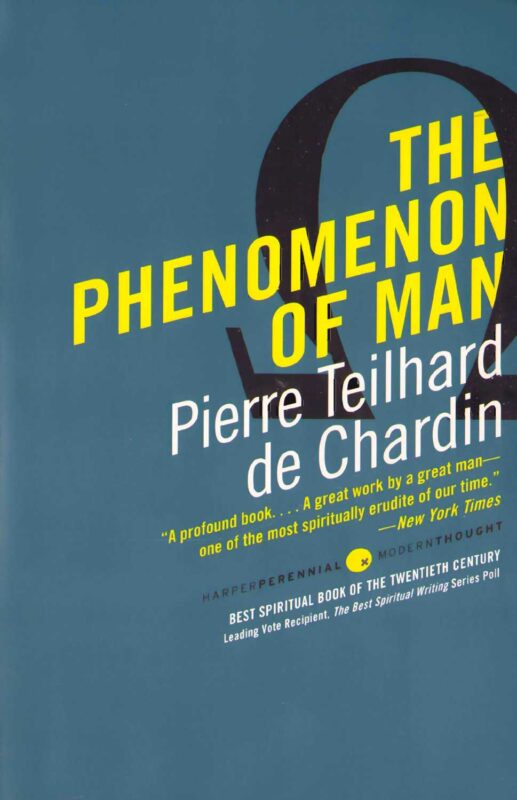
The Phenomenon of Man by Pierre Teilhard de Chardin synthesizes scientific discovery, evolutionary theory, and spiritual philosophy, positing that human evolution marks the latest chapter in a profound cosmic process. Teilhard’s narrative situates humanity within a larger story of matter’s genesis, organic complexity, and the emergence of consciousness, positioning this journey as the engine driving the ascent of life toward a future of unified awareness and spiritual fulfillment.
Teilhard de Chardin’s Evolutionary Vision
Teilhard begins by tracing matter’s origins. He asserts that existence unfolds through discrete stages, each governed by discernible patterns of complexity. The formation of atoms, molecules, and celestial bodies sets the stage for the rise of life on Earth. He frames this progression not as a random chain of events but as a structured, directional process. The proliferation of living forms and the subsequent rise of consciousness result directly from this inherent cosmic tendency toward organization and complexity.
He defines evolution as the central axis of reality, claiming that both material and spiritual phenomena derive from the same evolutionary drive. Biological evolution culminates in the human species, but the process itself neither halts nor dissipates with the appearance of Homo sapiens. Humanity continues the evolutionary arc, shifting the locus from mere biological change to psychosocial and spiritual development.
The Rise of Consciousness
Central to Teilhard’s thesis is the claim that consciousness does not erupt spontaneously but develops through progressive layers of complexity. He describes a universe in which matter gradually acquires the ability to organize, replicate, and eventually reflect upon itself. Through the successive thresholds of life—cellular, multicellular, neural—consciousness intensifies. In animals, the nervous system and the brain reach a degree of complexity that enables instinct, learning, and adaptation.
Humanity inherits this legacy but surpasses it by achieving reflection: the power to think about thought, to recognize selfhood, and to direct one’s own development. Teilhard names this singular event “hominization.” With it, the evolutionary process crosses a decisive threshold. Human consciousness, unlike animal awareness, constructs memory, meaning, and culture. Thought gains the capacity to accumulate knowledge, transmit experience, and build civilizations.
The Noosphere and the Expansion of Human Thought
As humans organize themselves into communities, their thoughts and innovations accumulate in networks that span beyond individuals. Teilhard introduces the concept of the “noosphere,” the thinking layer enveloping the planet, arising from the totality of human minds and their interrelations. The noosphere acts as a medium for shared knowledge, discovery, and progress, shaping the direction of cultural and technological evolution.
The development of language, writing, science, and technology accelerates the thickening of the noosphere. Increased communication and interconnection generate a feedback loop: as knowledge spreads and multiplies, humanity’s collective intelligence grows. This acceleration, Teilhard argues, results from a deep structural tendency—convergence. Human societies, once separated by geography or language, begin to unite in global networks, reinforcing the momentum toward integration.
Complexification and Convergence: The Structure of Progress
Teilhard characterizes the universe as moving inexorably toward higher forms of organization—a process he calls “complexification.” He asserts that matter, when subjected to evolutionary pressure, tends to organize itself into structures capable of greater interiority and responsiveness. From atoms to molecules, cells to organisms, and brains to cultures, each leap of complexity introduces new properties and potentials.
He observes that with humanity, complexification accelerates through psychosocial means. Technological advancements, systems of thought, and forms of governance become increasingly intricate, enabling greater cooperation and understanding. The phenomenon of convergence—where differentiation produces diversity but integration generates unity—shapes the modern world. Scientific collaboration, global commerce, and shared ethical frameworks bind humanity into a single evolving entity.
Omega Point: The Destiny of Evolution
Teilhard projects the trajectory of evolution into the future, asserting the inevitability of a culminating event he calls the “Omega Point.” This Omega Point signifies the ultimate unification of consciousness, the moment when humanity achieves complete self-awareness and spiritual integration. Teilhard presents the Omega Point not as a metaphor but as the logical outcome of the evolutionary process: as complexity and consciousness reach their zenith, they generate a form of being that transcends individual limitations.
He claims that the drive toward the Omega Point imbues evolution with meaning and direction. Human creativity, the pursuit of knowledge, the impulse to love and unite—these expressions of interiority accelerate the approach to this culmination. Teilhard envisions a hyper-personal future, where individuals retain their uniqueness while contributing to an integrated whole. Love, for Teilhard, acts as the ultimate force of convergence, binding individuals into higher collectives and pushing the noosphere toward the Omega Point.
Science and Faith: Integration Rather Than Division
Teilhard’s scientific training grounds his arguments in empirical observation and evolutionary theory, yet he insists that science and religion form two aspects of a single reality. He rejects the separation of spiritual experience from scientific inquiry, positing that both draw from and illuminate the same evolutionary process. For Teilhard, the rise of consciousness provides evidence that the universe aims at something more than material complexity.
He interprets Christian doctrine—particularly the notion of Christ—as symbolizing the Omega Point, the promise of ultimate unification and fulfillment. This synthesis transforms the practice of faith. Belief becomes participation in the world’s evolutionary advance, and spirituality aligns with the task of deepening consciousness, building community, and seeking unity. Teilhard calls for a new form of worship grounded in active engagement with the world, scientific discovery, and a shared commitment to humanity’s evolutionary mission.
The Personal Universe and the Ethics of Becoming
Teilhard locates the human person at the center of his evolutionary vision. The process of becoming fully human involves both individuation—cultivating one’s unique capacities—and personal integration with others. The emergence of the person, capable of self-awareness and love, signals the universe’s capacity to transcend mere biology. Teilhard describes personality as an achievement and a challenge: by deepening relationships and cooperation, individuals participate in the transformation of the species.
Ethics, for Teilhard, follow from the trajectory of evolution. He urges humanity to embrace responsibility for guiding evolution toward greater consciousness, integration, and fulfillment. Science provides the tools for understanding the world; love supplies the energy for unification; faith directs aspiration toward the Omega Point. This ethics demands active engagement: to seek knowledge, to foster community, to serve the world’s ongoing creation.
Global Unity and the Future of Humanity
Teilhard’s analysis of human evolution anticipates trends in globalization, technological convergence, and the emergence of planetary consciousness. He asserts that the survival and flourishing of humanity depend on building global unity, fostering diversity within a single framework, and accelerating the transmission of knowledge and values. The risks and challenges of modernity—conflict, alienation, ecological crisis—underscore the urgency of deepening the noosphere and orienting it toward the Omega Point.
He maintains that true progress emerges from the fusion of diversity and unity. The variety of cultures, traditions, and individual talents enriches the collective, while convergence harnesses this richness to create new possibilities. Teilhard’s optimism rests on the conviction that the universe’s directionality—toward complexity, consciousness, and love—will ultimately prevail. The task facing humanity is to recognize its role in this grand process and act with purpose and vision.
Knowledge, Love, and the Power to Direct Evolution
Teilhard claims that knowledge forms the basis for understanding both the world and humanity’s place within it. Through scientific inquiry, humanity discovers the laws governing matter, life, and consciousness. Knowledge, however, reaches its highest form when allied with love. Teilhard presents love as the dynamic energy of convergence, the force that unites, integrates, and propels evolution forward. By combining knowledge and love, humanity gains the power to direct evolution consciously.
This power imposes responsibility: to use technology wisely, to cultivate harmony, to promote the growth of the person and the community. Teilhard envisions a civilization animated by the pursuit of wisdom and the practice of compassion, capable of transforming conflict into cooperation and scarcity into abundance. The destiny of evolution, in this vision, depends on the choices humanity makes in deepening the noosphere and accelerating the approach to the Omega Point.
Enduring Influence and Relevance
The Phenomenon of Man by Pierre Teilhard de Chardin continues to shape discussions in philosophy, theology, evolutionary biology, and cultural theory. His synthesis of science and spirituality inspires movements toward global ethics, interfaith dialogue, and planetary stewardship. Teilhard’s concept of the noosphere prefigures digital networks and the knowledge economy, while his call for convergence anticipates efforts toward sustainable development and world peace.
Teilhard’s work invites readers to see themselves as participants in a cosmic story, charged with the task of fulfilling the universe’s potential for consciousness, unity, and love. As humanity faces new frontiers and existential challenges, Teilhard’s vision provides a roadmap for aligning science, faith, and action toward a common purpose: the evolution of life and mind toward a future of realized meaning and shared fulfillment.