The Old Boys: The American Elite and the Origins of the CIA

Burton Hersh’s book The Old Boys: The American Elite and the Origins of the CIA investigates the transformation of America’s clandestine operations from scattered diplomatic maneuvers into a civilian-directed intelligence empire underpinned by Ivy League networks and Wall Street law firms.
An Elite Inheritance of Power and Purpose
The personalities that shaped American intelligence in the 20th century arose from a tight circle of privilege. Men like Allen and John Foster Dulles, Frank Wisner, and William “Wild Bill” Donovan did not emerge by chance. Their rise was the result of deliberate cultural transmission within elite institutions. Princeton and Yale did not merely educate them—they indoctrinated a missionary sense of American global obligation, married to a reverence for hierarchy and a taste for discretion. Their law partnerships—Sullivan & Cromwell, chiefly—served as rehearsal stages for the machinations that intelligence operations would later require.
They learned to manage crises, conceal interests behind neutral legalese, and build networks of control. Intelligence, in their hands, became less about data and more about influence. The craft of the spy merged with the tactics of the corporate lawyer: obfuscate, maneuver, dominate.
The Wilsonian Origin of Covert Strategy
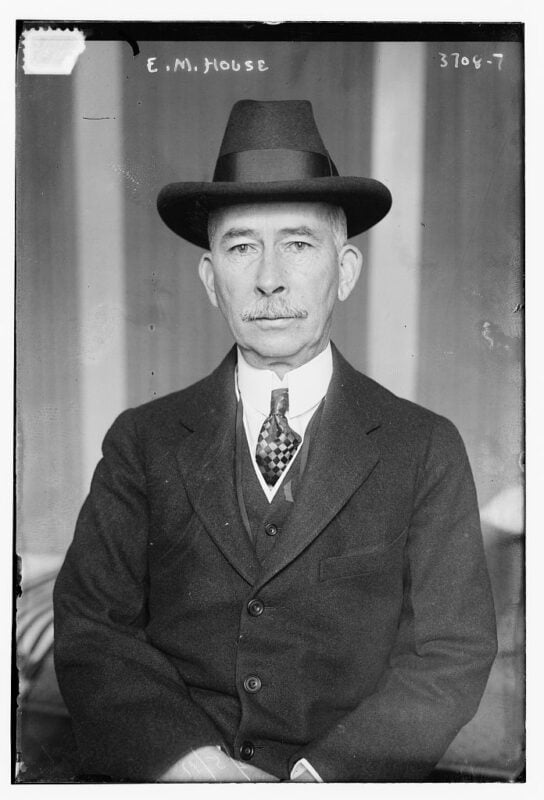
President Woodrow Wilson’s reliance on intellectual elites during and after World War I catalyzed the creation of a covert state within the democratic one. The Inquiry, a clandestine group of academics and advisers including Allen Dulles, crafted geopolitical maps and peace blueprints while ignoring the formal apparatus of diplomacy. Versailles birthed new nations and embedded new resentments. The Dulles brothers and Bullitt cut their teeth negotiating under Colonel House’s guidance. These early experiences forged their strategic worldviews: control is more achievable through insinuation than declaration.
OSS and the Invention of Unorthodox War
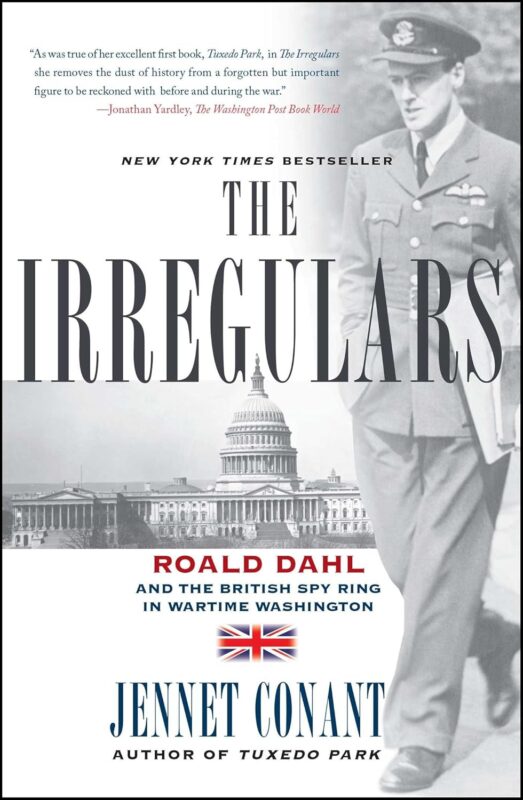
World War II demanded a national intelligence framework. William Donovan's Office of Strategic Services (OSS) was the prototype. Rather than build a military bureaucracy, Donovan recruited from his own world—lawyers, bankers, professors. Covert warfare became an East Coast project. The OSS operated not only against enemies abroad but against rival institutions at home, continually asserting civilian over military control.
Allen Dulles in Bern conducted espionage with a refined sense of political theater. He measured intelligence success by access and influence rather than operational metrics. He protected relationships with Nazi industrialists even as the regime fell. Intelligence gathering and diplomatic negotiation fused into the same mode of elite networking.
Frank Wisner’s Psychological Arsenal
After the war, as America defined its position in the Cold War, Frank Wisner engineered the psychological battlefield. Leading the CIA’s Office of Policy Coordination, he launched media fronts, funded political parties abroad, and recruited émigrés as ideological foot soldiers. Radio Free Europe and covert support for anti-communist insurgencies stemmed from Wisner’s conviction that narratives win wars.
He did not hide his belief that this was a crusade. Intelligence was no longer simply a defensive shield—it was a proactive instrument of regime influence and ideological alignment. The CIA became the architect of clandestine modernity.
Institutionalizing Intelligence Under the National Security Act
The National Security Act of 1947 codified the new world. The Central Intelligence Agency emerged not just as a reporting mechanism but as a strategic actor. George Kennan’s theory of containment gained operational teeth. From that point forward, covert action aligned with American foreign policy rather than merely supporting it. Civilian operatives did not wait for mandates—they created conditions for intervention.
Allen Dulles’ later leadership of the CIA formalized this approach. Operations in Iran, Guatemala, and beyond followed the playbook crafted in postwar Europe. Law firms had defined the rules of engagement; now the agency rewrote the international order with clandestine precedent.
The Cold War Theater and the Collapse of Boundaries
The Bay of Pigs marked the public unraveling of the confidence that had built the CIA. An operation rooted in elite certainty collapsed under the weight of poor planning and overestimation. Yet the culture that produced it remained intact. Hersh outlines how CIA operations in Asia, Eastern Europe, and Latin America continued to reflect the assumptions of a caste that saw the world through boardroom windows.
The agency resisted accountability by invoking the mystique of security and secrecy. Oversight collapsed in the face of cultivated ignorance. Congressional leaders deferred to the same elite that staffed their think tanks and shaped their campaigns. Intelligence hardened into doctrine.
Parallel Governments and the Disappearance of Civilian Control
By the 1950s and 60s, the intelligence community no longer operated alongside the constitutional government—it operated within it and sometimes around it. Hersh describes how the networks that built the OSS and early CIA now occupied senior positions across the executive branch. They answered to each other more than to the public. National security became a sovereign claim, exempt from transparency.
The Iran-Contra affair decades later would merely confirm what Hersh describes in origin: a government within the government, loyal to its own imperatives, staffed by interchangeable elites whose real allegiance lay in class continuity rather than elected authority.
The Cultural Code of Espionage
Espionage in Hersh’s history is not just strategy. It is ritual. The old boys developed their own language, codes of conduct, and boundaries of loyalty. They operated less like bureaucrats and more like a fraternity or religious order. Personal relationships defined career mobility. Trust circulated not through evidence, but through shared pedigree.
That culture of secrecy and privilege conferred both operational strength and fatal blind spots. Outsiders were excluded from decision-making even when they held formal rank. Dissenters like William Bullitt, who once shaped policy, found themselves exiled for questioning orthodoxy.
The Mythology of the Dulles Era
Allen and Foster Dulles embody the dual peak of this system. Allen, the backstage operator, controlled personnel and policy from within Langley. Foster, as Secretary of State, managed the overt diplomacy aligned with covert intentions. Their partnership synchronized the levers of statecraft and clandestine action.
Hersh presents their era not as aberration but as culmination. Every decision they made—from engineering coups to backing dictators—reflected the logic embedded at Versailles, refined at Yale, and executed through legal and financial machinery. They did not separate interest from principle. They fused them, assuming that what served their class served the nation.
The Echo of Versailles in Vietnam and Beyond
The postcolonial world did not interpret American actions through the lens of freedom. Covert action betrayed the universalist rhetoric of democracy. From the Congo to Indochina, from Berlin to Baghdad, populations understood that American interests meant elite control.
Hersh argues that the logic of Versailles never disappeared. It metastasized. Intelligence became the instrument through which a self-selected elite sustained its influence across changing administrations, crises, and ideologies. The old boys adapted because they owned the tools of adaptation.
A Lasting Architecture of Power
The Old Boys delivers a documented reckoning. Hersh draws from personal papers, Gestapo archives, interviews with CIA veterans, and State Department records to map the convergence of education, class, ambition, and ideology into a durable system. That system continues to define the boundaries of permissible strategy and permissible dissent.
Power, in this account, resides not in individual skill or party ideology but in embedded relationships—networks that outlast policy swings and electoral cycles. The CIA did not arise from necessity. It arose from ambition—ambition sculpted by a specific caste of Americans who believed that history offered them stewardship by birthright.
What Hersh uncovers is not a shadow government. It is a parallel sovereignty. Its rituals, alliances, and assumptions endure, reshaping global alignments in the image of the club that first gathered under chandeliers in Paris.