Secret Agent 666: Aleister Crowley, British Intelligence and the Occult
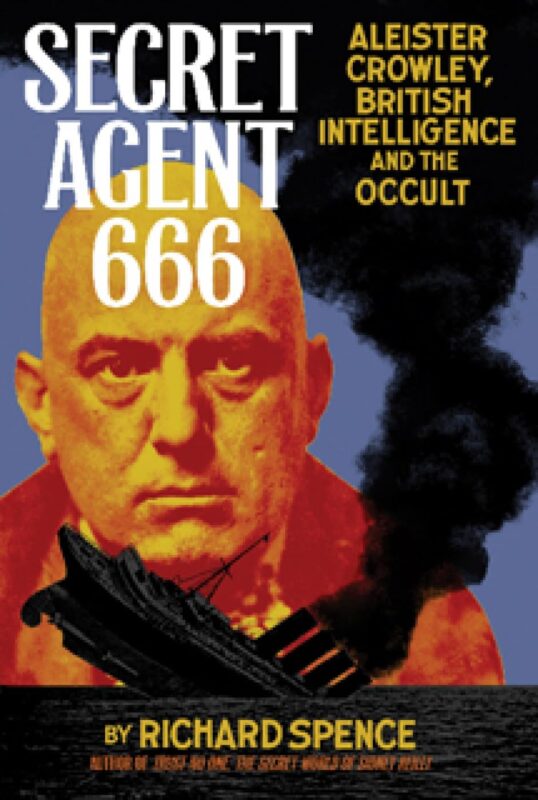
Secret Agent 666 Aleister Crowley, British Intelligence and the Occult by Richard B. Spence exposes a hidden chapter in the life of one of the twentieth century’s most controversial figures. Aleister Crowley, notorious for his occult writings and flamboyant public persona, operated within the shadowy corridors of British intelligence during a period marked by global war and political upheaval. Spence’s book investigates Crowley’s clandestine activities, mapping his movements through the secret societies, bohemian circles, and diplomatic intrigues that shaped his era.
The Many Masks of Aleister Crowley
Crowley mastered the art of transformation, crafting identities that allowed him to traverse diverse spheres of influence. From his beginnings in Victorian England’s conservative heartland, Crowley cultivated a public reputation as the “Great Beast 666,” a mystic, poet, mountaineer, and provocateur. Beneath this notoriety, he forged connections with political elites, military officers, writers, and artists. Crowley’s capacity to move seamlessly between the worlds of spiritualism, high society, and radical politics positioned him as an ideal agent in a time when intelligence gathering demanded discretion and adaptability.
The Intersection of Occultism and Espionage
The rituals and secrecy of occult organizations provided Crowley with both a toolkit and a cover for intelligence work. As Crowley penetrated the Hermetic Order of the Golden Dawn and similar societies, he built networks that overlapped with the intelligence apparatus of the British Empire. Spence traces Crowley’s immersion in mystical orders, emphasizing that such groups offered both access to influential circles and opportunities for surveillance, recruitment, and manipulation.
British Intelligence and the Climate of Secrecy
Late nineteenth-century Britain fostered a climate in which intelligence gathering expanded in response to emerging threats at home and abroad. Spence situates Crowley within the structures of British intelligence, where officers directed agents and informants—roles requiring guile, improvisation, and moral flexibility. Crowley’s talents fit the evolving needs of agencies like MI5 and MI6, whose operational boundaries blurred as they coordinated espionage across diplomatic, military, and commercial sectors. The book reveals that Crowley’s involvement spanned both documented assignments and murkier operations whose traces surface only through circumstantial evidence and fleeting archival mentions.
World War I: Espionage on American Soil
World War I intensified the demand for covert operations, and Crowley’s role in New York became central to Spence’s narrative. Crowley, posing as a pro-German propagandist, infiltrated circles sympathetic to the Central Powers while maintaining contact with British authorities. His activities coincided with the infamous sinking of the RMS Lusitania, a turning point that propelled American entry into the conflict. Crowley’s own accounts, corroborated by U.S. Army intelligence files, indicate that he actively sought to influence German agents and provoke anti-British sentiment—an operation designed to serve Allied interests by driving the United States toward war with Germany. Spence documents these actions, arguing that Crowley’s duplicity exemplifies the tangled loyalties and complex calculations that defined the era’s espionage landscape.
Official Denials and the Puzzle of Destroyed Files
British intelligence agencies have struggled to manage the legacy of Crowley’s involvement. Official statements regarding Crowley’s records vacillate between denial, acknowledgment, and explanations for missing or destroyed files. Spence recounts his own efforts to access these documents, uncovering evidence that references to Crowley existed in official indexes and correspondence. The destruction of these files during the mid-twentieth century suggests both a desire to erase sensitive history and an implicit recognition of Crowley’s importance. The narrative tension heightens as Spence reconstructs the puzzle from surviving fragments, cross-referencing intelligence archives, personal papers, and memoirs to build a compelling case for Crowley’s covert service.
Secret Societies, Political Intrigue, and Revolutionary Plots
Crowley’s intelligence work often intersected with the radical politics and underground movements of his day. Through the Golden Dawn and affiliated circles, Crowley engaged with Jacobite and Legitimist factions plotting regime change in Britain and continental Europe. Spence highlights Crowley’s participation in arms smuggling efforts aimed at supporting Spanish Carlist rebels, his connections with separatist movements in the British Isles, and his proximity to international conspiracies. Crowley’s persona—a blend of sincere occult devotion and strategic manipulation—enabled him to win the confidence of revolutionaries while secretly reporting to British authorities or undermining subversive activities from within.
Espionage Methods and the Cult of Secrecy
Spence draws attention to the similarities between occult ritual and espionage tradecraft. Both domains reward secrecy, encourage the use of aliases, and promote the management of hidden knowledge. Crowley’s experience in magical orders sharpened his skills in deception, role-playing, and psychological manipulation. The author demonstrates how Crowley’s behavior as an agent provocateur—provoking conflict, destabilizing organizations, and spreading disinformation—mirrored his magical practice of disrupting established orders to achieve transformation.
Personal Motivations and the Paradoxes of Loyalty
Crowley’s commitment to the British state coexisted with his public contempt for conventional morality and social norms. Spence presents Crowley’s loyalty as complex and deeply personal. In his memoirs, Crowley likened his patriotism to the loyalty of a dog for a master who mistreats it—an emotional attachment that persists despite grievance or alienation. Spence contends that Crowley’s drive to serve reflected both a longing for acceptance by the British elite and a fascination with the subversive power of secrecy.
The Lusitania Affair and the Power of Propaganda
The sinking of the Lusitania marked a pivotal episode in Crowley’s intelligence career. Crowley later claimed responsibility for influencing German perceptions of the ship’s status, helping to convince agents that the liner was a legitimate military target. Spence interrogates these claims, placing Crowley’s activities within the broader context of British efforts to manipulate public opinion and enemy decision-making through information warfare. The question emerges: how do covert operations shape the course of history when their traces remain half-hidden, their outcomes woven into the fabric of world events?
The Anatomy of a Spy: Skills, Risks, and Rewards
Crowley’s profile as an agent encapsulates the risks and rewards of espionage. His chameleon-like adaptability, appetite for danger, and disregard for social constraints made him effective in situations demanding improvisation and moral ambiguity. Spence explores the psychological dimensions of espionage, referencing insights from contemporaries like John Le Carré, who described recruitment into intelligence as a form of religious conversion—an embrace of secrecy that grants both power and alienation. Crowley’s journey through magic, politics, and espionage reflects the seductive, often destructive allure of hidden knowledge and forbidden action.
Legacies of Influence: Crowley’s Networks and Cultural Reach
Crowley’s impact extended beyond his operational lifespan. Spence documents Crowley’s relationships with influential figures—military theorists, artists, writers, and politicians—whose connections created networks of cultural and strategic influence. These networks persisted into the postwar period, shaping perceptions of both occultism and espionage in the popular imagination. Crowley’s doctrines and persona inspired generations of Thelemites, New Agers, and countercultural seekers. The traces of his intelligence work linger in the archives, redacted documents, and coded references that continue to intrigue researchers.
The Structure of British Intelligence: Historical Context
Spence provides essential background on the evolution of British intelligence, situating Crowley within a dynamic system shaped by changing threats and operational requirements. The emergence of MI5 and MI6 as institutional pillars, the interplay between military, diplomatic, and police intelligence, and the use of private detective agencies as fronts for state operations create a matrix in which Crowley’s activities acquired strategic significance. The book’s analysis clarifies distinctions between intelligence officers—career professionals within the government—and agents, external operatives like Crowley who supplied information and carried out missions on a contractual basis.
Crowley’s Initiation and the Cultivation of Access
Crowley’s entry into elite secret societies involved both merit and design. Spence analyzes Crowley’s calculated approach to winning acceptance among the Golden Dawn’s leaders, emphasizing the role of strategic networking, background checks, and staged encounters. Crowley’s successful integration enabled him to gather intelligence on political dissidents and occult rivals, accelerate internal conflicts, and channel information to handlers in the British intelligence establishment.
International Intrigue: The Russian and Spanish Connections
Crowley’s activities in Russia and Spain illustrate the international scope of his intelligence work. His time in St. Petersburg positioned him as both student and observer, assessing political sentiment and gathering intelligence under the guise of cultural engagement. In Spain, Crowley joined plots to support Carlist insurgents, participated in arms smuggling, and adopted aliases that masked his identity and intentions. Spence documents these episodes as case studies in the operational blending of occultism, politics, and espionage.
Destruction of the Golden Dawn: A Case Study in Agent Provocateur Tactics
Crowley’s rise and subsequent expulsion from the Golden Dawn precipitated the group’s collapse. Spence attributes this outcome to Crowley’s disruptive interventions, which heightened factionalism and accelerated the organization’s unraveling. The aftermath saw Crowley and former allies exchange accusations of conspiracy, fraud, and magical sabotage. The episode demonstrates how intelligence operations can leverage internal divisions to neutralize perceived threats, using provocateurs to achieve outcomes that benefit the state.
Enduring Mysteries and Ongoing Research
Despite the destruction or concealment of key records, Spence’s investigative rigor yields a detailed, substantiated account of Crowley’s intelligence activities. The book recognizes that gaps and ambiguities persist, challenging future researchers to unearth new sources, decode references, and reconstruct lost episodes. Crowley’s own writings, the recollections of contemporaries, and surviving intelligence files form a foundation for continued exploration.
Cultural Impact and the Synthesis of Magic and Espionage
Crowley’s legacy encompasses both the esoteric traditions of the occult revival and the operational realities of modern intelligence work. Spence’s analysis shows how the symbolic power of secrecy, ritual, and initiation shaped the culture of both domains. Crowley emerges as a figure whose life, myth, and actions synthesized magic and espionage into a model of influence—visible in the networks he built, the operations he led, and the legends that endure.
The Convergence of Espionage, Occultism, and History
Secret Agent 666 Aleister Crowley, British Intelligence and the Occult by Richard B. Spence situates Crowley at the crossroads of intelligence, occultism, and cultural transformation. The book’s narrative tension arises from the interplay of revelation and secrecy, loyalty and subversion, magic and politics. Spence’s research affirms Crowley’s role as a hidden architect of twentieth-century intrigue—a man whose influence radiated outward from the most secret places into the fabric of history. As archives yield new discoveries and interest in Crowley’s legacy grows, the full extent of his impact awaits further illumination.