The Double-Cross System 1939-1945
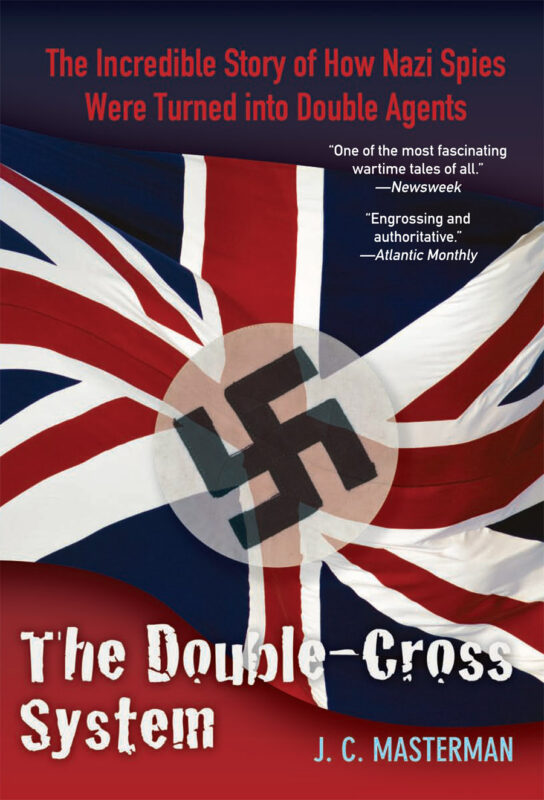
The Double-Cross System by J.C. Masterman details the British intelligence operation that turned German spies into double agents during World War II. This strategic program did not only feed misinformation to the enemy—it actively seized control of Germany’s espionage apparatus in Britain, transforming it into a tool for Allied deception and operational superiority.
The Architecture of Control
By mid-1940, after the fall of France, Great Britain became insulated from continental Europe. This geographical isolation enabled tighter border security and created favorable conditions for MI5 to detect and neutralize incoming enemy agents. Instead of executing or imprisoning them, British intelligence recruited many into a counter-espionage framework: the Double-Cross System. The structure of the operation prioritized centralized coordination, long-term planning, and inter-agency cooperation. A dedicated unit, the Twenty Committee, oversaw message content, agent credibility, and strategic alignment across the intelligence community.
MI5 integrated these captured agents into a systemic framework, which J.C. Masterman managed directly through B.1.A, a sub-section of MI5. They monitored outgoing transmissions and ensured alignment with British deception strategies. By regulating what agents could communicate, the British filtered, shaped, and often fabricated intelligence flows to Germany. This flow included plausible battlefield data, political misinformation, and operational projections. The purpose was twofold: to distract German command and to direct their actions away from Allied intent.
Deception as Strategic Function
Why did deception matter so much? Masterman outlines that the Double-Cross System achieved more than tactical confusion. It allowed Britain to sculpt the broader strategic landscape. During the build-up to D-Day, for instance, agents like GARBO transmitted intricate falsehoods to convince German command that the main invasion would strike Pas-de-Calais rather than Normandy. The deception succeeded because these agents had built long, trustworthy relationships with their handlers in the Abwehr. Those relationships depended on years of accurate reports mixed with subtle fabrications—establishing believability through a meticulously curated profile of trustworthiness.
Through this framework, the British guided enemy assumptions. They portrayed troop deployments, supply conditions, and political sentiments that did not reflect reality but felt internally coherent within German intelligence expectations. The success of these narratives was measurable: enemy force allocations, logistical shifts, and operational delays mirrored the false information fed by double agents.
Agent Management and Tactical Messaging
Running a double agent demands more than psychological leverage. It requires operational synchronization across agencies and technical infrastructures. Case officers learned to mimic the agent’s original radio cadence, coding style, and communication habits. If an agent was incapacitated, British handlers continued operations through substitutes whose transmissions appeared seamless. Wireless communication evolved into a shared language between deceivers and the deceived.
Every message faced scrutiny not just for content but for plausibility within the broader network. Agents could not contradict each other or external observable realities like bombing raids or troop movements. The Twenty Committee managed these variables by creating master narratives, allowing individual agents to contribute fragments that cohered into a strategic whole.
Agents like TATE, ZIGZAG, and TRICYCLE played distinct roles. Some specialized in fabricating sabotage operations; others painted intricate pictures of civilian morale, defense installations, or industrial production. The system’s success hinged on giving just enough accurate data to earn trust, then embedding lies with deliberate timing.
The Infrastructural Logic of Espionage
MI5’s dominance over the German network relied on technical superiority as much as human intelligence. Britain had refined its radio interception and direction-finding capabilities. With this, they could trace unauthorized broadcasts, localize enemy transmitters, and verify that transmissions reached German intelligence. In some cases, the Germans supplied their agents with outdated encryption protocols, which British codebreakers quickly penetrated.
This infrastructure gave the British real-time oversight. They monitored not only what agents sent but also how Berlin responded. Feedback loops confirmed which narratives landed effectively, which required adjustment, and which opened new avenues for operational manipulation. This loop of communication became the beating heart of the Double-Cross System.
Institutional Synergy and Strategic Oversight
The complexity of such a system demanded inter-agency harmony. The Admiralty, RAF Intelligence, the Foreign Office, and MI6 all fed into the system’s functionality. Each department contributed subject matter expertise. Aircraft data, troop movements, weather forecasts, and ship construction timelines all entered the pool of potential deception content. MI5 provided operational control, while the Twenty Committee arbitrated content approval and strategic alignment.
Decision-making followed a structured path. When agents submitted information requests from their German handlers, British controllers determined whether to comply, deflect, or subvert the request. That judgment required weighing risk versus strategic gain. Sometimes the lie was subtle: implying a delay in aircraft production. Sometimes it was radical: suggesting imminent invasions or manufacturing fictional military units.
What does it mean to control the enemy’s own intelligence framework? Masterman shows that when the Germans received information, they not only believed it but also redirected their planning around it. British intelligence did not guess at this influence. They confirmed it by watching how enemy deployments shifted, how bombings adjusted, and how strategic conversations in the German high command aligned with the deceptions they planted.
Narrative Calibration and Operational Patience
Success required patience. Agents could not immediately serve deception roles. They needed to establish reliability, a process that took months or even years. During this phase, British handlers allowed the transmission of low-value truths—“chicken feed”—to build the agent’s standing with German command. Only once credibility solidified could they embed misinformation.
Timing mattered. Agents had to match the rhythm of global events. Sending false data about an invasion too early risked exposure. Sending it too late rendered it useless. The British needed to gauge German perception, react to their suspicions, and recalibrate narratives on the fly. This dance demanded continuous analysis and real-time decision-making.
The System as Strategic Weapon
The Double-Cross System did not merely deflect enemy strategy. It reengineered the wartime intelligence battlefield. Masterman asserts that from 1941 onward, German espionage in Britain ceased to exist in autonomous form. Their entire framework operated under British manipulation. No agent transmitted data independently. Every wire, message, and signal passed through British hands.
This control allowed Britain to run the enemy’s espionage for its own ends. Rather than disable Germany’s eyes and ears, they hijacked them. This redefined the meaning of secrecy. It was no longer about hiding information but about deciding what the enemy knew.
Institutional Legacy and Tactical Doctrine
Masterman drafted the book in 1945 as an internal report, offering a real-time account of wartime intelligence work. He argued that the British success rested on two pillars: interdepartmental collaboration and structured deception planning. These principles became the foundation for future counter-espionage doctrine.
The system’s institutional memory extended into the Cold War, shaping how intelligence agencies structured their agent networks and managed foreign operatives. The strategic calculus learned during World War II informed future practices in misinformation, disinformation, and agent-based warfare.
Strategic Memory and National Security
Masterman concludes with a caution and an imperative. The conditions that made the Double-Cross System viable—geopolitical isolation, technological advantages, and enemy missteps—may not recur. Future wars would demand new tactics, but the structural principles—agent control, interagency alignment, deception as doctrine—remain enduring.
He asserts that confidence in intelligence work depends on visible success. When secrets stay hidden, the public sees only failures. Revealing this story, long after its operational relevance faded, restored a measure of institutional trust. It validated the professionalism of British intelligence and preserved the strategic imagination that defined wartime counter-espionage.
The Double-Cross System stands as both a historical record and a tactical blueprint. It reveals how deception operates as an instrument of warfare—not through illusion, but through control. It shows how intelligence turns knowledge into action. And it confirms that power, in war, begins with the ability to decide what the enemy sees.